



Suspended LED Linear Lighting: The High-Efficient Lighting Solution for Supermarket
By JC
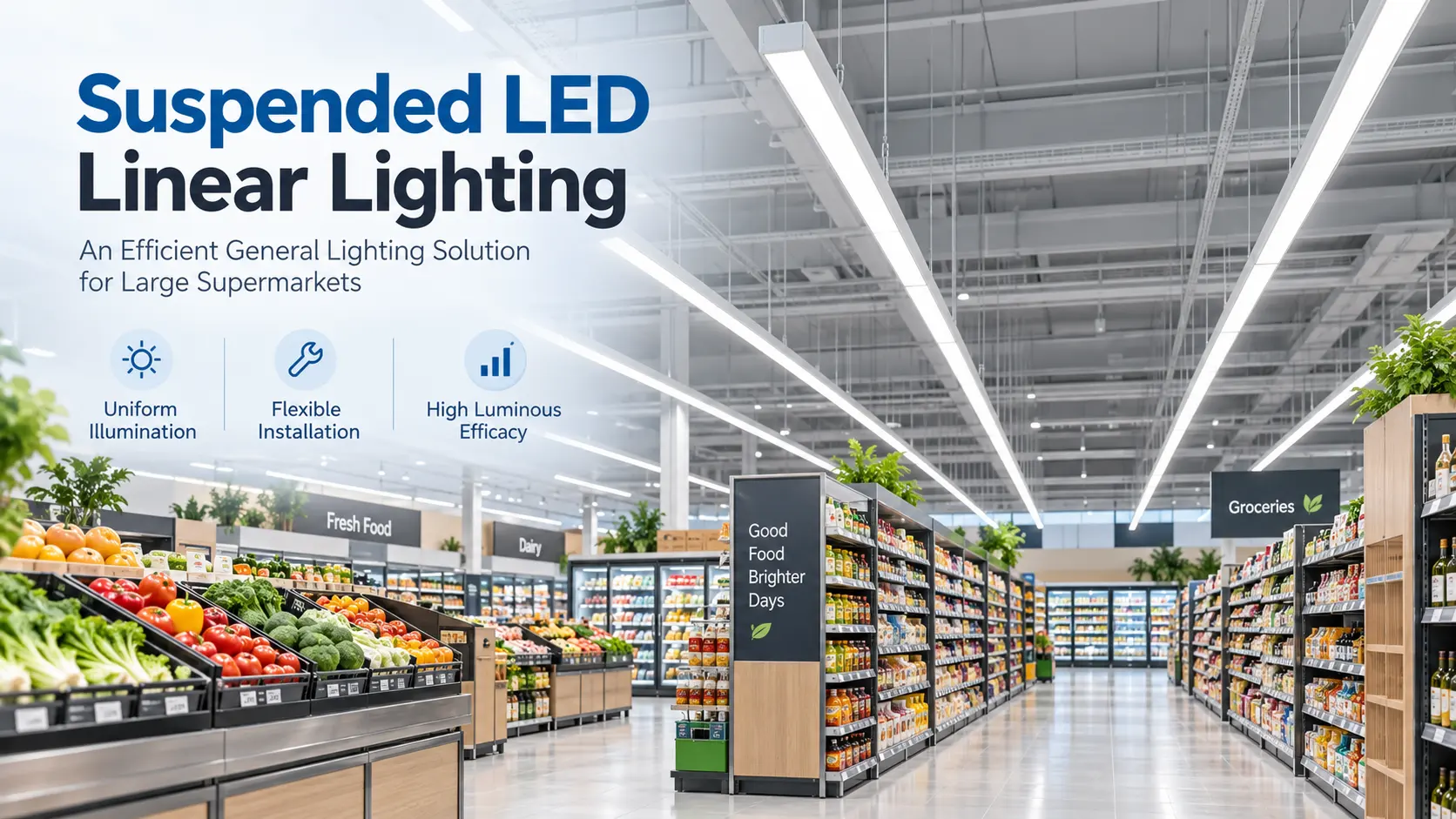
With the development of retail industry, sufficient brightness is no longer the only enquirement for commercial lighting. Uniform illumination across large-scale retail spaces, energy consumption reducition and a pleasant shopping experience have become key priorities in supermaket lighting design.
By continuous arrangement, flexible installation and high-luminous lighting output, suspended led linear lighting solution has become a common choice for large supermarkets. Suspended led linear lighting can provide uniform and comfortable lighting experience across aisles, open commodity areas and checkout zones with reasonable light installation.
Why Large Supermarkets Need High-quality Basic Lighting?
Large supermarkets feature spacious retail areas, densely shelves, and long operation. Therefore, basic illumination not only needs to fulfill sufficient brightness, but also ensures reasonable light distribution across different areas.
Enhance Lighting Uniformity in Large Area
If traditional lighting layout is not well-planned, it can create a noticeable variations in brightness between aisles and shelves, resulting in uneven illumination and reduced commodities presentation.
For wider main aisles or open commodity display areas, the appropriate arrangement of luminaires should be based on aisle width, ceiling height and the charateristics of the fixtures.
A well-planned lighting layout should consider illumination levels on the floor, vertical shelving surfaces and customers’ eye-level visibility, rather than simply increasing the number of luminaires.
Reasonable Power, Lumen and Beam Angle
Wattage is not only factor when selecting suspended linear light for supermarket. Luminous efficacy, lumen output, beam angle and mounting height also play important roles in overall lighting performance.
For example, high-efficacy suspended linear can reduce power consumption while maintaining the required illumination levels. However, achieving energy saving also depend on a well-planned lighting layout.
For aisles of different width, suitable light arrangement needs to be carefully considered to avoid overly concentrated light distribution or unnecesssary illumination in areas where it is not needed.
How to Plan a Suspended Linear lighting Layout for Supermarkets
Mounting Position Based on Aisles width and shelf Layout
Supermarkets aisles vary in width and layout. Therefore, using the same lighting arrangement across different areas may not provide suitable illumination for every space.
For narrower aisles, a single row of suspended led linear lights can be considered, with luminaires installed along the aisle direction.
For wider areas, such as main aisles or public product display areas, multiple parallel rows of luminaires may be required to expand lighting coverage and improve illumination uniformity.
Lighting Designers should determine the lighting number and mounting positions based on aisle width, shelf height, ceiling structure and taget brightness, rather than just increasing luminaires power.
How do symmetrical and asymmetrical light distributions affect supermarket lighting?
Where is symmetrical light distribution suitable?
Symmetrical light distribution typically directs light relatively evenly to both sides of the luminaire.
For open supermarket areas unobstructed by dense shelving, symmetrical light distribution can be used to provide broad, general illumination.
For instance, open promotional areas, main shopping aisles, and certain public spaces often require light to cover a wide area of the floor.
However, in aisles flanked by tall shelves, a distribution pattern that focuses light primarily on the floor may result in sufficient floor illuminance but inadequate vertical illuminance on the merchandise displays.
How to Reduce the Operational Cost of Supermarket by High-luminous Suspended LED Linear Lighting?
Large supermarkets typically operate for extended hours each day, resulting in considerable energy cost from continuous lighting operation.
By adopting high-efficacy suspended led linear lighting, supermarket can improve energy efficiency and reduce unnecessary electricity consumption while maintaining the required illumination levels.
When integrated with smart lighting control system such as DALI, suspended LED linear lighting can further optimize enerygy by adjusting the light output based on working hours, available daylight, and the specific lighting requirements of different areas.
Consider Long-tem Maintaince Costs
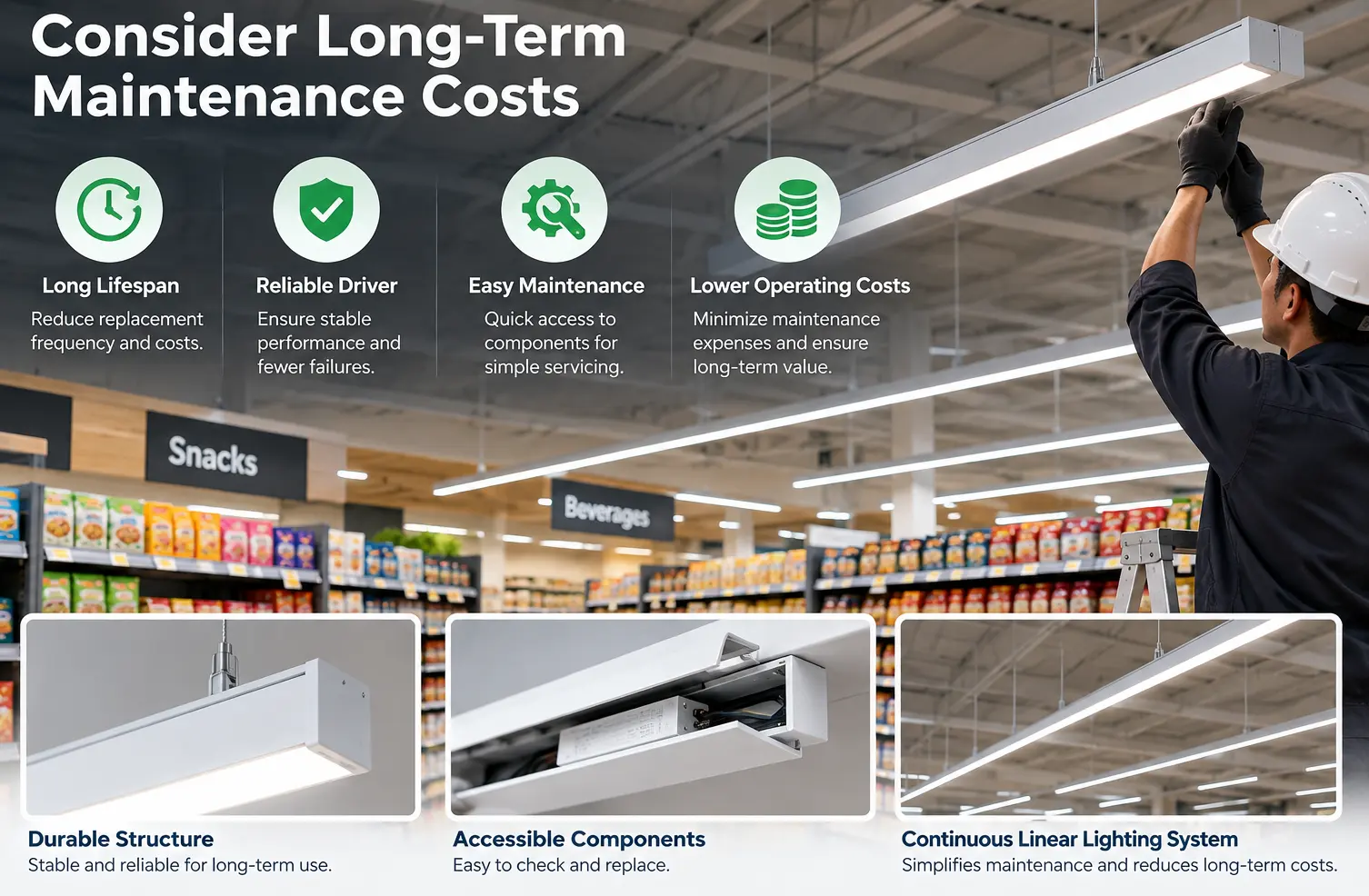
Most supermarkets typically require a considerable number of luminaires. Therefore, the overall projectct cost should not be simply considered based on the initial purchased price.
The lifespan of luminaries, driver reliability and ease of after-sales maintainance will also play important roles in determining long-term operation cost.
For major-scale continuout linear lighting system, it’s helpful for maintainance by stable structure, easy-to-check products.
Where Can Suspended LED Linear Light Be Used?
Suspended LED linear lighting is widely used in main shopping aisles and various retail areas within supermarkets. It provides uniform general illumination and helps create a comfortable, well-lit shopping environment.
Aisles Between Shelves and Product Display Areas
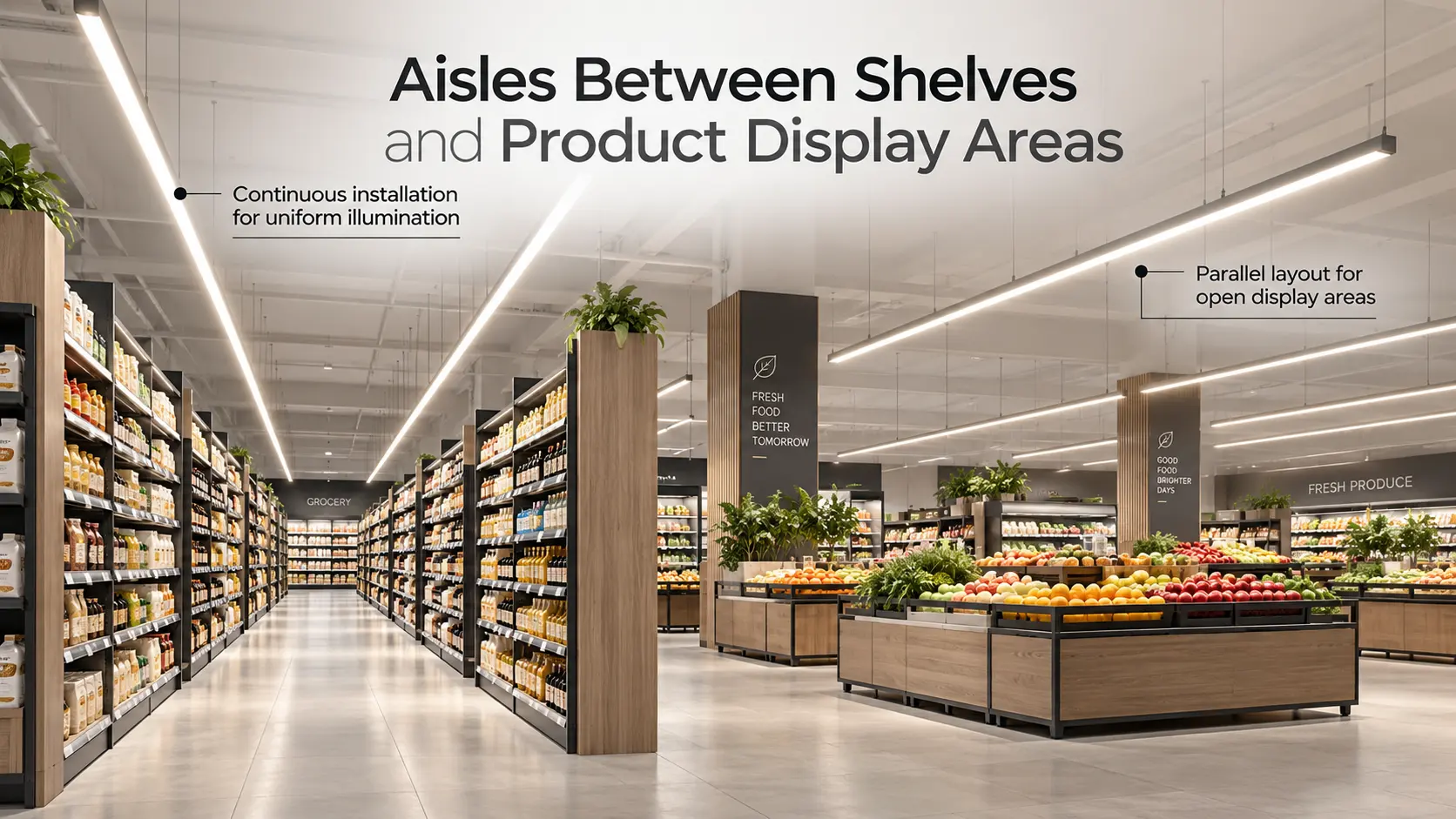
With continuous arrangement and installation, suspended led linear light can provide uniform general illumination along long rows of shelves. It can reduce noticeable bright transition.
For open product display areas, parallel lighting layouts can be adapted to different spatial configurations to meet specific illumination requirements and ensure even light distribution across the space.
Checkout Area and Public Shopping Aisle
In checkout area and main shopping aisles, suspended led linear light can provide continuous, energy-efficient illumination, helping customers navigate through the space while maintaining a consistent lighting design throughtout the supermarket.
How to Choose Suspended LED Linear Lighting for Supermarkets
Purchasers and lighting designers should carefully consider the practical lighting requirements of supermarkets when selecting suspended LED linear lighting.
First, the actual lumen output, luminous efficacy, and light distribution characteristics of the luminaires should be evaluated to determine whether they can meet the required illumination levels.
Second, suitable color temperature and Color Rendering Index (CRI) should be selected according to product display requirements to ensure natural and accurate color reproduction.
For large-scale supermarket chains, connection systems, mounting methods, power supply arrangements, and ease of maintenance should also be taken into consideration.
Before final installation, lighting simulations or on-site tests are recommended to evaluate whether the proposed lighting solution can meet the illumination requirements of different areas, considering the actual layout, mounting height, and luminaire specifications.
Why Should Supermarket Lighting Consider More Than Floor Illuminance?
Horizontal vs. Vertical Illuminance in Supermarkets
| Comparison | Horizontal Illuminance | Vertical Illuminance |
|---|---|---|
| Definition | Light falling on horizontal surfaces | Light falling on vertical surfaces |
| Main Application | Shopping aisles, floors, checkout counters | Product shelves, packaging, vertical displays |
| Main Purpose | Ensure safe movement and sufficient task lighting | Improve product visibility and shelf illumination |
| Poor Lighting Effects | Dark aisles and uneven floor illumination | Poor product visibility and insufficient shelf brightness |
| Design Considerations | Luminaire spacing, mounting height, and light distribution | Shelf height, luminaire position, and optical distribution |
In large supermarkets, both horizontal and vertical illuminance are important factors that should be considered during lighting design.
Horizontal illuminance refers to the amount of light received by horizontal surfaces, such as floors and walkways. Vertical illuminance, on the other hand, refers to the light received by vertical surfaces, including shelves, product packaging, and other display areas.
Even when shopping aisles have sufficient floor illumination, products displayed on shelves may not receive adequate lighting.
If light is concentrated mainly in the center of the aisles, the floor may appear well-lit, while upper and lower shelves remain insufficiently illuminated. This can result in uneven light distribution, unnecessary energy consumption, and reduced visibility of product information.
Therefore, supermarket lighting design should not focus solely on achieving higher floor illuminance levels. It should also ensure sufficient light reaches vertical display surfaces at different shelf heights, helping customers clearly identify products and creating a more balanced lighting environment.

