



Fashion Retail Lighting Solutions: The Complete Guide to Perfect Clothing Store Illumination
By Vincent
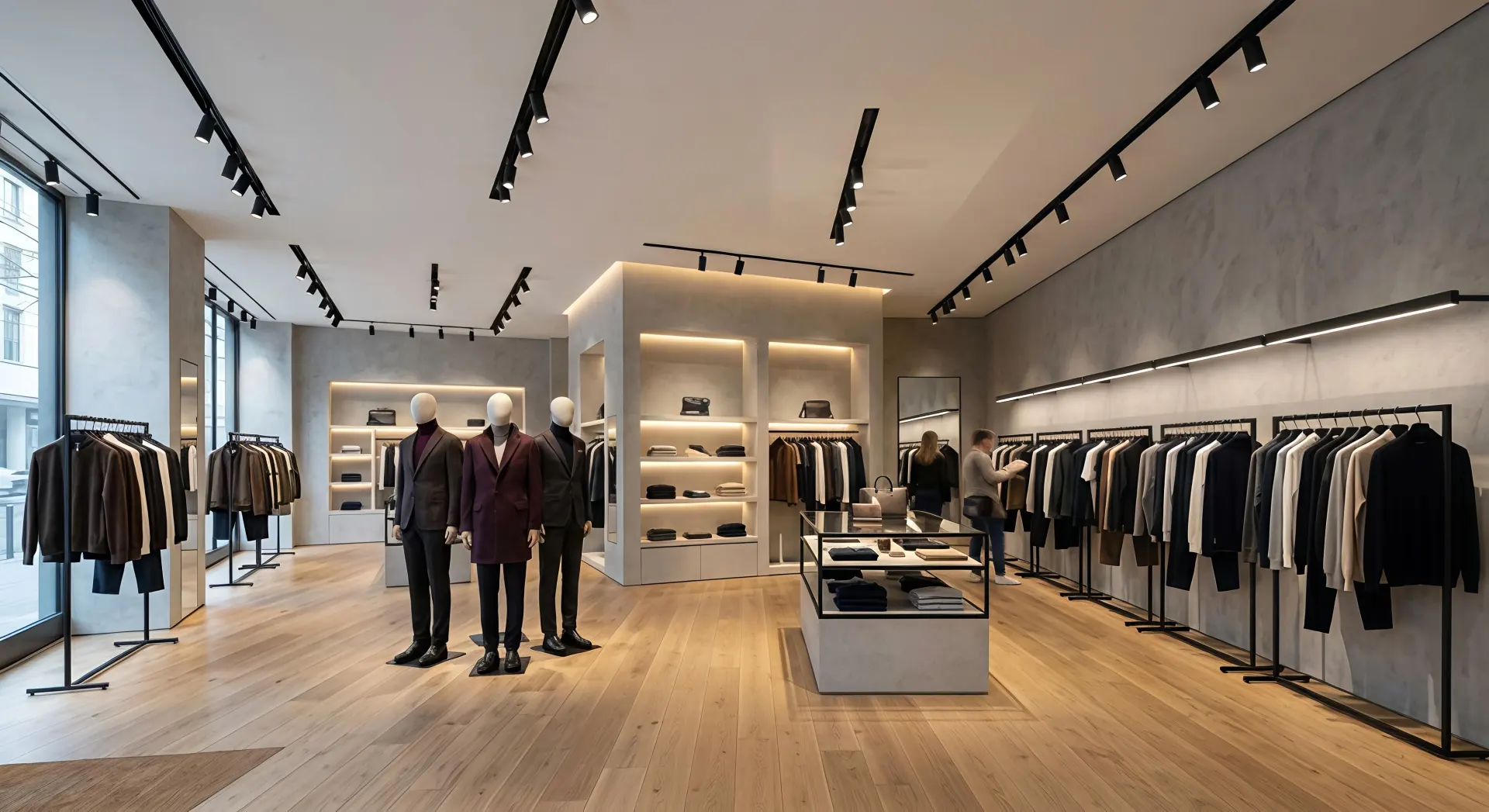
In today’s highly competitive apparel market, lighting is no longer just about making a space bright. It has become an invisible sales assistant inside the store—shaping brand identity, enhancing product value, and influencing customer purchasing decisions. This is exactly why professional Fashion Retail Lighting Solutions have become essential for modern clothing stores.
Many store owners face the same frustrating situation: premium fabrics look dull on the rack, vibrant colors appear distorted under poor lighting, customers try on clothes but feel their complexion looks tired or dull, and the store simply lacks the sense of openness that invites people to stay longer.
In many cases, the problem isn’t the clothing itself—it’s the lighting.
With over 16 years of experience in commercial lighting projects, we have seen how light, fabric texture, color rendering, and customer psychology interact in subtle but powerful ways. A well-designed Fashion Retail Lighting Solutions plan is never just about installing more fixtures. Instead, it focuses on three key goals:
- highlighting fabric texture
- enhancing natural skin tones
- creating a premium and immersive retail atmosphere
By combining track spotlights, track linear lights, recessed or surface linear lighting, and downlights, retailers can build a layered lighting environment that supports product display, customer experience, and brand storytelling at the same time.
This guide breaks down a complete clothing store lighting strategy—from design logic and fixture selection to layout techniques and technical parameters—so retailers can create a high-conversion fashion retail space.
Why Fashion Retail Lighting Solutions Directly Impact Store Performance
In fashion retail environments, every purchasing decision is based on visual perception. Lighting is the medium through which customers see and evaluate the products.
A carefully planned Fashion Retail Lighting Solutions strategy improves store performance in four key ways.
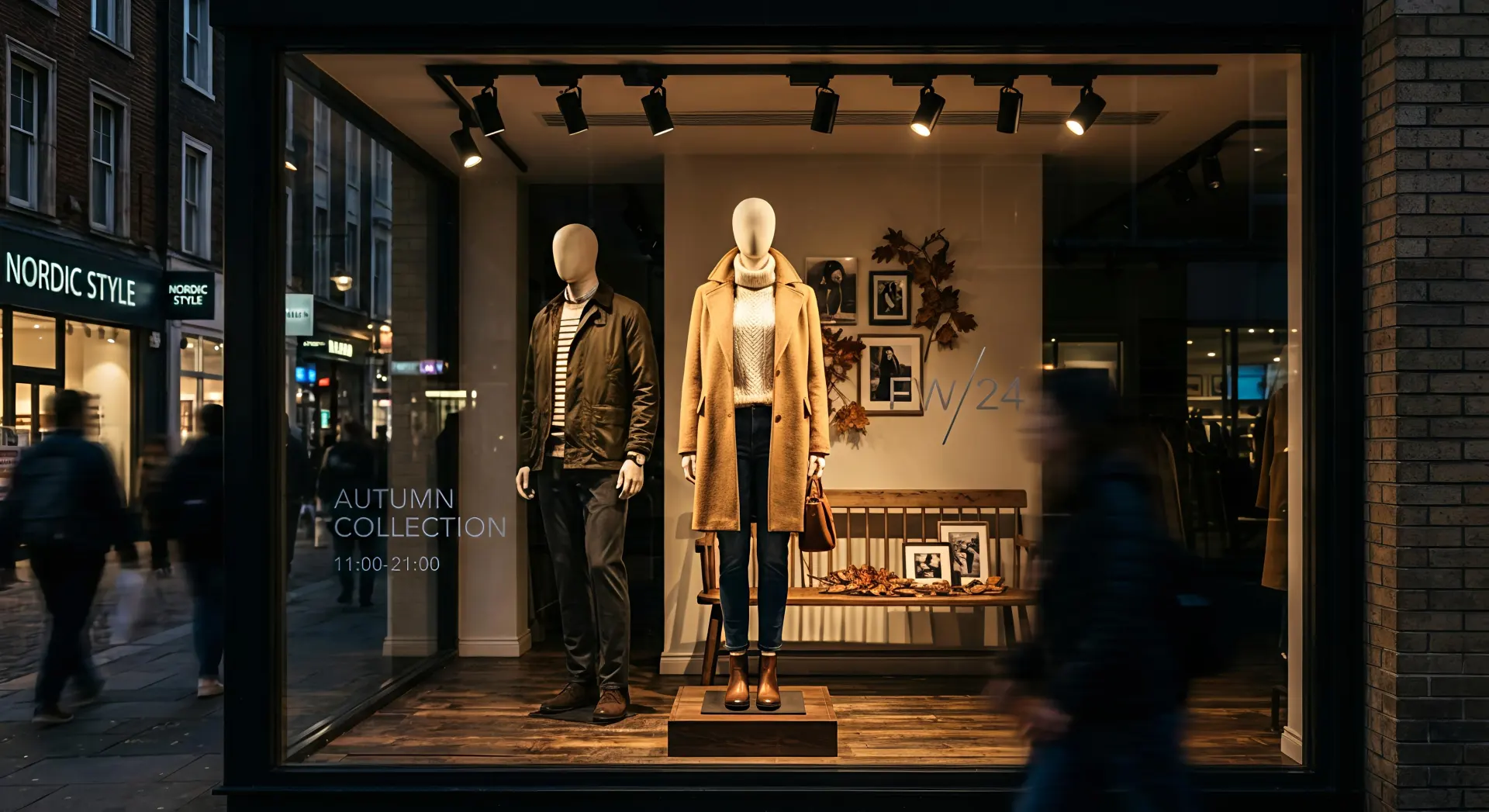
1. Highlighting Fabric Texture and Product Details
Different fabrics react very differently to light. Silk reflects light softly, knitwear absorbs it gently, denim reveals strong textures, while leather displays structure and depth.
Without proper lighting, even high-end materials can appear flat or lifeless.
Directional lighting, on the other hand, reveals the texture, stitching, and structure of the garment. It introduces subtle contrast between highlights and shadows, giving clothing a three-dimensional appearance that significantly increases perceived value.
This is especially critical in storefront displays and mannequin areas where first impressions are formed.
For additional insights into the impact of lighting on retail environments, see this guide from the
<a href=”https://www.ies.org/” target=”_blank”>Illuminating Engineering Society</a>.
2. Improving Fitting Room Experience and Conversion Rates
Studies show that more than 80% of clothing purchases are finalized in the fitting room. Lighting plays a decisive role in this moment.
If the lighting is too cold, too dim, or poorly positioned, customers may appear pale, tired, or older in the mirror. Even well-designed clothing may lose its appeal.
However, with high-quality light sources and well-balanced illumination, skin tones appear more natural and vibrant. Customers feel more confident trying on clothes, which significantly increases the likelihood of purchase.
3. Creating a Premium Brand Atmosphere
Lighting is one of the most powerful tools for communicating brand identity.
Luxury fashion boutiques rely heavily on layered lighting strategies. By combining accent lighting, ambient lighting, and architectural lighting, designers create visual hierarchy and emotional atmosphere.
Without this layered approach, even expensive interior design can look flat or uninspiring.
For a deeper understanding of retail lighting design principles, the https://www.archdaily.com/ provide useful case studies.
4. Guiding Customer Movement and Increasing Retail Efficiency
Professional Fashion Retail Lighting Solutions can also guide customer flow within the store.
Strategically placed lighting highlights key display areas and draws customers toward important collections. Smooth brightness transitions encourage customers to explore the entire store instead of staying near the entrance.
Retailers often overlook this aspect, but lighting can significantly influence customer behavior and store dwell time.
The Core Structure of Modern Clothing Store Lighting
Successful Fashion Retail Lighting Solutions rely on a layered lighting approach. Instead of a single lighting type, professional retail environments combine four lighting systems.
| Lighting Layer | Main Fixtures | Purpose |
|---|---|---|
| Accent Lighting | Track spotlights | Highlight garments and create visual focus |
| Supplementary Lighting | Track linear lights | Provide even illumination for long racks |
| General Lighting | Downlights | Maintain comfortable overall brightness |
| Ambient Lighting | Recessed / surface linear lights | Create atmosphere and architectural depth |
Each layer works together to deliver both functionality and visual impact.
Track Lighting in Fashion Retail Lighting Solutions
Track spotlights are the core element of most Fashion Retail Lighting Solutions.
Their flexibility allows lighting designers to adjust angles, beam angles, and positions whenever store displays change.
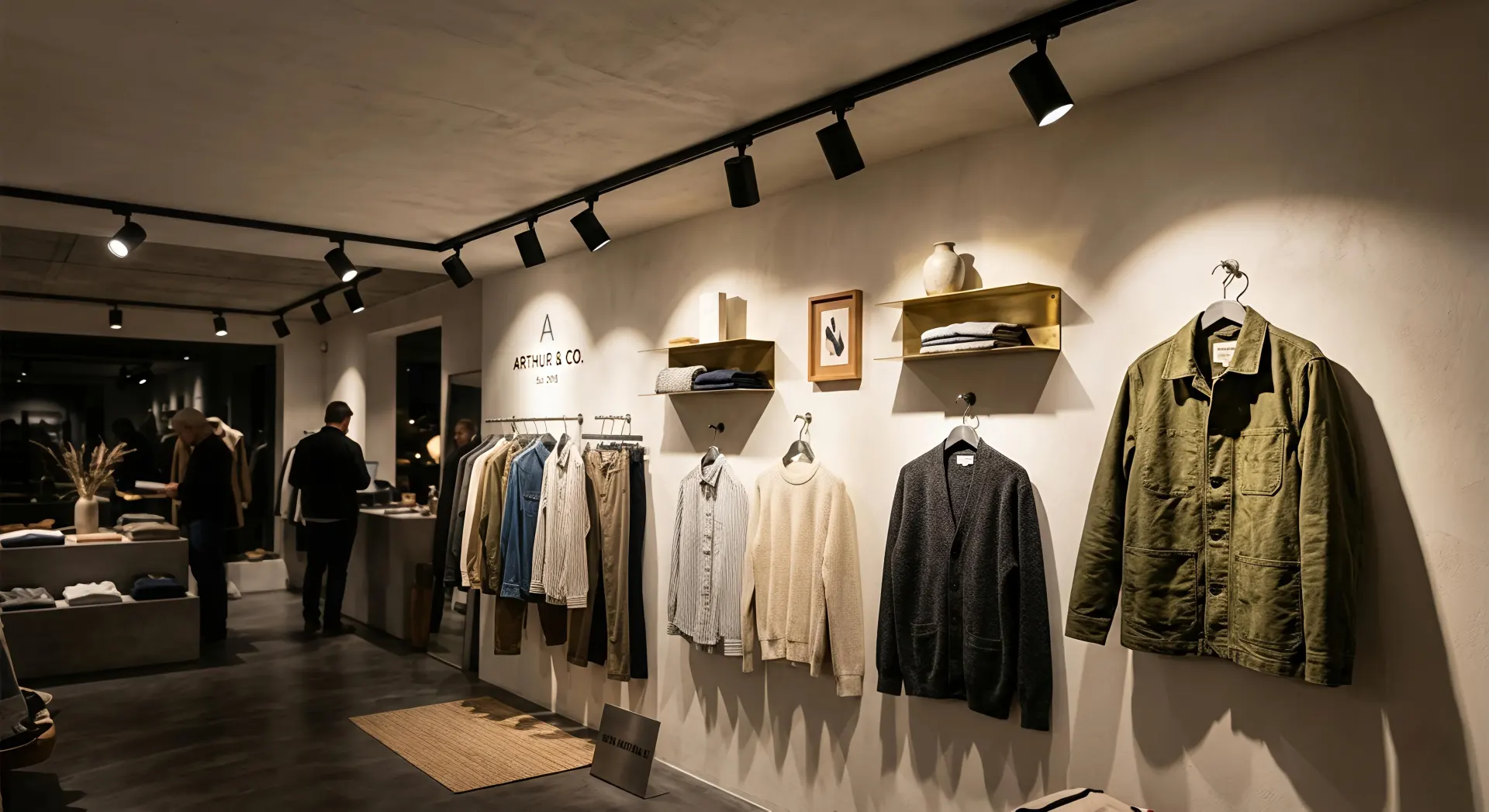
Common Application Areas
Track spotlights are typically installed in areas such as:
- storefront displays
- mannequin presentations
- wall-mounted clothing displays
- hanging racks
- central island displays
Because of their directional beams, they can precisely illuminate garments without lighting unnecessary areas.
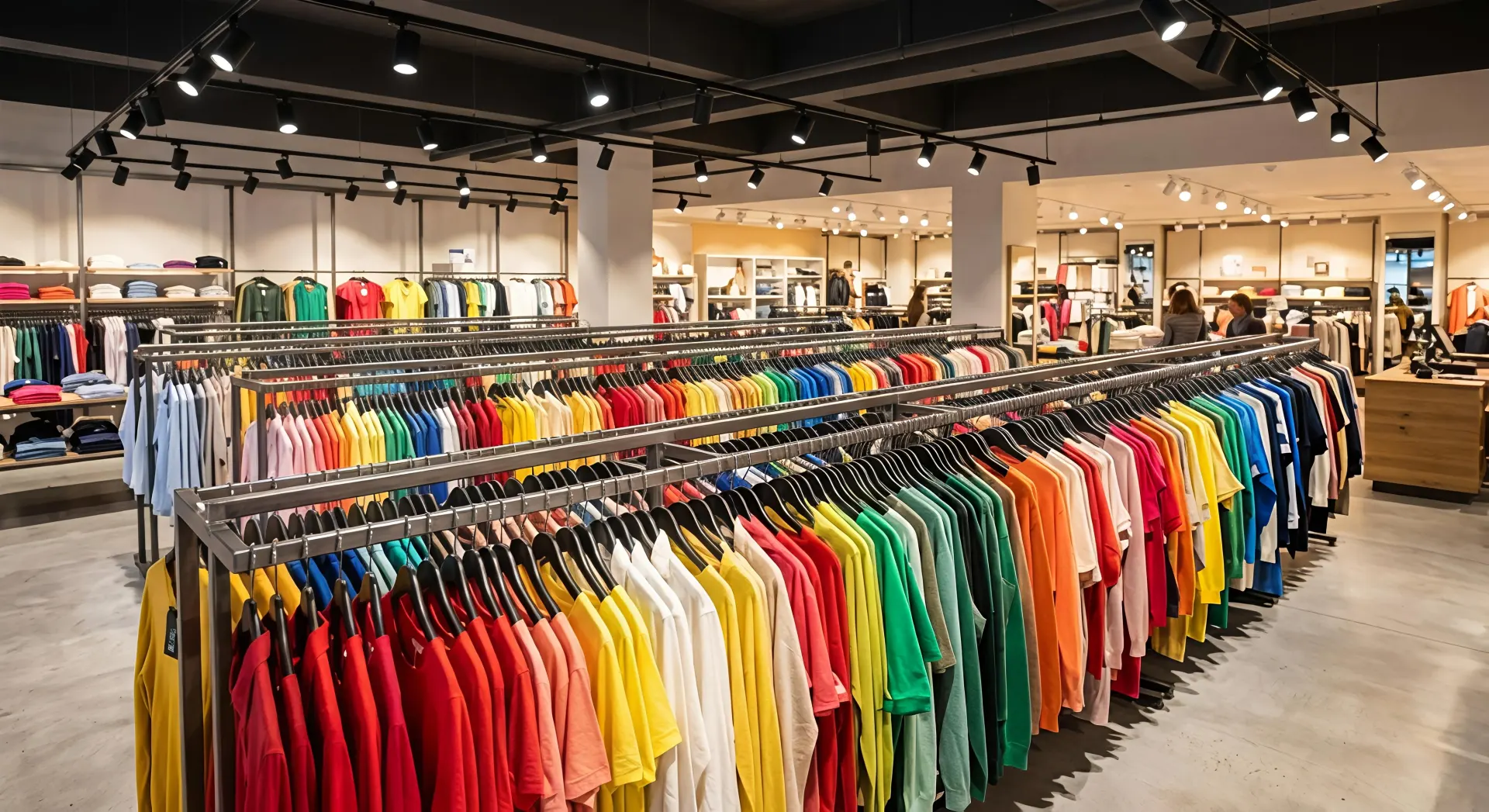
Why Track Spotlights Are Essential
Track spotlights provide several advantages:
- strong visual focus
- excellent color rendering
- adjustable beam angles
- flexibility for changing displays
In fashion retail design, they serve as the primary tool for highlighting garments and drawing customer attention.
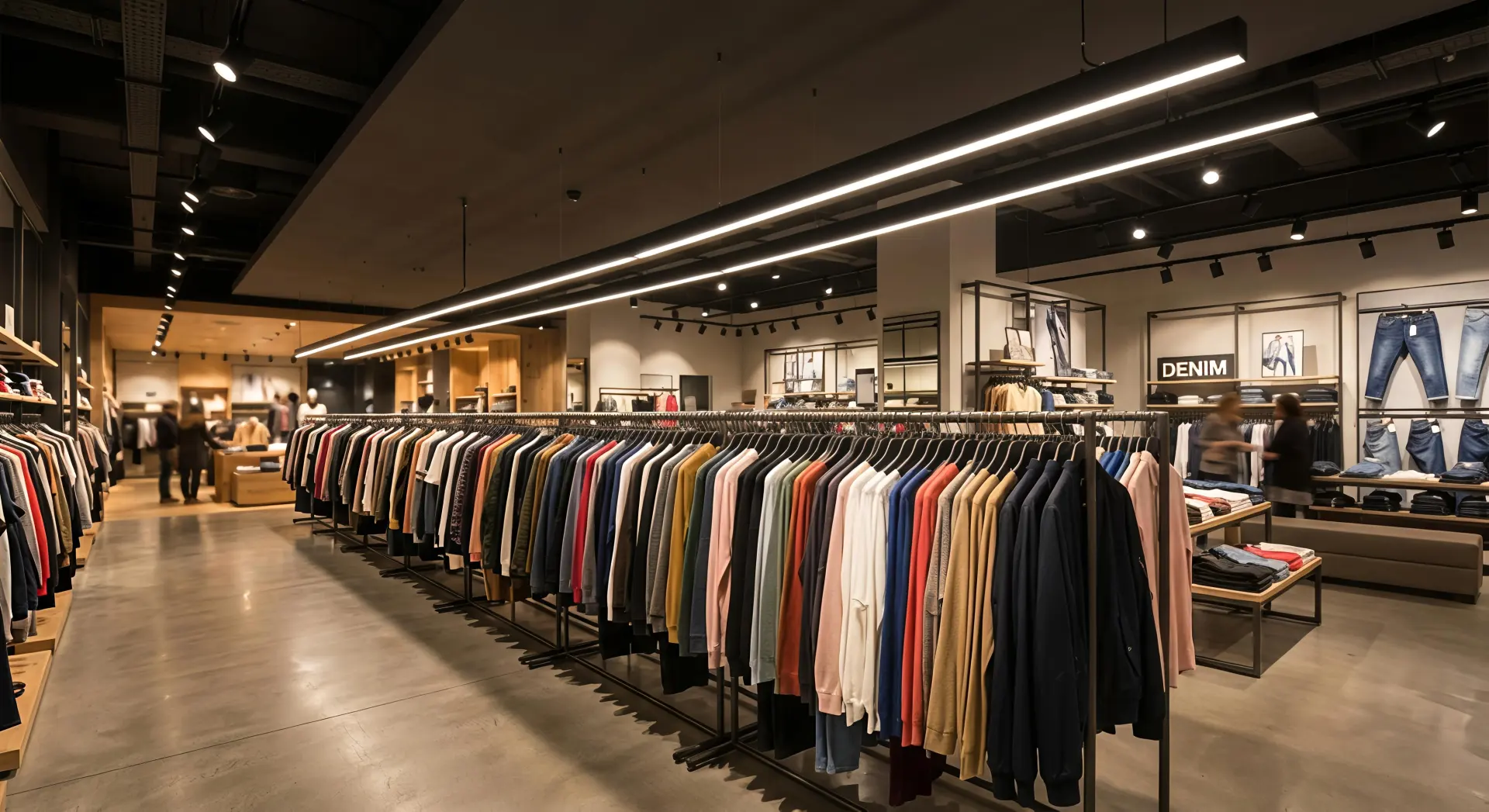
Linear Lighting for Clothing Racks
Long clothing racks often create uneven lighting conditions when only spotlights are used.
Track linear lighting solves this issue by providing continuous illumination along the entire rack.
Key Benefits
| Feature | Benefit |
|---|---|
| Continuous light output | Eliminates dark spots between spotlights |
| Soft, uniform illumination | Improves product visibility |
| Flexible installation | Can share the same track system with spotlights |
This makes linear lighting an essential component of professional Fashion Retail Lighting Solutions.
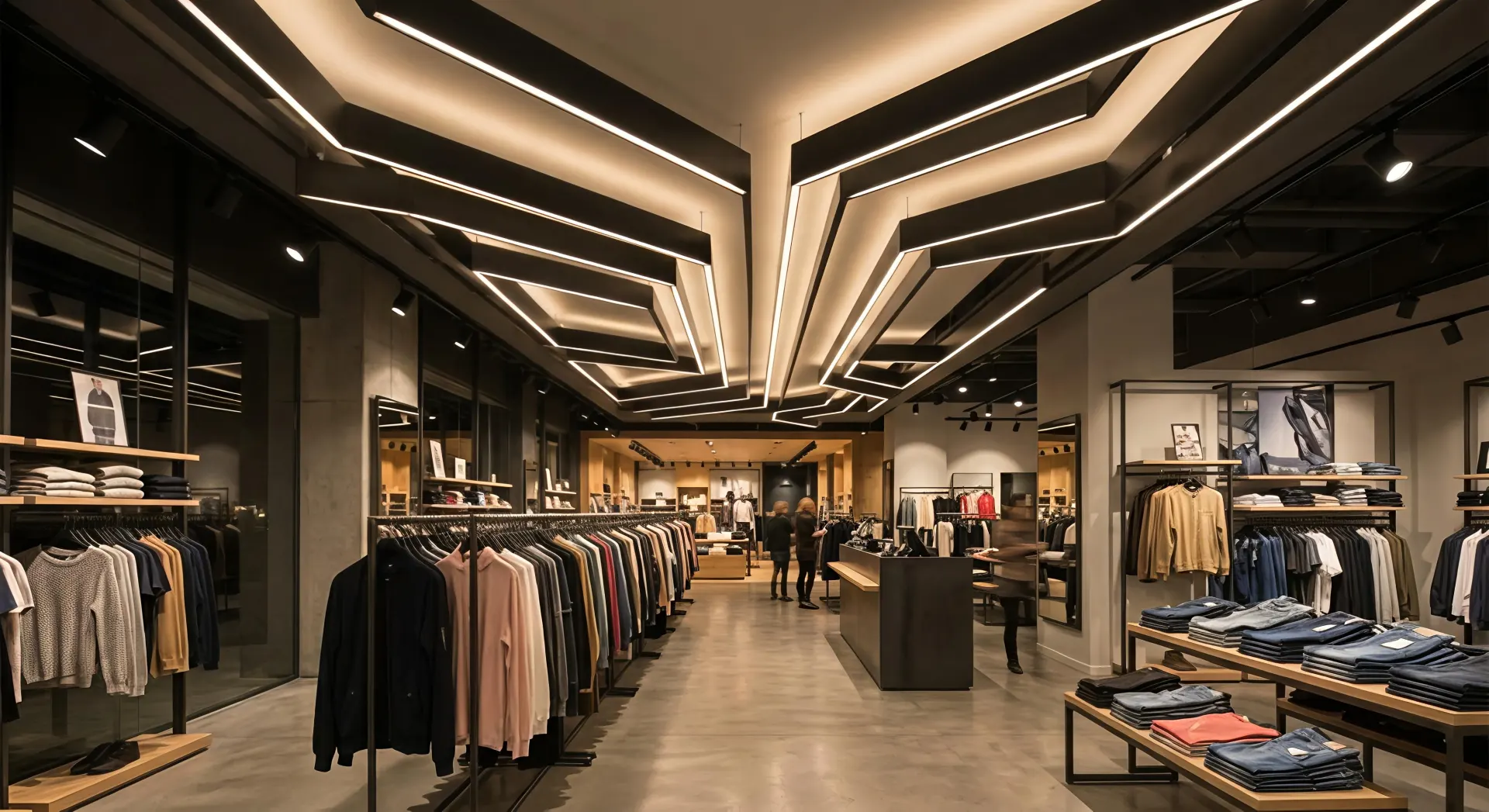
Architectural Linear Lighting for Store Atmosphere
Beyond product lighting, linear lighting also plays an important role in shaping the architectural atmosphere of the store.
Ceiling and Cove Lighting
Recessed linear lights are commonly integrated into ceiling coves or architectural features. They provide indirect lighting that enhances spatial depth and creates a modern appearance.
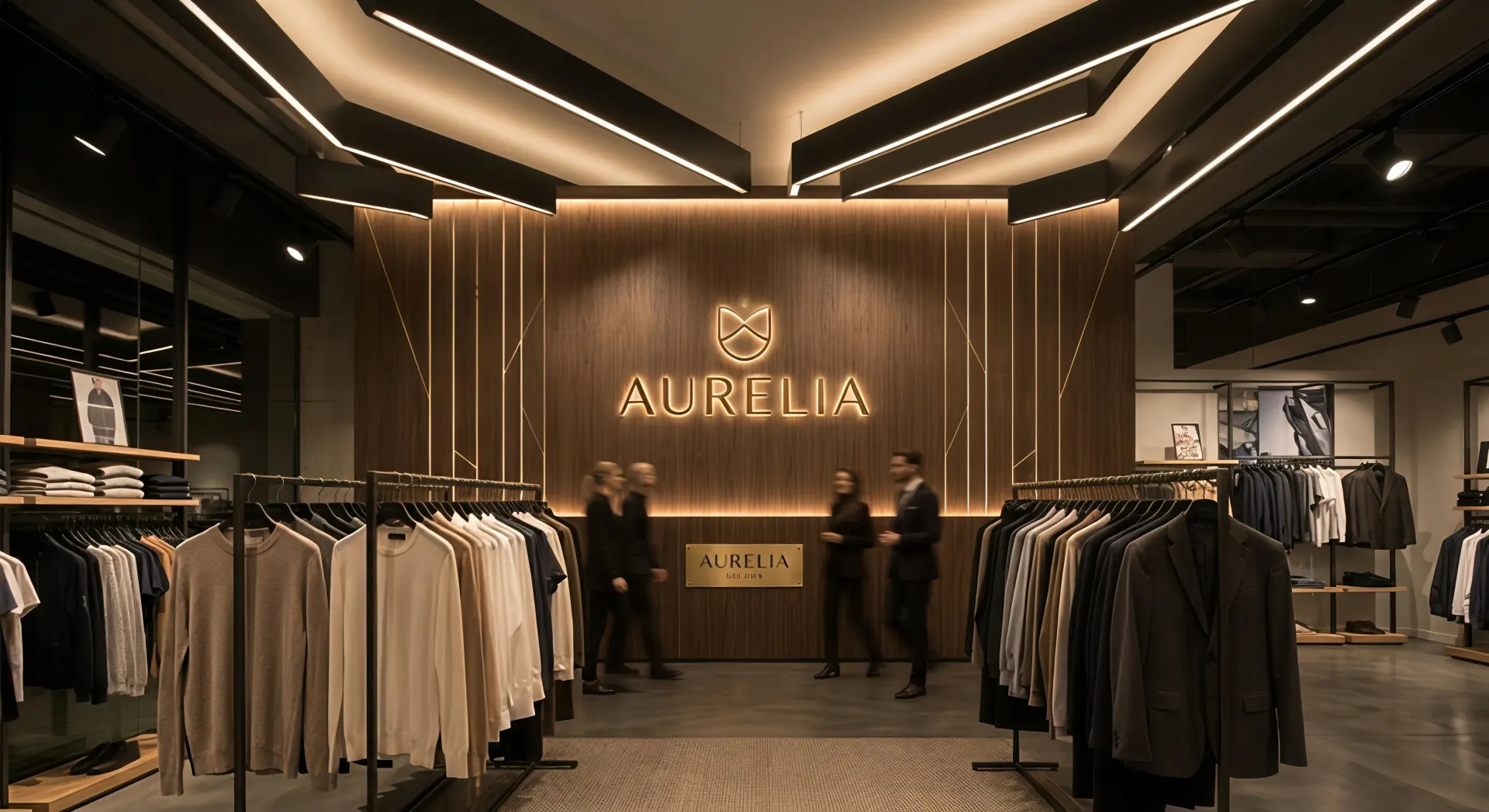
Background Walls and Floor Edges
Surface-mounted or recessed linear lights can also be installed behind brand logos, on display walls, or along floor edges. These lighting accents subtly reinforce brand identity and improve the overall ambiance.
Downlights for General Retail Lighting
While spotlights and linear lights focus on displays, downlights provide the basic illumination required for comfortable navigation.
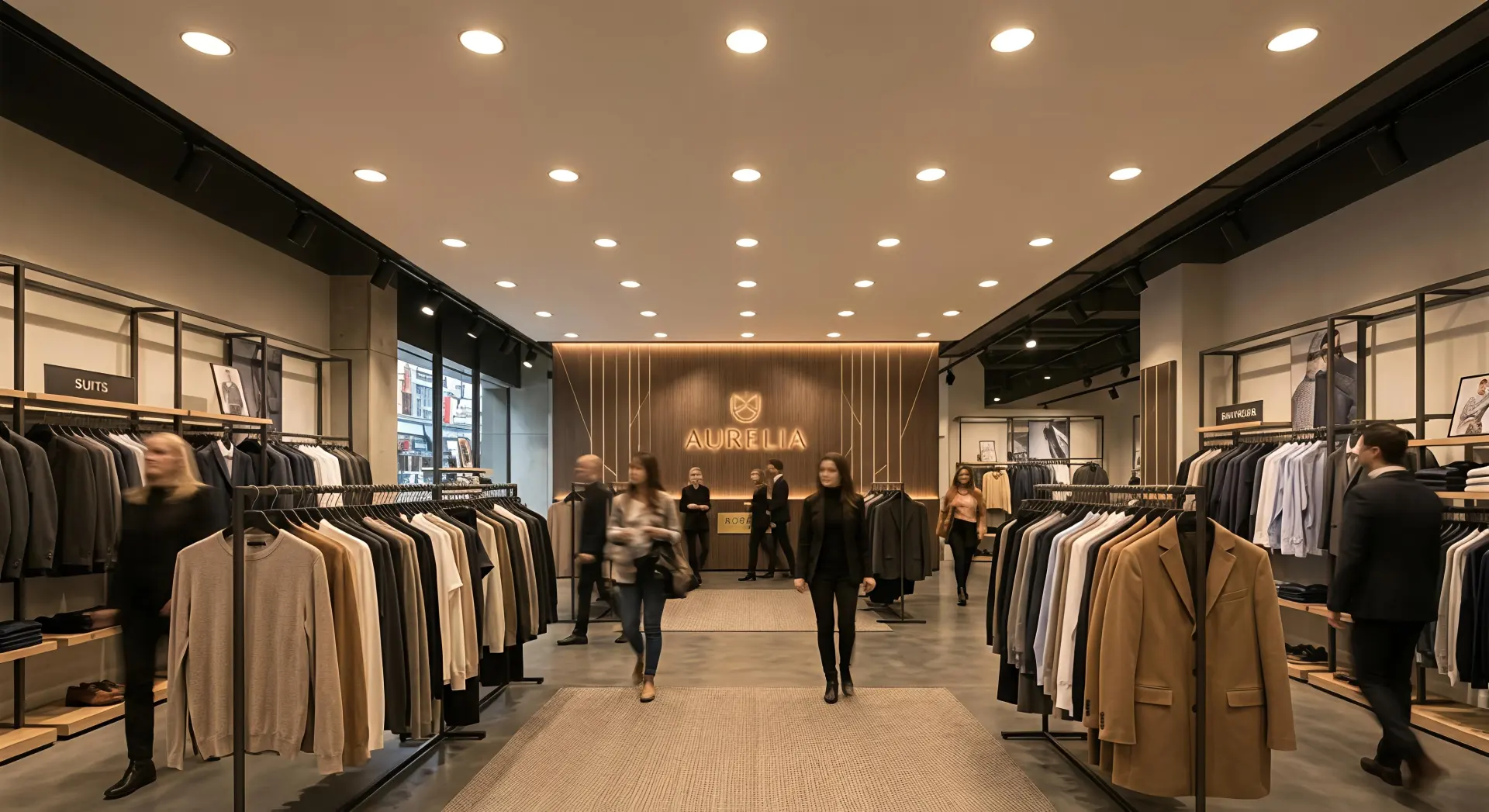
Typical installation areas include:
- walkways
- cashier areas
- lounge spaces
The goal is to maintain balanced brightness without competing with the accent lighting used for product displays.
A well-balanced combination of these fixtures forms the backbone of effective Fashion Retail Lighting Solutions.
Key Technical Parameters for Clothing Store Lighting
Many store owners focus only on brightness, but professional lighting design depends on several technical parameters.
Recommended Lighting Parameters
| Parameter | Recommended Value | Reason |
|---|---|---|
| Color Rendering Index | CRI ≥ 90 (CRI ≥95 for premium stores) | Accurate color representation |
| R9 Value | >50 | Natural skin tone rendering |
| Color Temperature | 3000K – 4000K | Balanced visual comfort |
| Beam Angle | 15° – 60° | Adjust according to display needs |
| Glare Rating | UGR <19 | Comfortable visual environment |
These specifications ensure clothing colors remain accurate while customers appear natural under the lighting.
Common Clothing Store Lighting Mistakes
Even experienced retailers sometimes make lighting design mistakes.
Common problems include:
- using only one type of fixture throughout the store
- ignoring color rendering performance
- mixing inconsistent color temperatures
- poor glare control
- insufficient lighting in rack areas
Avoiding these mistakes is essential for achieving professional Fashion Retail Lighting Solutions.
Conclusion
In fashion retail, lighting is far more than a technical requirement—it is a powerful design tool that shapes how customers perceive clothing, brands, and the shopping environment.
From track spotlights that highlight garment details to linear lights that eliminate dark areas and architectural lighting that creates atmosphere, every fixture contributes to the final retail experience.
A carefully designed Fashion Retail Lighting Solutions strategy ensures that clothing looks its best, customers feel confident when trying on products, and the store delivers a premium shopping environment.
When lighting is done right, garments are not just displayed—they are experienced.
And that experience ultimately turns browsing into buying.

