



Why Modern Office Linear Lighting Is Redefining Workplace Illumination?
By Powerstar
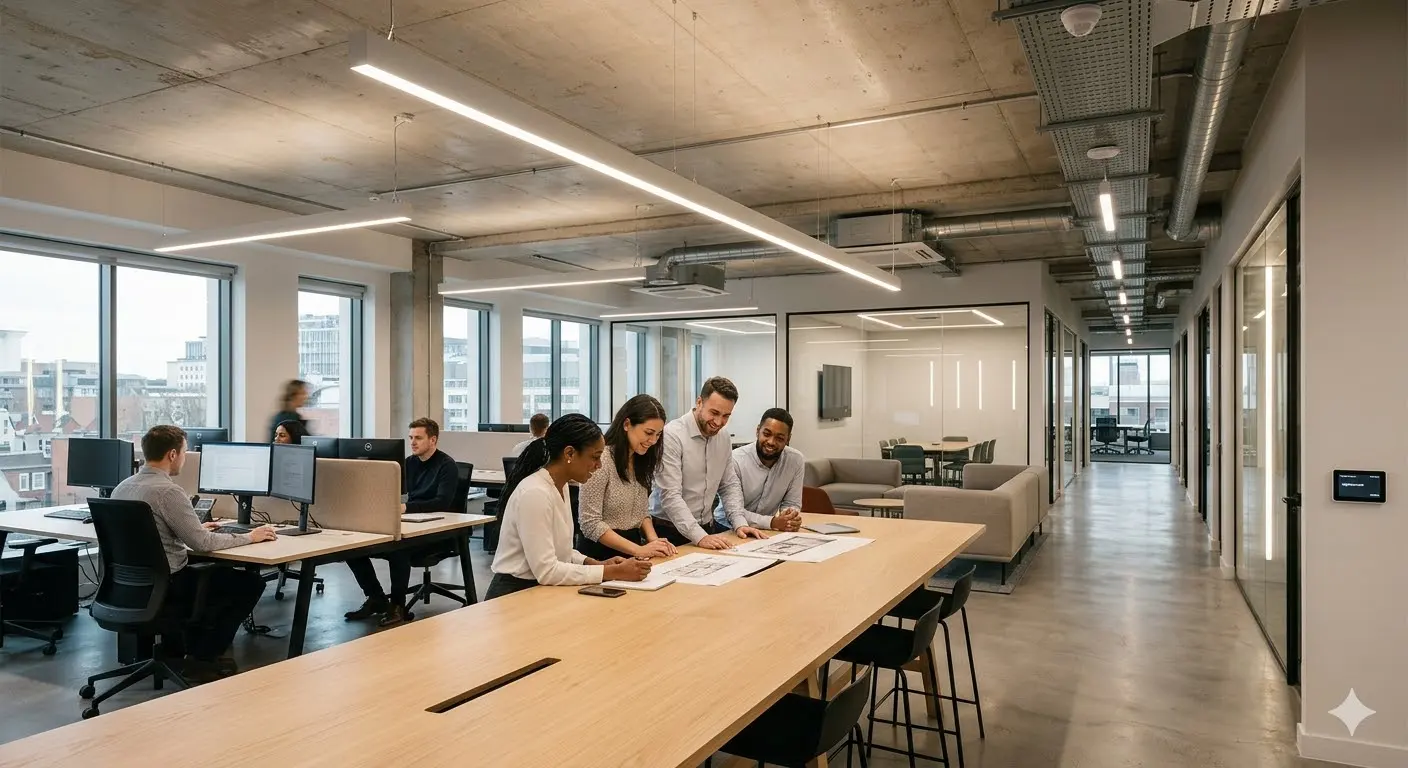
Bad lighting ruins a great office design. Now, modern office linear lighting is a considerable choice for commercial spaces. Modern workplaces require lighting systems that support productivity, visual comfort, and architectural aesthetics. Modern office linear lighting has become a preferred solution in contemporary commercial environments. These fixtures deliver uniform illumination, clean visual lines, and flexible installation options.
Unlike traditional fluorescent panels, modern LED linear systems offer improved efficiency, longer lifespan, and better lighting control. As office layouts evolve toward open spaces and collaborative zones, linear lighting provides a scalable and adaptable approach.
This article explains how linear lighting enhances office environments, improves employee comfort, and supports energy-efficient building design.
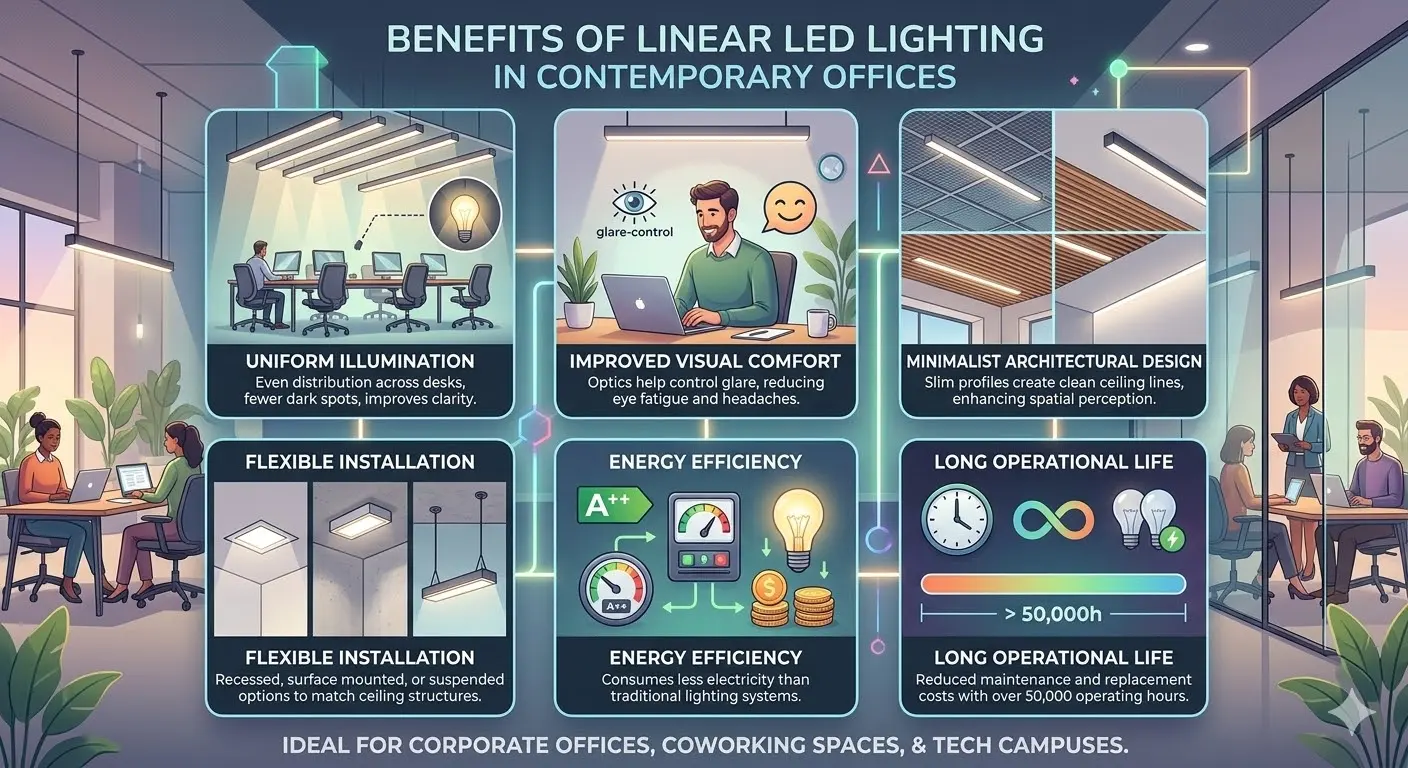
Benefits of Linear LED Lighting in Contemporary Offices
Linear LED lighting systems provide several advantages for commercial office applications. They combine functionality with modern architectural style.
Key benefits include:
- Uniform illumination
Linear fixtures distribute light evenly across desks and workstations. This reduces dark spots and improves visual clarity. - Improved visual comfort
High-quality optics help control glare. Employees can work longer without eye fatigue. - Minimalist architectural design
Slim linear profiles complement modern office interiors. They create clean ceiling lines that enhance spatial perception. - Flexible installation
Linear lights can be recessed, surface mounted, or suspended. This flexibility allows designers to match different ceiling structures. - Energy efficiency
LED linear fixtures consume less electricity than traditional lighting systems. - Long operational life
Most commercial LED systems operate for more than 50,000 hours. Maintenance costs are significantly reduced.
These characteristics explain why linear lighting is widely used in corporate offices, coworking spaces, and technology campuses.
Suspended Linear Lighting for Open-Plan Workspaces
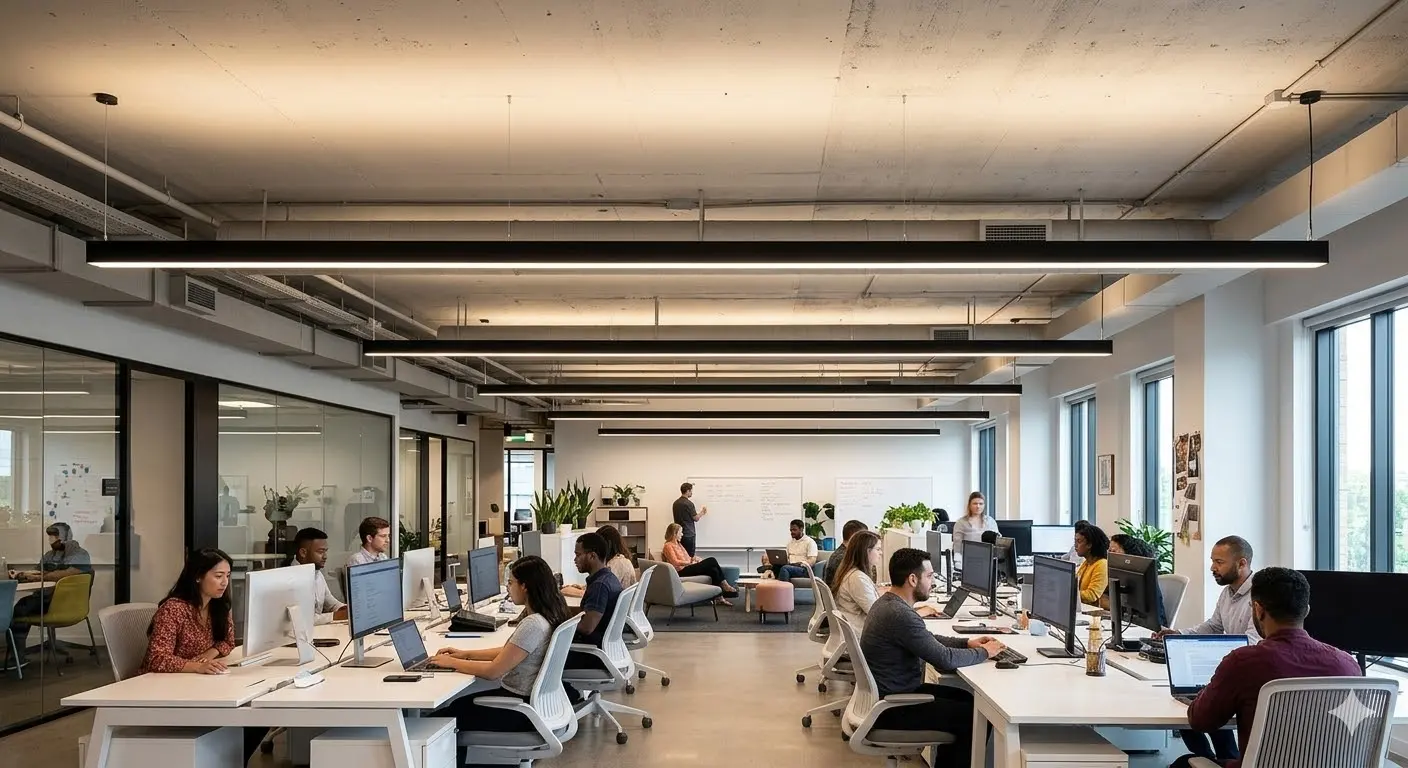
Open office layouts require lighting systems that provide broad, consistent coverage. Suspended linear lighting works particularly well in these environments.
Pendant linear fixtures are typically installed above workstation rows or collaborative areas. This configuration creates balanced illumination without excessive ceiling brightness.
Important advantages include:
- Direct and indirect lighting distribution
Many suspended fixtures combine downward task lighting with upward ambient lighting. - Visual alignment with furniture layout
Linear lights can run parallel to desk rows. This reinforces the spatial organization of the office. - Improved ceiling aesthetics
Suspended lighting helps reduce clutter on exposed ceilings. - Adjustable suspension height
Designers can optimize the mounting height for visual comfort and uniform illumination.
In large open offices, continuous linear systems often replace multiple individual fixtures. This approach simplifies installation and creates a more cohesive lighting design.
Architectural Linear Lighting Systems for Modern Offices
Architectural lighting plays an important role in workplace branding and spatial identity. Linear lighting systems help designers integrate illumination directly into the building architecture.
Common architectural applications include:
- Continuous ceiling lines
Linear fixtures can run across long ceiling sections without visible gaps. - Integrated ceiling systems
Lighting can be combined with acoustic panels or ventilation systems. - Geometric lighting layouts
Designers can create shapes such as squares, rectangles, or intersecting lines. - Feature lighting in reception areas
Linear lighting often highlights entrance zones or corporate branding walls.
Because of their modular design, many linear systems allow custom configurations. This flexibility makes them suitable for both small offices and large commercial headquarters.
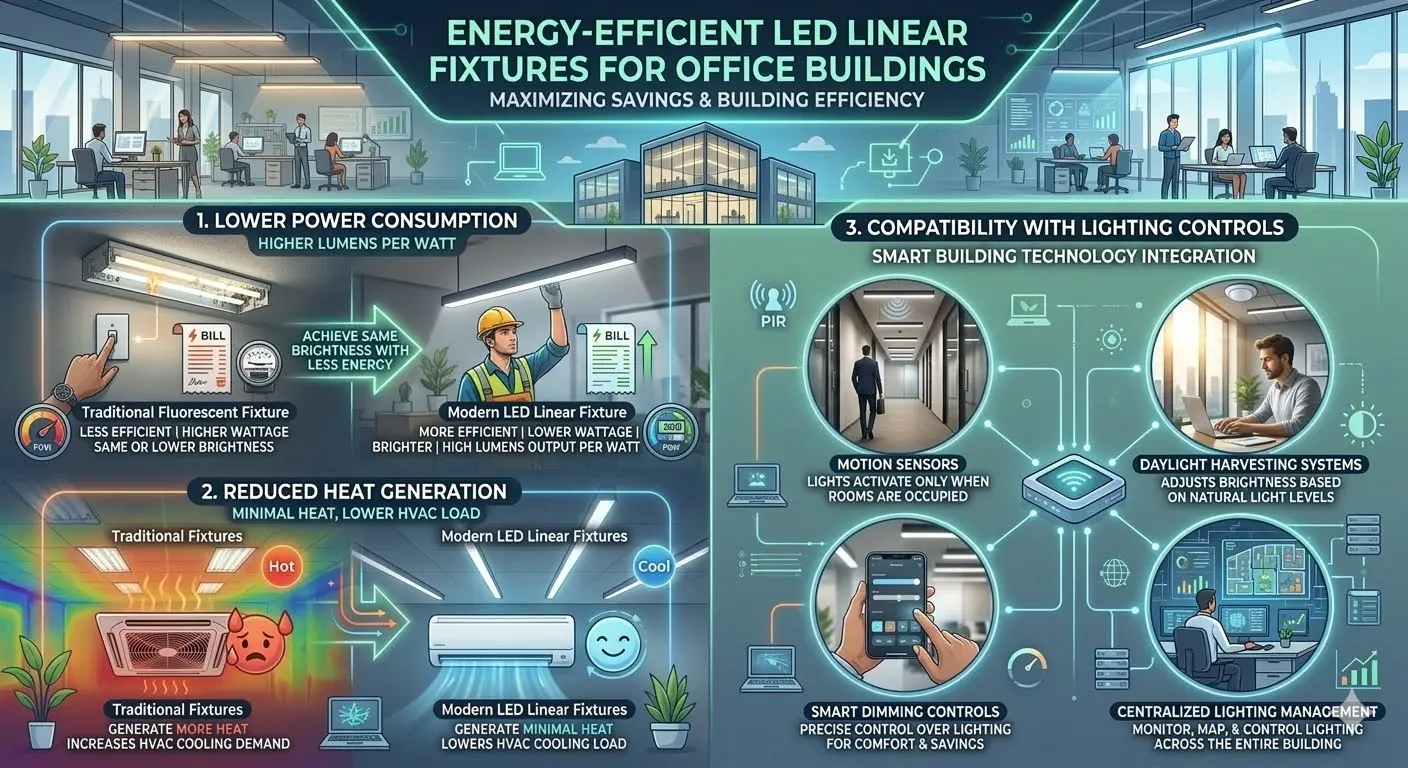
Energy-Efficient LED Linear Fixtures for Office Buildings
Energy consumption is a major concern for commercial buildings. Lighting systems operate for long hours each day, which directly impacts electricity costs.
Modern LED linear lighting addresses this issue through several efficiency advantages.
Lower power consumption
LED technology produces higher lumen output per watt compared with traditional fluorescent fixtures. This allows offices to achieve the same brightness with less energy.
Reduced heat generation
LED fixtures generate minimal heat. This lowers the cooling load on HVAC systems and improves overall building efficiency.
Compatibility with lighting controls
Many linear lighting systems integrate with smart building technologies, including:
- Motion sensors
- Daylight harvesting systems
- Smart dimming controls
- Centralized lighting management
These features help offices reduce unnecessary lighting usage during low-occupancy periods.
Linear Pendant Lighting Design Tips for Office Spaces
Successful office lighting design requires more than selecting the right fixture. Proper layout planning ensures optimal performance.
Consider the following design guidelines when specifying linear pendant lighting.
Maintain consistent fixture spacing
Even spacing ensures uniform light distribution across workstations. Designers often align fixtures with desk rows or circulation paths.
Choose the correct color temperature
Typical office lighting uses 4000K neutral white light. This temperature supports concentration and visual clarity.
Some collaborative areas may benefit from slightly warmer lighting for a relaxed atmosphere.
Prioritize high color rendering
A CRI above 80 is recommended for office environments. Higher color accuracy improves visual comfort and document readability.
Control glare
Glare can reduce productivity and cause visual fatigue. High-quality optical diffusers or micro-prismatic lenses help minimize this issue.
Plan for future flexibility
Modular linear lighting systems allow sections to be extended or reconfigured as office layouts change.
Continuous Linear Lighting for Workplace Aesthetics
Continuous linear lighting systems are increasingly popular in modern offices. Instead of separate fixtures, these systems form long uninterrupted lighting lines.
This approach offers several design advantages.
- Clean architectural appearance
Seamless lighting lines reinforce modern minimalist design. - Improved spatial guidance
Lighting lines can visually guide employees through corridors or work zones. - Enhanced ceiling design
Continuous lighting helps define the geometry of the ceiling. - Better lighting uniformity
Longer fixtures reduce shadows and uneven brightness.
In creative workplaces such as design studios or technology companies, continuous lighting also contributes to a contemporary brand image.
Conclusion
Modern office design requires lighting systems that combine efficiency, flexibility, and architectural aesthetics. Modern office linear lighting meets these requirements by providing uniform illumination, sleek design, and advanced energy performance.
Key advantages include:
- Clean and minimalist visual appearance
- Flexible installation options
- High energy efficiency
- Improved workplace comfort

