



Recessed Linear Led Light Fixture: Transform Retail Spaces With Seamless Lines of Light
By Vincent
In modern commercial retail, what shapes customers’ first impression includes not only the products themselves, but also the spatial atmosphere and visual texture perceived the moment they step into the store. A bright and tidy environment, clear and natural product colors, and lighting designs integrated with the building can all deliver a more comfortable shopping experience. If traditional commercial lighting relies too heavily on scattered spot lights, it may lead to a cluttered ceiling visually, excessive brightness in some areas or uneven light distribution. In contrast, Recessed Linear LED Light Fixture embeds linear light sources into the ceiling structure, creating visual order for modern commercial spaces with continuous and streamlined illumination.
So how do recessed linear lights transform retail spaces? And how should they be selected to balance design effects, lighting quality and long-term operational requirements?
1. Modern Retail Lighting Design Reflected in Apple Stores
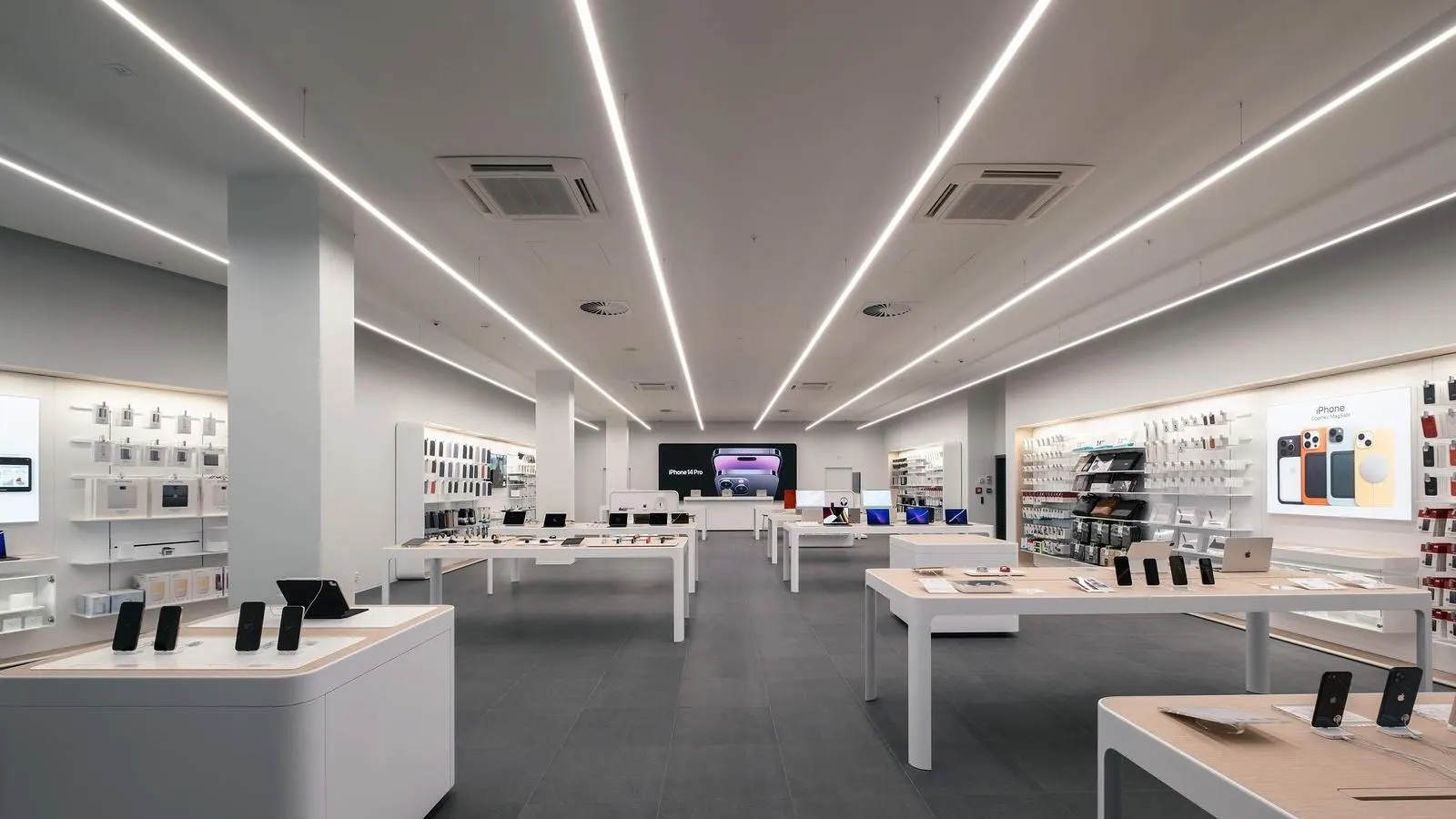
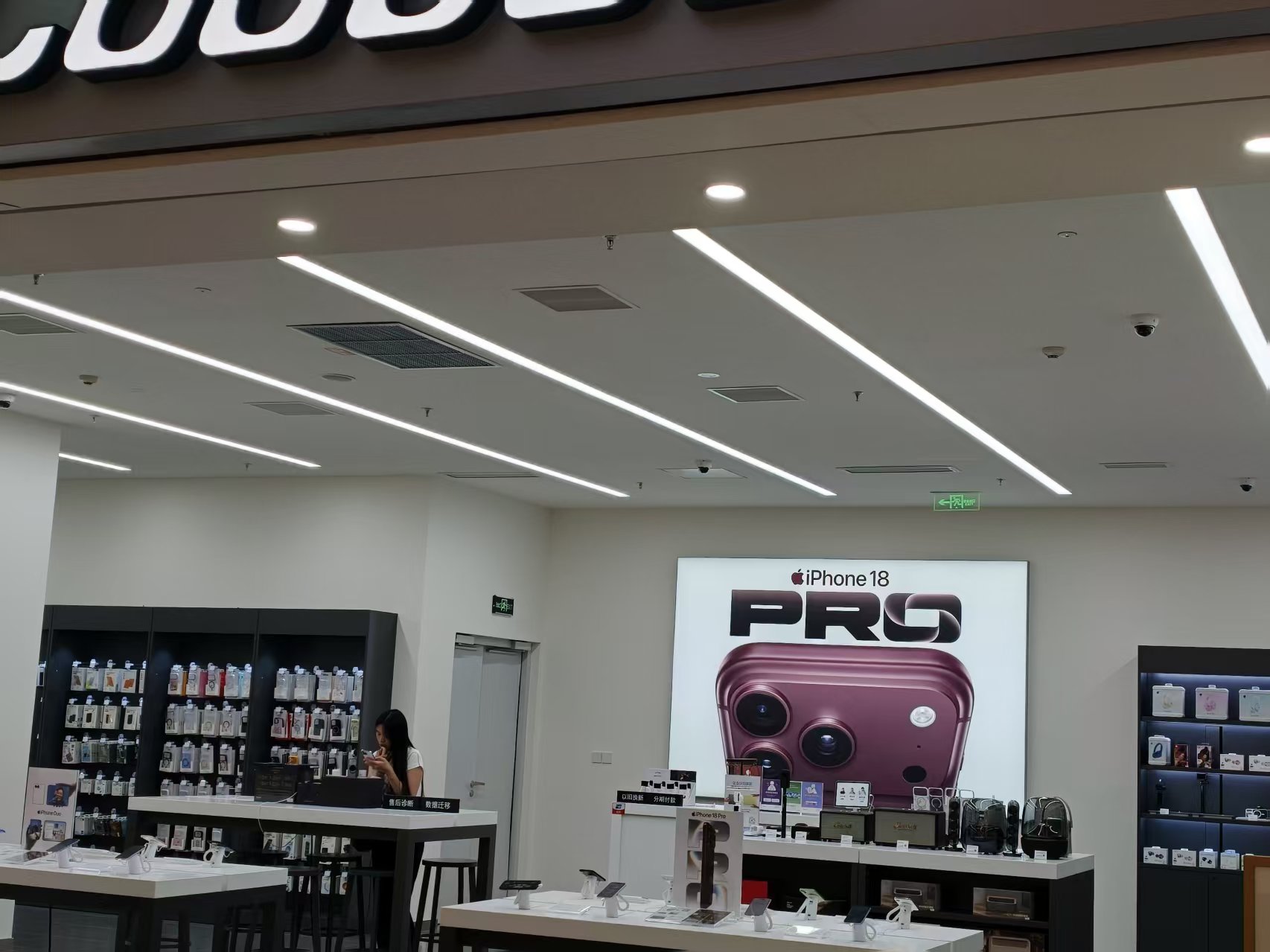
By observing real-scene photos of Apple Stores, we can identify a design approach worthy of reference: downlights at the storefront work in tandem with Recessed Linear Led Light Fixture on the interior ceiling to jointly create a bright, tidy and tech-infused space.
Downlights at the entrance illuminate the storefront and local areas, forming a distinct visual gateway. Inside the store, neatly arranged, depth-extending recessed linear lights are integrated into the ceiling design. The two types of lighting fixtures serve separate functions, creating clear spatial hierarchy at the entrance while maintaining a streamlined and unified overall visual effect.
This lighting combination delivers three notable outcomes.
First, the space is bright with a cleaner visual experience. Linear lights are arranged in an orderly fashion along the ceiling, reducing visual clutter caused by scattered light fixtures. Proper light distribution, fixture spacing and installation positions also facilitate even illumination and glare control.
Second, product colors and textures are displayed more favourably. Appropriate colour rendering, colour temperature and light distribution help present the body colours, metallic textures and fine details of electronic products in a natural way, preventing impaired display results caused by over-bright local areas or obvious colour shift.
Lastly, lighting and architecture share a consistent design language. Instead of being mere add-ons mounted on the ceiling, the light fixtures participate in spatial composition through continuous lines, lending greater integrity to the minimalist design.
This design concept offers valuable references for mobile phone stores, electronic product showrooms and other modern retail spaces.
2. Why are recessed linear Led light fixture gaining increasing importance in modern retail spaces?
2.1 Continuous light for a cleaner ceiling look
Traditional scattered light fixtures can make ceilings look fragmented. In contrast, embedded linear lights can be joined modularly to form continuous luminous strips, enabling lighting to blend more harmoniously with the architectural layout.
Whether extended in straight lines, arranged in parallel, or laid out to follow the spatial structure, linear light sources reinforce the sense of spatial order. For tech stores, boutique shops and modern apparel stores, this streamlined visual effect is ideal for highlighting a brand’s contemporary aesthetic.
2.2 Bright and layered lighting to enhance product display
Effective retail lighting is not merely about boosting brightness; it achieves synergy between ambient lighting and merchandise presentation.
Embedded linear lights can provide broad-area ambient illumination to deliver baseline brightness for stores. With properly set fixture spacing, light distribution design and installation positions, obvious uneven brightness can be reduced, letting customers browse products more comfortably.
For goods where appearance and colour matter greatly, such as mobile phones, clothing and cosmetics, selecting the right colour rendering index and colour temperature is equally critical. The lights should reproduce product colours as accurately as possible, avoiding cool shifts, yellow casts or loss of the original texture.
2.3 Minimised visual distraction to accentuate the space itself
Recessed mounting conceals the main body of fixtures inside the ceiling structure for a lighter visual presence. Light becomes an integral part of the space rather than an added decorative feature.
This design works especially well for retail environments with a minimalist style: a tidier ceiling brings walls, display counters and merchandise into clearer visual focus.
3. What retail scenarios are suitable for recessed linear light fixtures?
Different types of stores have different lighting requirements. Proper selection of light fixtures and layout allows linear lighting to deliver its full value.
Mobile phone and electronics stores: Drawing on the design concept of Apple Stores, recessed linear light fixtures can be used to create bright and uniform ambient lighting, supplemented by appropriate accent lighting to highlight display counters. Continuous light integrated with minimalist architectural design helps build a sense of technology and professionalism.
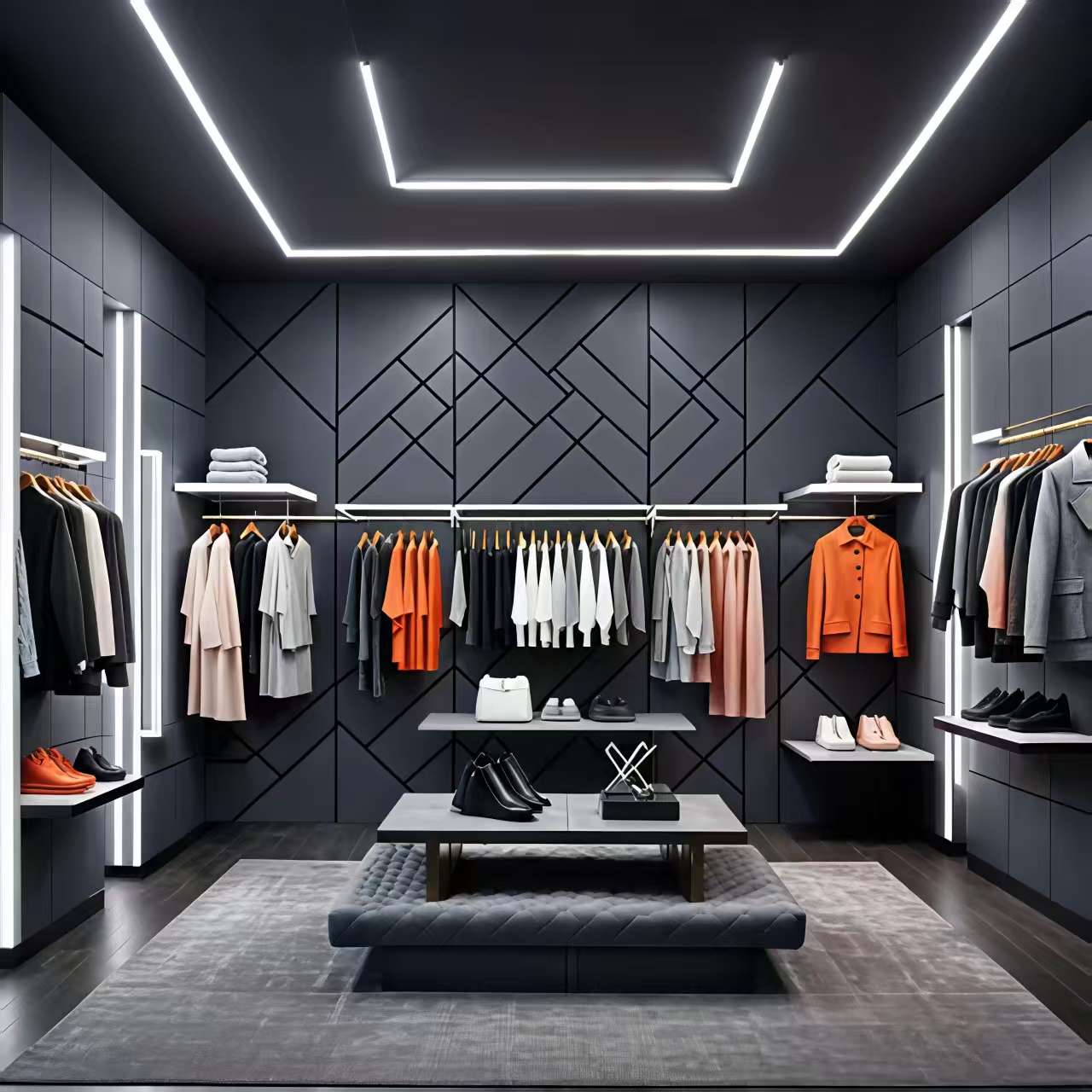
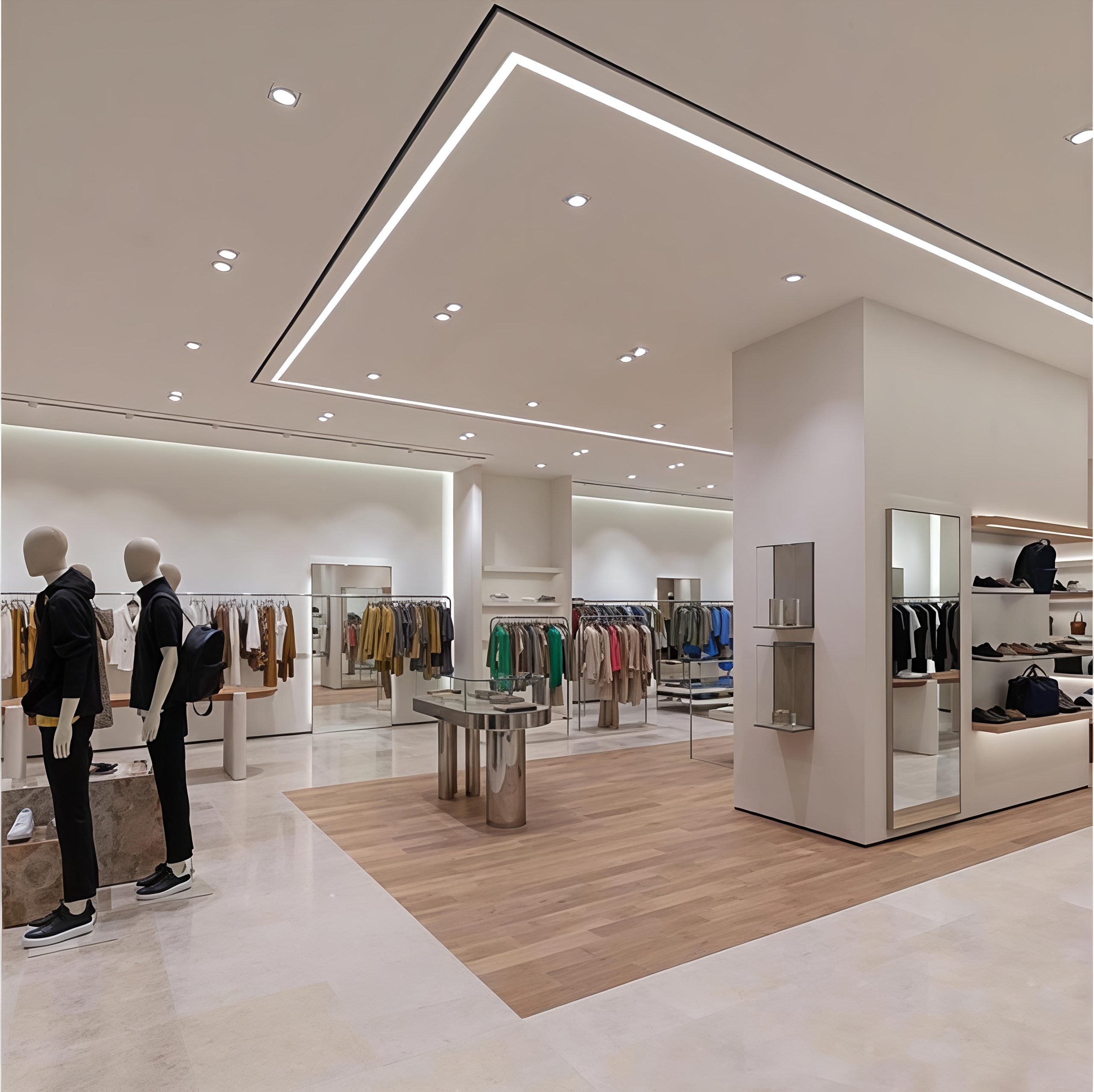
Clothing and boutique stores: Linear light fixtures can be installed along aisles, display zones or ceiling structures to establish a clear spatial order. Combined with track spotlights for clothing, mannequins and key displays, layered effects can be achieved between general ambient lighting and merchandise presentation.
Cosmetics and skincare stores: Even ambient lighting keeps the space bright, while high-color-rendering lighting helps reproduce packaging, colors and fine product details. The color temperature and color rendering performance of fixtures should be selected according to actual products and display requirements.
Supermarkets and daily retail spaces: Linear lights arranged along aisles or shelves strengthen the sense of orientation, making shelf areas and customer traffic routes more distinct. Layout planning should also take shelf height, merchandise obstruction and illuminance requirements of working surfaces into consideration.
4. Recessed linear Led lights and track lights: coordinating general lighting and accent lighting
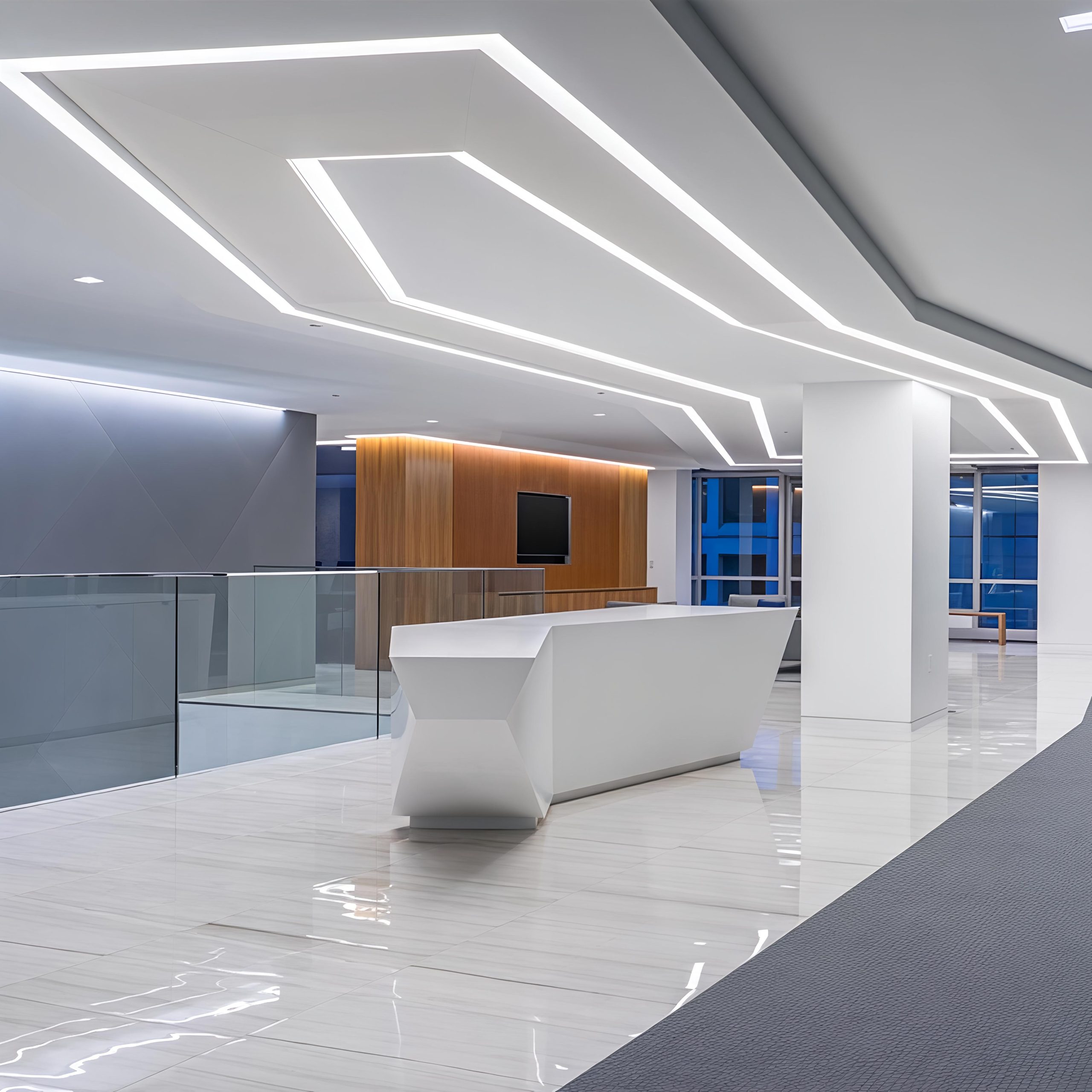
In commercial lighting design, a single type of luminaire often cannot meet all requirements. A well-planned combination of recessed linear lights, track lights and downlights usually delivers more flexible lighting effects.
Recessed linear lights are mainly used for ambient lighting, creating the basic brightness and visual order of the space with continuous light. Downlights are suitable for supplementary lighting at storefronts, entrances and partial areas. Track lights allow adjustable beam directions to focus light on merchandise, display counters or key brand zones.
For example, in a mobile phone store, recessed linear lights on the ceiling create a bright and consistent environment, downlights at the storefront enhance lighting for the entrance area, and track lights can highlight featured products according to the layout of display counters.
This layered design preserves the minimalist visual effect of the ceiling while offering greater adjustability for product displays. The specific quantity, power, light distribution and installation position of luminaires shall be determined based on space dimensions and lighting simulation results.
5. How to select a suitable Recessed Linear LED Light Fixture?
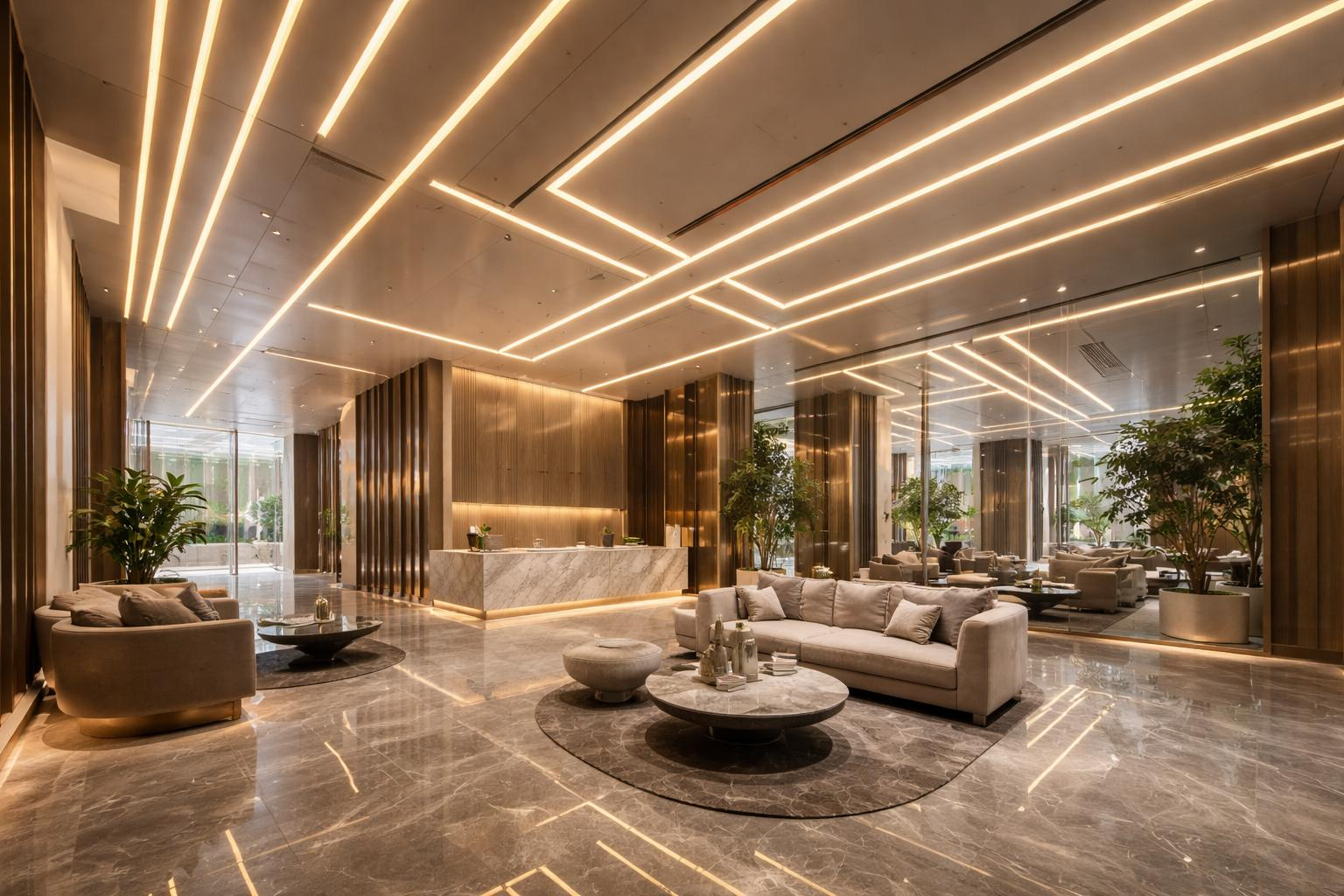
Besides appearance design, the optical performance, structure and control method of the luminaire also affect the final effect.
First, pay attention to the splicing structure and installation method. For retail projects requiring long continuous light runs, verify the connection structure, installation dimensions, recess depth and available layout options of the fixture to ensure compatibility with the ceiling design.
Second, focus on luminous efficacy and energy consumption. Under the premise of meeting the project illuminance requirements, selecting LED fixtures with appropriate luminous efficacy helps control long-term operating energy consumption. Judging the performance solely based on lm/W is insufficient; actual luminous flux, light distribution and installation conditions should also be considered comprehensively.
Third, check the color rendering index and color temperature. For stores selling electronic products, apparel and cosmetics, select proper CRI and color temperature according to product characteristics, so that goods can present visual effects consistent with brand positioning under in-store lighting.
Fourth, attach importance to glare control. The luminaire structure, light emission mode, mounting height and viewing angle all affect visual comfort. Glare performance shall be evaluated based on actual design requirements rather than judged only by the fixture appearance.
Fifth, confirm dimming and smart control requirements. If the project requires zone control, scene switching or dimming, verify in advance whether the luminaire supports required control protocols such as DALI and 0–10V, as well as the corresponding driver configuration.
6. Custom recessed linear lights for lighting that fits seamlessly into spatial design
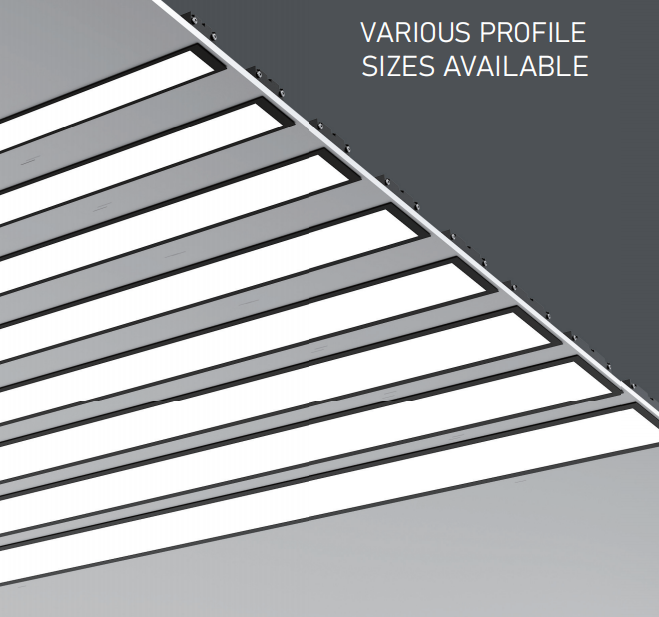
Every retail store features unique ceiling structures, display layouts and brand aesthetics. Standard lighting fixtures suit many common requirements, yet custom solutions deliver greater value for projects calling for bespoke lengths, continuous splicing or special arrangements.
By carefully planning fixture lengths, connection methods and lighting routing, linear light strips can integrate more naturally into architectural design and reduce layout compromises. For lighting contractors, interior design firms and commercial lighting distributors, partnering with suppliers that offer product configuration support and lighting simulation services also facilitates alignment between design and lighting requirements at the early project stage.
Powerstar specializes in commercial LED lighting. It can discuss specifications, splicing arrangements and lighting plans for recessed linear lights based on specific project needs, helping customers strike an optimal balance among spatial design, lighting performance and product configuration.
Conclusion: Let every ray of light become part of spatial design
From the bright entrances of Apple Stores to the neat, continuous ceiling lighting inside, outstanding retail lighting design always centers on one goal: bringing greater order to the space, properly showcasing merchandise, and delivering a comfortable visual experience for customers.
Recessed linear LED fixtures are not merely lighting products; they represent a way to integrate light with architectural design. When continuous linear lighting is sensibly combined with downlights and track lights, retail spaces can achieve a better balance between a minimalist visual style and practical lighting functions.
If you are planning a retail store lighting project, feel free to contact Powerstar to discuss commercial lighting solutions tailored to your spatial layout, product display requirements and design concepts.

