



Reducing Headaches and Eye Strain in Commercial Spaces with Low Glare Recessed Grille Light Solutions
By Vincent
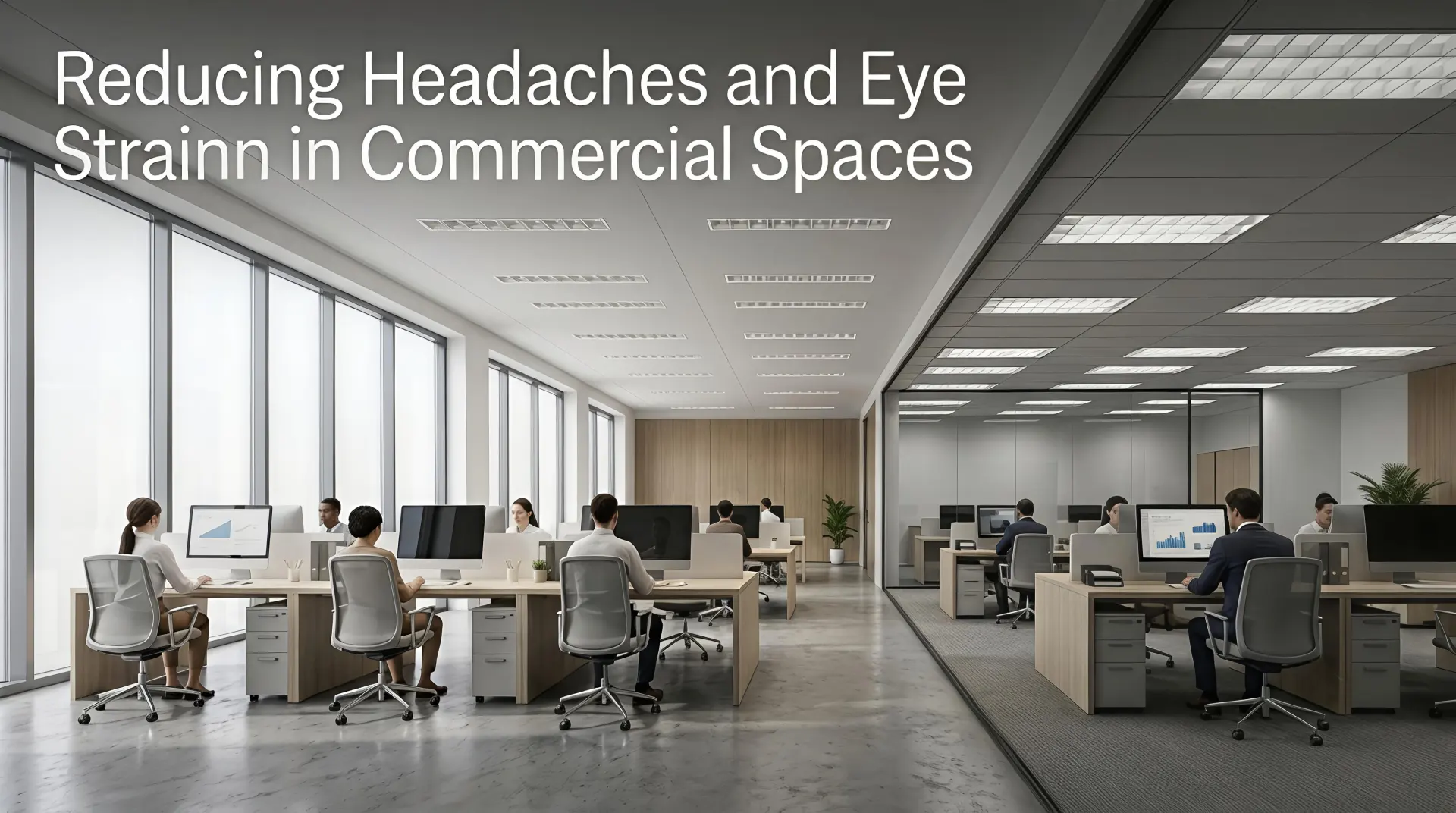
Modern commercial interiors are designed to feel open, clean, and visually sophisticated. Yet many offices, retail stores, and hospitality environments still suffer from one overlooked problem: lighting glare. A poorly designed lighting setup can easily lead to eye strain, headaches, screen reflections, and long-term visual discomfort. That’s why the low glare recessed grille light has become a preferred solution in today’s architectural lighting projects.
In workplaces where employees spend hours in front of computer screens, or in luxury retail environments where customer experience matters, visual comfort is no longer optional. Lighting now plays a direct role in productivity, wellness, and even brand perception.
Rather than simply making a space brighter, modern commercial lighting must create an environment where people can comfortably work, shop, meet, and relax without feeling visually fatigued.
Why Traditional Commercial Lighting Causes Visual Fatigue
Many commercial spaces still rely on standard downlights or large luminous panel fixtures that prioritize brightness over comfort. While these fixtures may deliver sufficient illumination levels, they often create excessive glare and uneven light distribution.
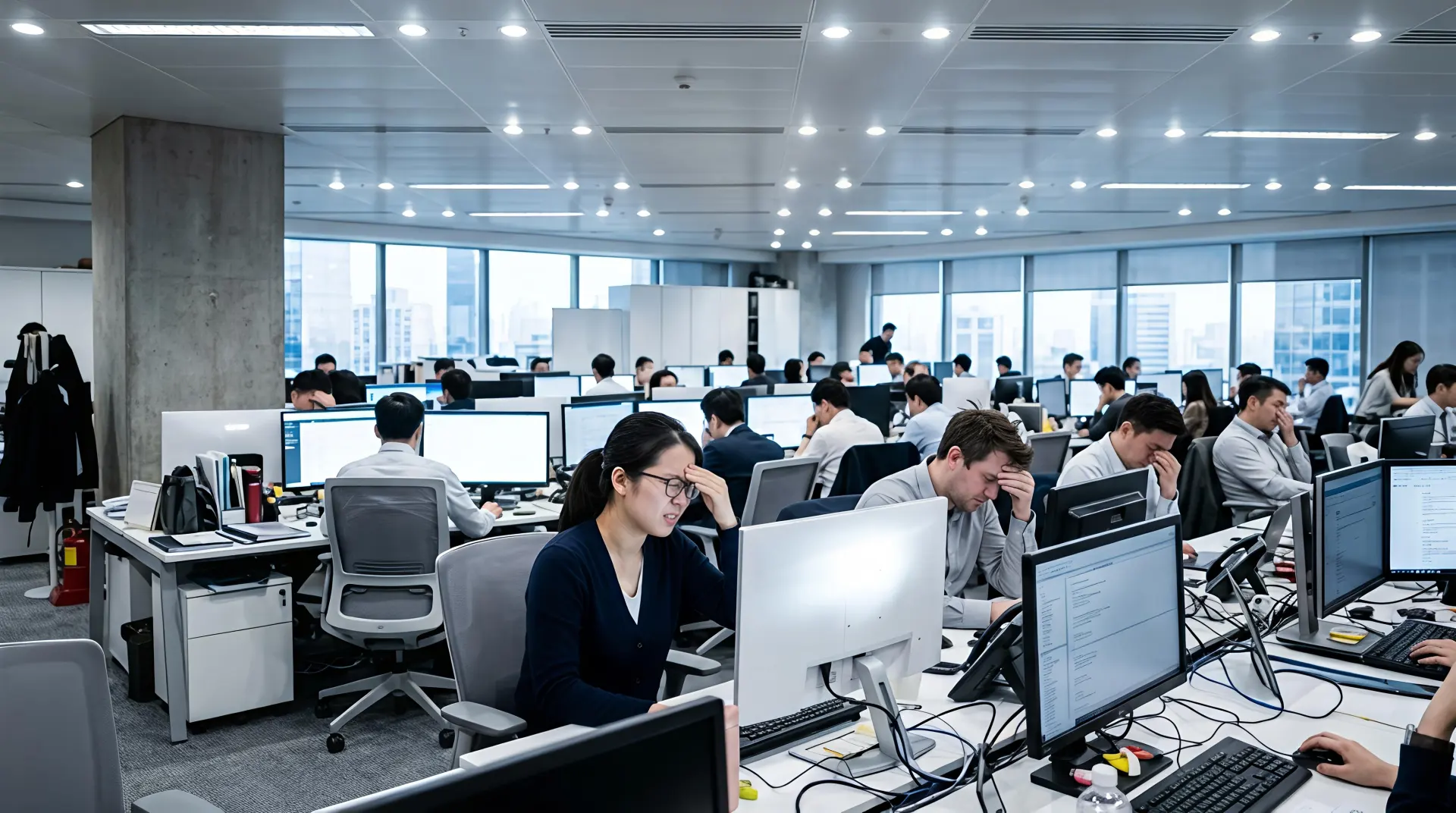
Two major types of glare commonly affect commercial interiors:
Direct Glare from Conventional Ceiling Fixtures
Traditional recessed lights often expose the LED source directly to the eye. When occupants can clearly see a bright light source overhead, the eyes continuously adjust to the harsh contrast, leading to discomfort over time.
Reflected Glare on Screens and Surfaces
In offices, glare reflected from computer monitors is one of the biggest causes of visual fatigue. Retail stores and hospitality spaces also experience reflected glare from glossy floors, marble counters, and glass surfaces.
Over time, these lighting conditions can contribute to:
- Eye strain
- Dry or watery eyes
- Tension headaches
- Reduced concentration
- Lower workplace productivity
- Customer discomfort in retail settings
According to research associated with visual comfort standards in WELL and LEED-certified environments, lighting quality has a measurable impact on occupant wellness and performance.
How Anti-Glare Recessed Lighting Improves Visual Comfort
Unlike traditional ceiling lights, anti-glare recessed lighting systems are engineered specifically to minimize visual discomfort.
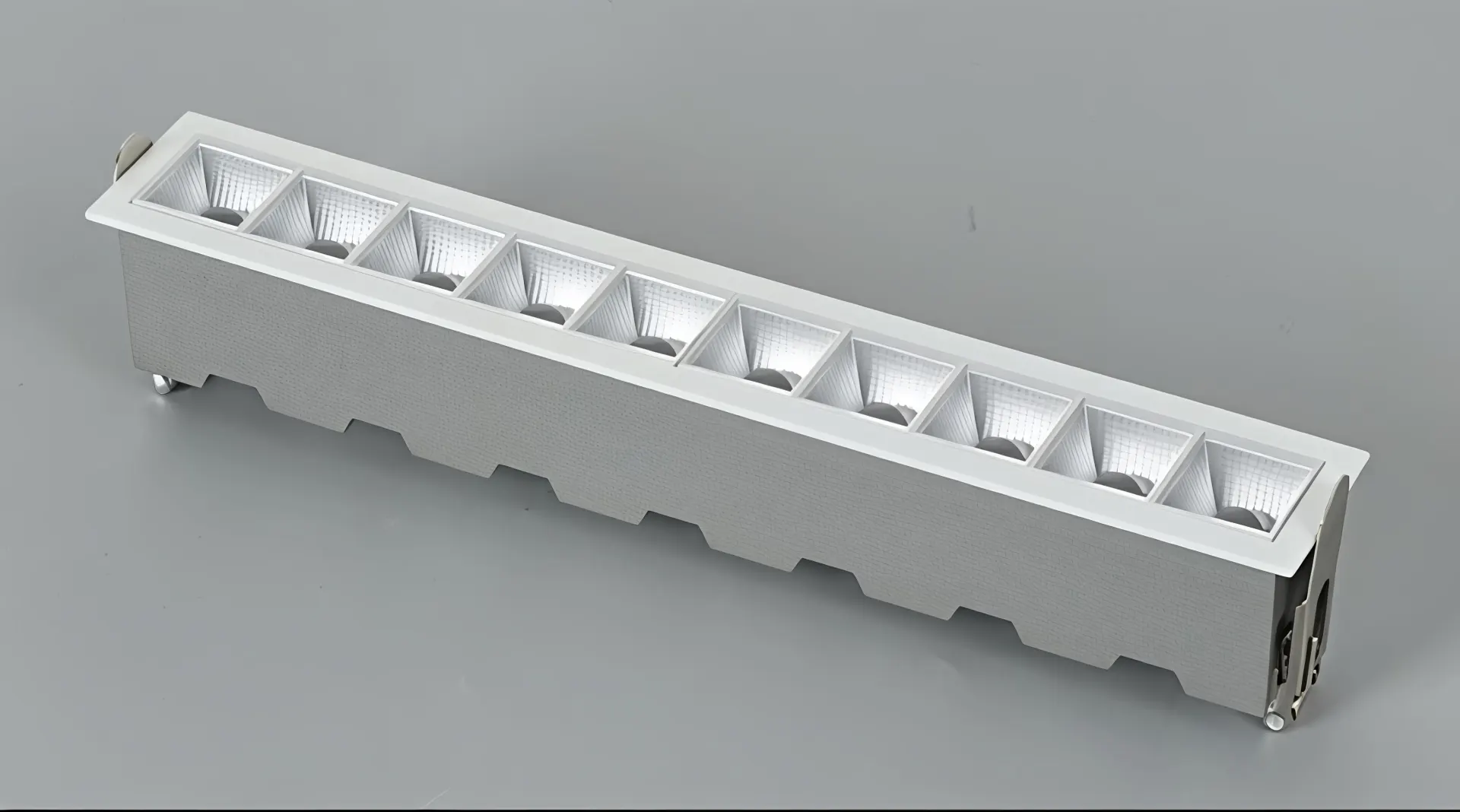
The goal is not simply reducing brightness, but controlling how light interacts with human vision.
Understanding UGR in Low Glare Commercial Lighting
In professional lighting design, glare is measured using the Unified Glare Rating (UGR).
The lower the UGR value, the more visually comfortable the lighting environment becomes.
| UGR Level | Typical Application |
|---|---|
| UGR > 22 | Standard commercial lighting |
| UGR < 19 | Offices and workspaces |
| UGR < 16 | Premium visual comfort areas |
| UGR < 13 | Galleries and luxury retail |
Many standard downlights exceed UGR 22, especially in open office environments. In contrast, a properly designed low glare recessed grille light can maintain UGR below 19 while still delivering strong illumination performance.
Deep Recessed Optical Design Reduces Direct Glare
One of the biggest differences between conventional fixtures and architectural low glare lighting is the recessed depth.
Instead of placing the LED flush with the ceiling, the light source is positioned deeper inside the housing. This prevents direct visibility of the high-brightness LED chip and softens the viewing angle.
This deep recessed structure significantly reduces eye irritation in spaces where people remain for long periods.
Grille Optics Create Better Light Control
The grille structure itself plays a major role in glare reduction.
A recessed grille lighting fixture uses optical shielding to precisely direct light downward while blocking excessive side glare. This helps create a softer and more balanced lighting environment.
Benefits include:
- Reduced monitor reflections
- Better visual comfort
- More controlled beam distribution
- Cleaner ceiling appearance
- Less visual stress during long work sessions
Dark Light Technology Enhances Architectural Aesthetics
High-end commercial lighting increasingly uses what designers call “dark light” technology.
With black reflectors or specular optical surfaces, the fixture appears visually dark when viewed from normal angles, even while illuminating the space effectively.
This “invisible light source” effect has become especially popular in:
- Luxury retail stores
- Premium offices
- Hotels
- Art galleries
- Showrooms
The result is a cleaner architectural ceiling and a more refined visual atmosphere.
Key Benefits of Low Glare Grille Lighting in Commercial Spaces
Investing in visual comfort lighting provides more than aesthetic value. It directly affects how people experience a space.
Better Workplace Wellness and Productivity
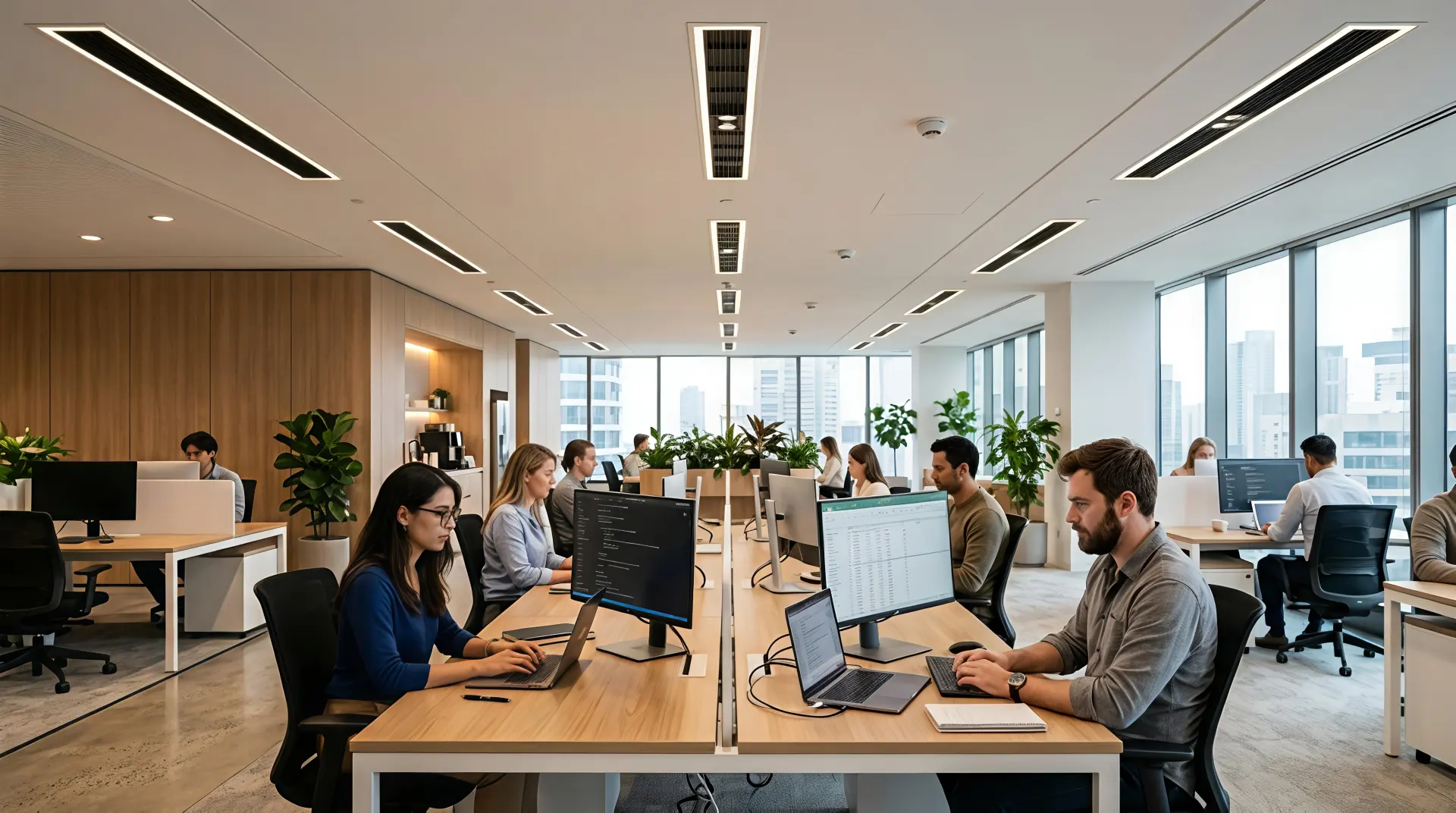
Employees working under low glare office lighting typically experience less eye fatigue and improved concentration throughout the day.
In modern workplaces, comfortable lighting supports:
- Longer focus periods
- Reduced visual stress
- Improved employee wellbeing
- Better collaboration environments
Enhanced Customer Experience in Retail Environments
In retail and hospitality spaces, harsh lighting can make customers feel uncomfortable without realizing why.
A low glare architectural lighting solution creates a calmer and more inviting atmosphere, encouraging visitors to spend more time inside the space.
Improved Ceiling Integration and Modern Design Appeal
Compared with oversized luminous panels or exposed downlights, recessed grille fixtures integrate much more naturally into contemporary ceilings.
Architects and interior designers often prefer these fixtures because they maintain clean ceiling lines and support minimalist interior concepts.
Comparing Standard Downlights vs. Low Glare Recessed Grille Fixtures
| Feature | Standard Downlight | Low Glare Recessed Grille Light |
| Visible Light Source | High | Minimal |
| Visual Comfort | Moderate to Poor | Excellent |
| UGR Performance | Often >22 | Typically <19 |
| Screen Reflection Control | Limited | Strong |
| Ceiling Aesthetics | Basic | Architectural |
| Suitable for Long-Term Use | Less Ideal | Highly Suitable |
Best Applications for Low Glare Ceiling Grille Fixtures
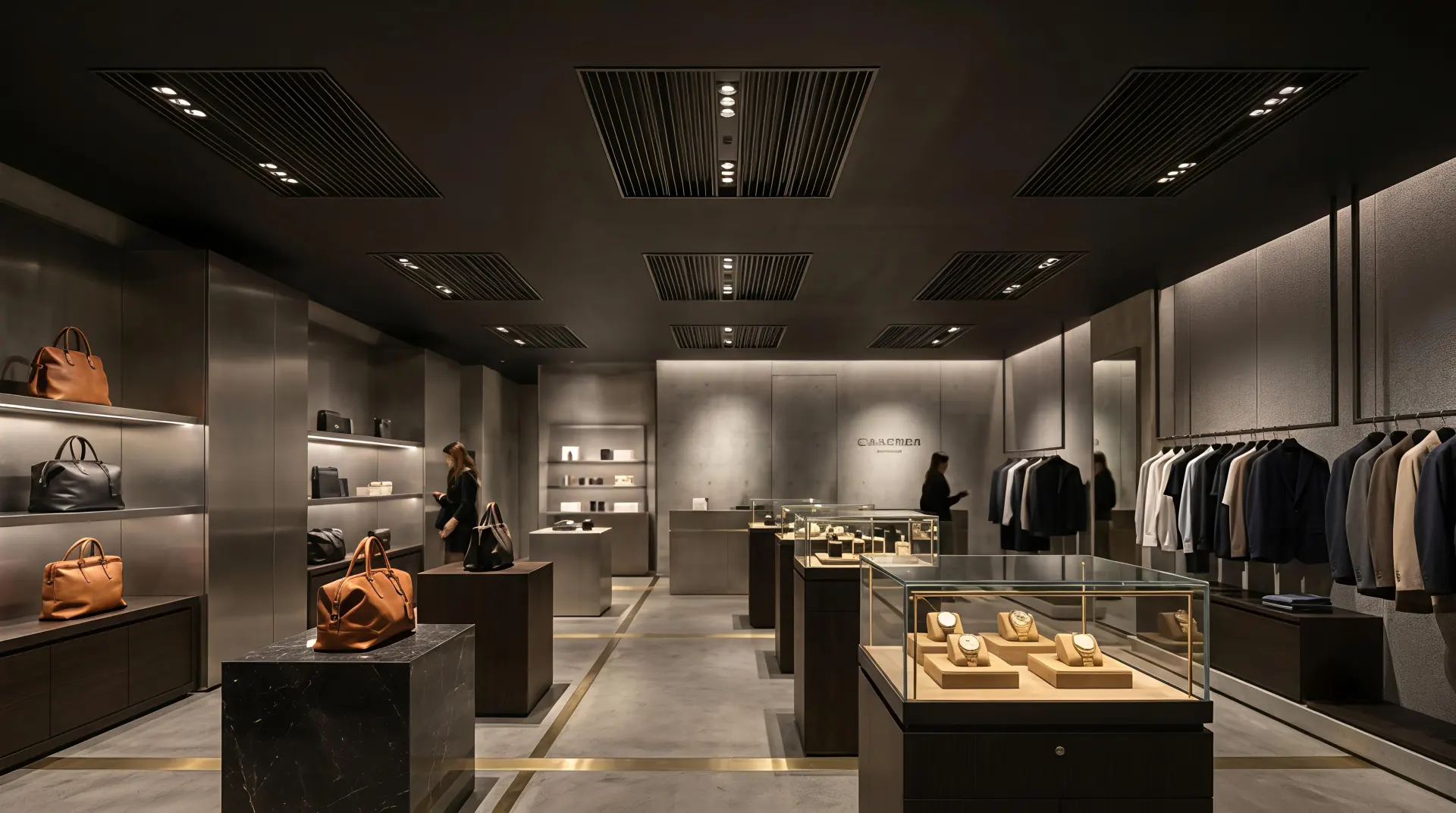
Open Office Spaces
Open-plan offices benefit greatly from low glare office lighting because employees spend extended periods working on screens.
Executive Meeting Rooms
Comfortable lighting improves focus during presentations, video conferences, and long meetings.
Luxury Retail Stores and Showrooms
Accent lighting with controlled glare enhances product presentation without creating discomfort.
Hospitality and Reception Areas
Hotels, lounges, and reception spaces require visually relaxing environments that feel premium and welcoming.
Educational and Healthcare Facilities
Schools, clinics, and libraries benefit from flicker-free anti-glare commercial lighting that reduces long-term visual fatigue.
What to Look for When Choosing an Architectural Anti-Glare Lighting Fixture
When selecting a low glare recessed grille light for commercial projects, several specifications matter.
Look for:
- UGR below 19
- Deep recessed anti-glare structure
- High CRI (90+ recommended)
- Flicker-free LED drivers
- Black reflector or dark light optics
- Proper beam angle selection
- High efficacy performance
Long-tail keywords commonly associated with these solutions include:
- low glare office lighting
- anti glare recessed lighting for offices
- architectural recessed grille lighting
- UGR19 commercial lighting
- deep recessed anti glare downlight
FAQ About Low Glare Recessed Grille Lighting
What is a low glare recessed grille light?
It is a recessed commercial lighting fixture designed with optical grilles and deep-set LEDs to reduce direct glare and improve visual comfort.
Why is UGR important in office lighting?
UGR measures how much glare a lighting fixture creates. Lower UGR values help reduce eye strain, screen reflections, and visual fatigue in workplaces.
Are low glare fixtures only for offices?
No. They are widely used in retail stores, hotels, galleries, healthcare facilities, and other commercial environments where comfort and aesthetics matter.
Does anti-glare lighting reduce brightness?
Not necessarily. High-quality anti-glare commercial lighting can still provide strong illumination while controlling how light reaches the eye.
What beam angle is best for commercial spaces?
It depends on the application. Narrow beams work well for accent lighting, while wider beams are better for general ambient illumination.
The Future of Commercial Lighting Is Human-Centered
Today’s commercial spaces are no longer designed solely around brightness and efficiency. Human comfort has become a central part of modern lighting design.
By reducing glare, minimizing eye strain, and improving spatial aesthetics, low glare recessed grille lighting helps create environments where people can work, shop, and interact more comfortably.
The best lighting solutions are often the ones people barely notice — because the space simply feels calm, balanced, and visually effortless.

