



Retail Track Lighting System: Combining Linear Lights and Spotlights for Better Store Lighting
By JC
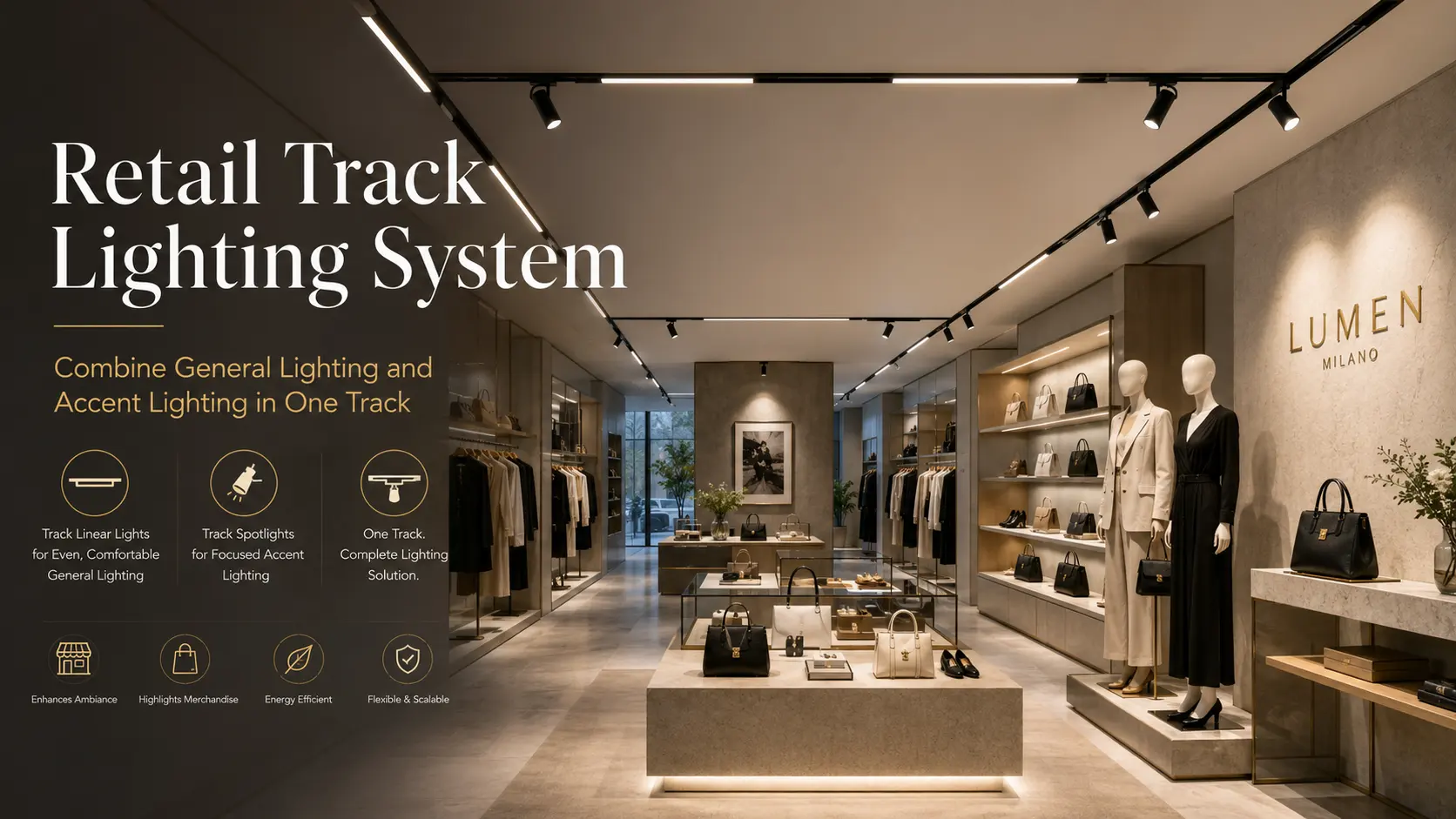
A well-designed retail track lighting system should do more than simply make a store bright. It should provide uniform general lighting, highlight key products, guide customer attention, and remain flexible when store layouts change. This is why many modern retail projects combine track linear lights with LED track spotlights on the same track system.
Track linear lights are mainly used to create broad and continuous illumination across aisles, shelves, and open retail areas. Track spotlights provide more focused accent lighting for mannequins, promotional displays, products, and feature walls. By combining both fixture types, retailers can achieve a more balanced lighting environment without installing separate lighting systems.
1. Why Retail Stores Need a Complete Track Lighting System
Retail lighting has a direct influence on product visibility, customer comfort, and the overall appearance of a store. A space with insufficient general lighting may look dark and uninviting, while a store that relies only on uniform lighting can appear flat and visually uninteresting.
A complete retail track lighting system solves both problems by combining general and accent lighting.
1.1 General Lighting for Visual Comfort
General lighting provides the basic illumination customers need to move comfortably through a store. It helps them see aisles, shelves, product labels, and circulation areas clearly.
Track linear lights are particularly suitable for this role because they produce a broader and more continuous light distribution than conventional narrow-beam spotlights. When installed along the main track lines, they can reduce dark areas and improve overall brightness consistency.
1.2 Accent Lighting for Product Emphasis
Accent lighting creates contrast between important products and the surrounding environment. It draws attention to selected displays and helps retailers establish a visual hierarchy.
LED track spotlights are commonly used to highlight:
- New product displays
- Mannequins
- Promotional areas
- Feature walls
- Luxury products
- Window displays
- Seasonal collections
The direction and beam angle of a track spotlight can usually be adjusted, allowing retailers to change the lighting whenever the display layout is updated.
1.3 Flexible Lighting for Changing Store Layouts
Retail stores frequently move shelves, change merchandise, and redesign promotional areas. Fixed lighting may no longer match the new layout after these changes.
A retail track lighting system allows fixtures to be repositioned along the track. Track linear lights and spotlights can be added, removed, rotated, or relocated according to the latest store arrangement.
This flexibility makes track lighting especially suitable for supermarkets, fashion stores, showrooms, boutiques, and other spaces where displays change regularly.
2. The Role of Track Linear Lights in Retail Lighting
Track linear lights are designed to provide broad and uniform illumination while maintaining the flexibility of a track-mounted system.
Unlike suspended linear fixtures or fixed recessed lights, track linear lights can be installed directly onto compatible lighting tracks. This makes them easier to reposition and integrate with other track-mounted fixtures.
2.1 Uniform Lighting Across Aisles
In supermarkets and large retail stores, inconsistent lighting between fixtures can create visible dark areas along aisles. This can make shelves look uneven and reduce product visibility.
Track linear lights provide a longer light-emitting surface, helping distribute light more continuously across the floor and merchandise areas.
When positioned correctly, they can create more uniform illumination along:
- Supermarket aisles
- Clothing racks
- Retail shelves
- Display tables
- Checkout areas
- Open circulation zones
2.2 Efficient General Lighting
Modern track linear lights can achieve high luminous efficacy, allowing stores to produce sufficient brightness with lower power consumption.
High-efficiency models can be particularly useful in commercial spaces where lighting operates for many hours every day. Improved efficiency may help reduce energy consumption while maintaining the required illuminance level.
For retail projects, the selected power should depend on ceiling height, aisle width, fixture spacing, optical distribution, and the brightness requirements of the space.
2.3 Reduced Glare for Customer Comfort
Retail customers may spend a long time browsing products. Excessive glare can cause visual discomfort, especially when exposed LED light sources are installed directly within the customer’s field of view.
Track linear lights with deep louver optics or anti-glare structures can help hide the light source and reduce direct glare. A well-controlled optical system can provide comfortable illumination while still maintaining sufficient brightness.
Low-glare track linear lighting is particularly useful in:
- Fashion stores
- Offices within retail spaces
- High-end boutiques
- Furniture showrooms
- Electronics stores
- Luxury retail environments
3. The Role of Track Spotlights in Retail Lighting
While track linear lights provide general illumination, track spotlights are responsible for creating emphasis, contrast, and visual focus.
A store illuminated only by linear lighting may be bright, but it can lack depth. Spotlights add layers to the lighting design and help customers notice important products.
3.1 Highlighting Products and Displays
Track spotlights can direct light precisely toward specific merchandise. This makes products appear more prominent than the surrounding area.
For example, a fashion store may use linear lights to illuminate the entire sales floor, while spotlights highlight mannequins and new collections. A supermarket may use linear fixtures for aisle lighting and spotlights for promotional end caps or fresh food displays.
This combination helps retailers control where customers look first.
3.2 Adjustable Beam Angles
Different retail displays require different beam angles.
A narrow beam can be used for small products or long-distance accent lighting. A wider beam can cover larger display areas, mannequins, or feature walls.
Adjustable or zoomable track spotlights provide additional flexibility because the beam angle can be changed without replacing the fixture. This is useful for stores that frequently adjust product displays.
3.3 Creating Contrast and Visual Depth
Good retail lighting does not need to make every area equally bright. A certain level of contrast helps the store appear more dynamic and visually attractive.
Track spotlights can create brighter focal points against a softer general lighting background. This contrast gives the space more depth and can improve the perceived value of displayed products.
However, the contrast should remain comfortable. Extremely bright spotlights combined with dark surroundings may create glare or visual fatigue.
4. How Track Linear Lights and Spotlights Work Together
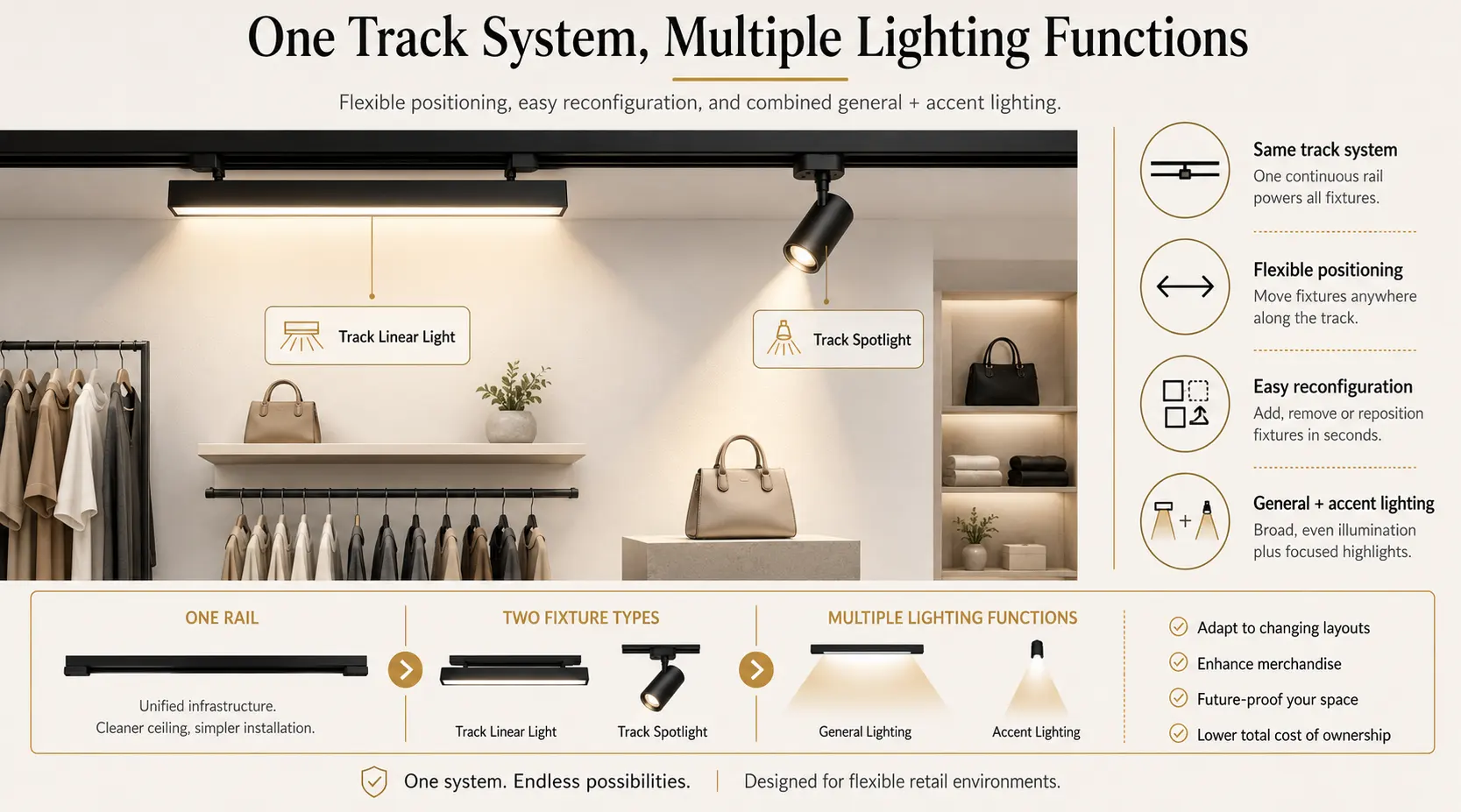
The most effective retail track lighting system uses each fixture for the task it performs best.
Track linear lights provide the base layer of illumination, while track spotlights create the accent layer.
4.1 Creating a Layered Lighting Design
Layered retail lighting usually includes:
- General lighting for overall visibility
- Accent lighting for products and displays
- Decorative lighting for atmosphere and brand identity
Track linear lights can form the general lighting layer. Track spotlights can handle the accent lighting layer. Decorative pendant lights or architectural lighting may then be added where necessary.
This approach creates a more complete retail environment than relying on a single fixture type.
4.2 Reducing the Number of Separate Lighting Systems
Without a track-based solution, a store may need separate recessed lights, suspended linear fixtures, and adjustable spotlights.
By installing linear lights and spotlights on the same compatible track system, the project can become simpler and more flexible.
Both fixture types can share the same ceiling track layout, while still performing different lighting functions. This can reduce visual clutter and make future lighting changes easier.
4.3 Supporting Different Retail Zones
Different areas of the same store may require different combinations of light.
For example:
- Main aisles may use more track linear lights.
- Promotional areas may use more spotlights.
- Checkout counters may need soft general lighting with focused task lighting.
- Window displays may rely heavily on adjustable spotlights.
- Shelving areas may use linear lighting combined with narrow accent beams.
A flexible track system allows the fixture combination to be adapted for each zone.
5. Applications of Retail Track Lighting Systems
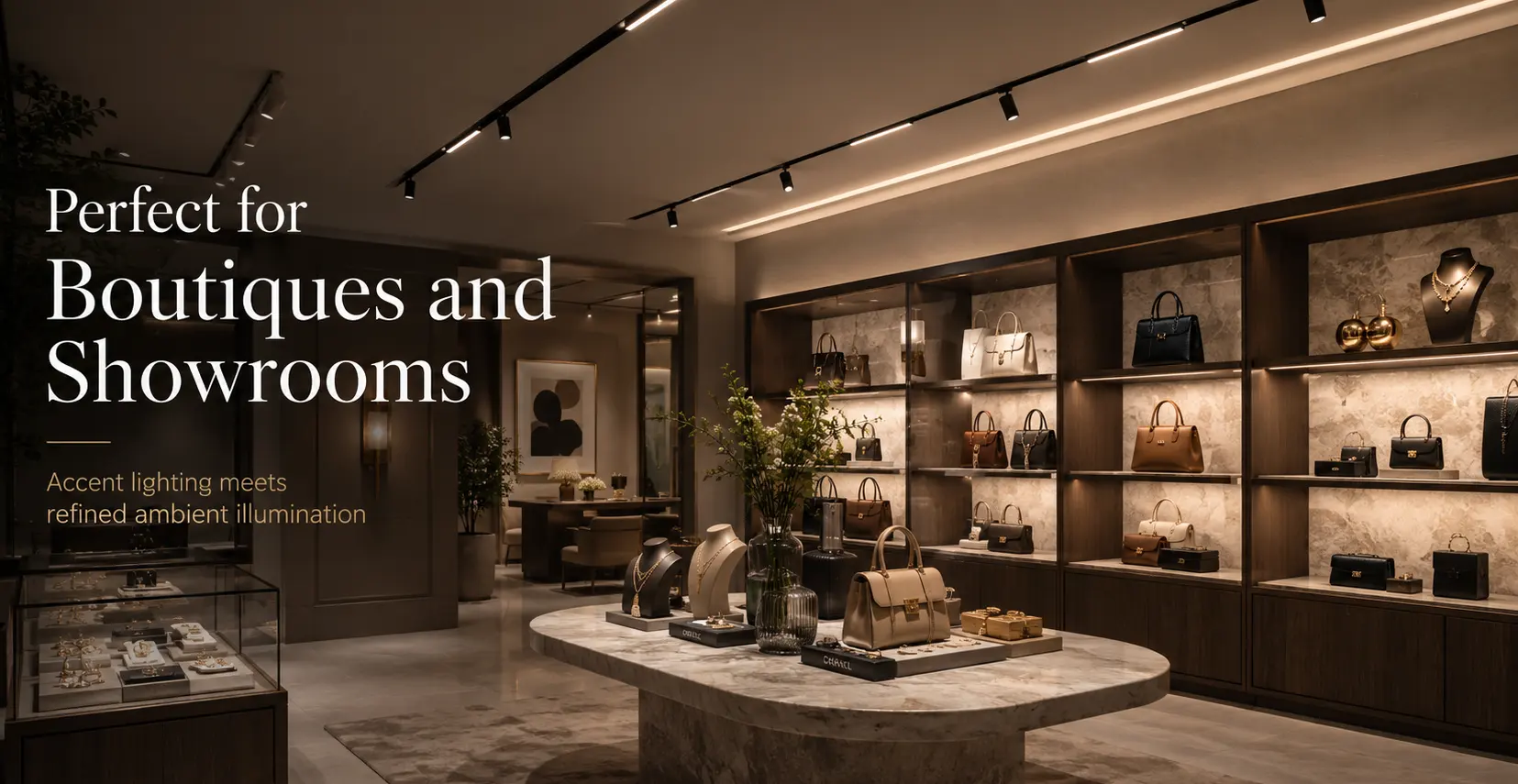
A combined system of track linear lights and spotlights can be used in many commercial environments.
5.1 Supermarkets
Supermarkets require bright and uniform aisle lighting, but they also need accent lighting for fresh food, promotional displays, and special product areas.
Track linear lights can illuminate shelves and circulation paths, while spotlights can highlight fruit, bakery products, wine displays, or promotional end caps.
5.2 Fashion Stores
Fashion retail lighting should show garment colors clearly while creating an attractive atmosphere.
Linear track lighting can provide comfortable general illumination across clothing racks. Track spotlights can emphasize mannequins, wall displays, and new collections.
High color rendering is important because customers need to see fabrics and colors accurately.
5.3 Showrooms
Showrooms often change product locations and display layouts. A flexible retail track lighting system allows the lighting arrangement to change with the products.
Track linear lights can support general visibility, while adjustable spotlights can focus on furniture, appliances, vehicles, or display samples.
5.4 Boutiques and Luxury Stores
Boutiques usually require lower overall brightness and stronger visual contrast.
Anti-glare track linear lights can provide a soft lighting foundation, while high-quality spotlights create precise highlights on selected merchandise.
The result is a more refined and premium-looking environment.
6. Key Factors When Choosing a Retail Track Lighting System
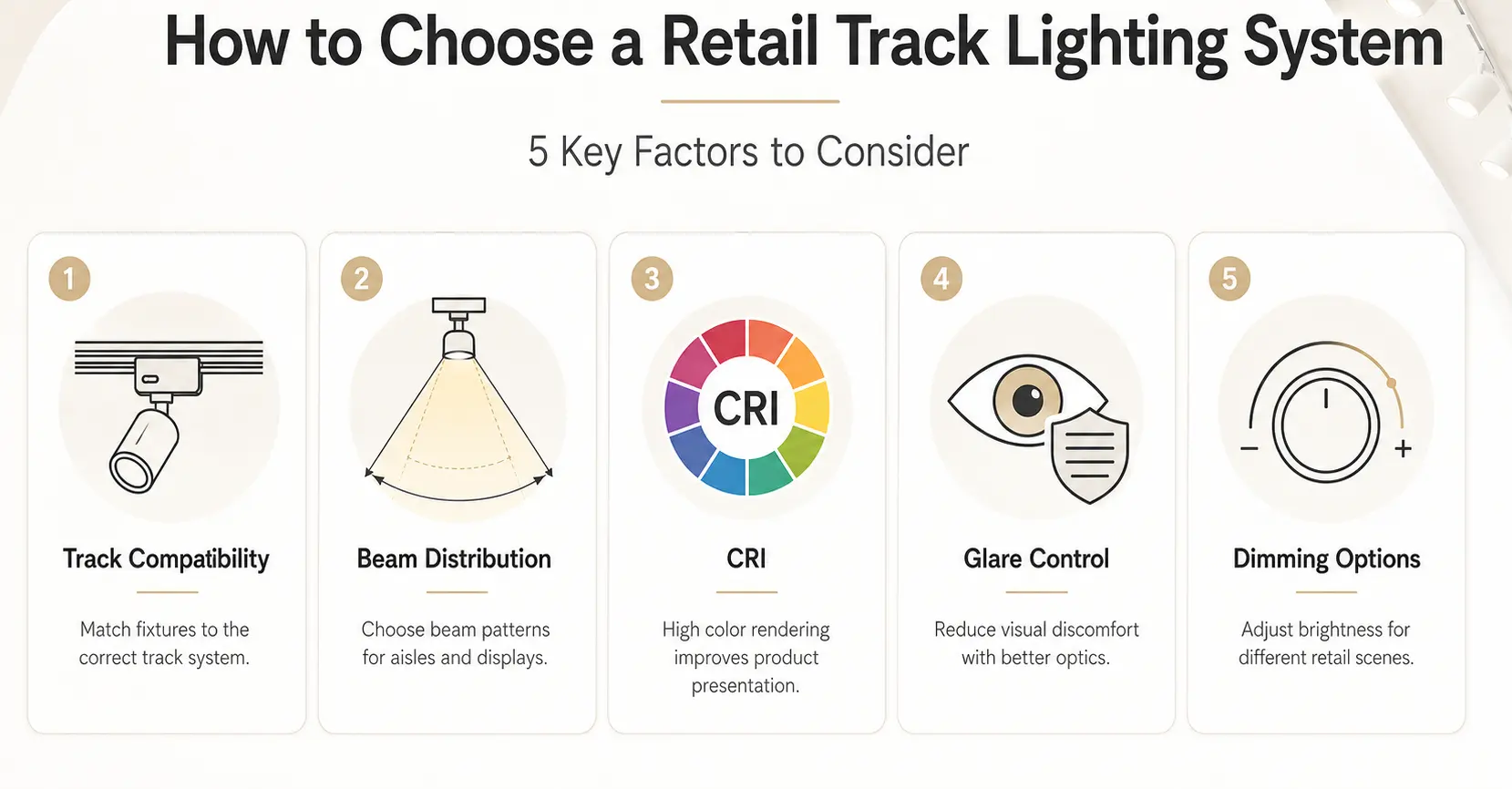
Selecting the right fixtures requires more than choosing power and appearance.
6.1 Track Compatibility
The fixtures must be compatible with the selected track system. Common options include single-circuit, three-circuit, and low-voltage magnetic track systems.
For commercial projects, three-phase or three-circuit track systems are often preferred because they allow different groups of fixtures to be controlled separately.
6.2 Beam Distribution
Track linear lights should have an optical distribution suitable for the aisle width and mounting height. Spotlights should have beam angles that match the size and distance of the displayed products.
Incorrect beam selection may cause dark areas, excessive overlap, or wasted light.
6.3 Color Rendering and Color Temperature
High color rendering helps merchandise look more natural and attractive. CRI 90 or above is commonly selected for fashion, food, artwork, and premium retail applications.
Color temperature should match the store concept. Warm light can create a comfortable and luxurious atmosphere, while neutral white light often produces a clean and modern appearance.
6.4 Glare Control
Both track linear lights and spotlights should control direct glare. Deep reflectors, louvers, anti-glare rings, and well-designed optical systems can improve visual comfort.
This is especially important in stores with lower ceilings, where customers can see the light source more directly.
6.5 Dimming and Control Options
Dimming allows retailers to adjust brightness for different periods, displays, or events.
Depending on the project, a retail track lighting system may support:
- On/off control
- Phase-cut dimming
- 0–10V dimming
- DALI control
- Bluetooth control
- Smart lighting systems
Independent control of different fixture groups can help create more flexible lighting scenes.
7. Conclusion
A retail track lighting system provides a flexible way to combine general lighting and accent lighting within the same commercial space.
Track linear lights create broad, uniform, and efficient illumination for aisles, shelves, and open areas. Track spotlights add focus, contrast, and visual interest by highlighting products and promotional displays.
When both fixture types are installed on the same compatible track system, retailers can adjust the lighting layout more easily as products and store arrangements change.
For supermarkets, fashion stores, boutiques, and showrooms, this combination offers a practical balance between uniform brightness, product emphasis, energy efficiency, and long-term flexibility. Instead of choosing between linear lighting and spot lighting, retailers can use both to build a more complete and effective lighting environment.

