



Track Lighting Energy Consumption: Do Track Lights Use a Lot of Electricity?
By Vincent

When planning a home or commercial lighting project, understanding track lighting energy consumption is often a key concern.
So, do track lights use a lot of electricity?
The short answer is no—modern LED track lighting is highly energy-efficient and consumes significantly less power than traditional halogen systems.
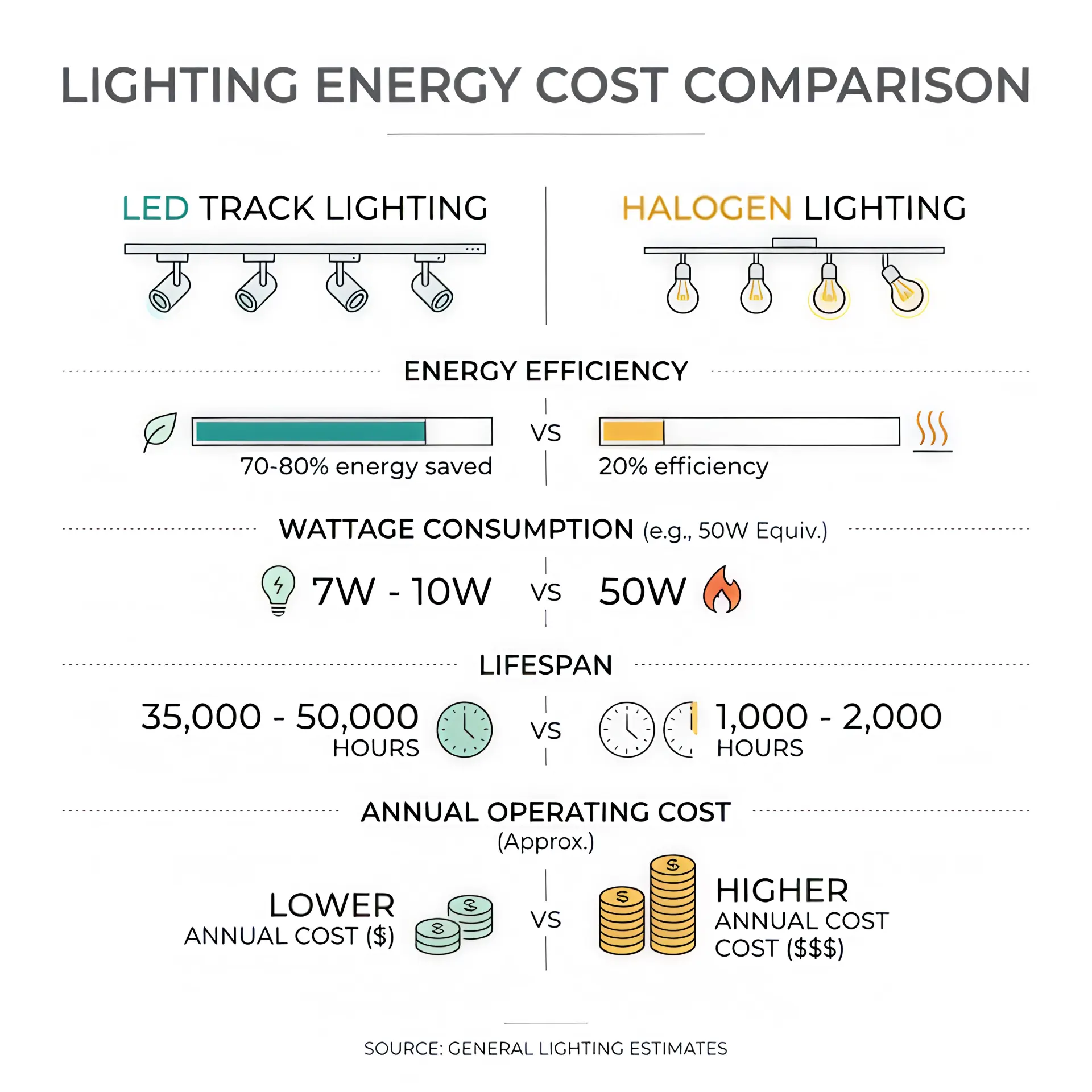
Modern LED track lighting consumes only 15%–20% of the energy used by traditional halogen systems.
In fact, a 10W LED track light can easily replace a 50W halogen fixture while delivering the same (or better) brightness.
👉 In simple terms:
You get the same lighting performance with significantly lower energy costs.

How Much Electricity Do Track Lights Use?
Track lighting itself doesn’t consume power—the fixtures (light heads) do.
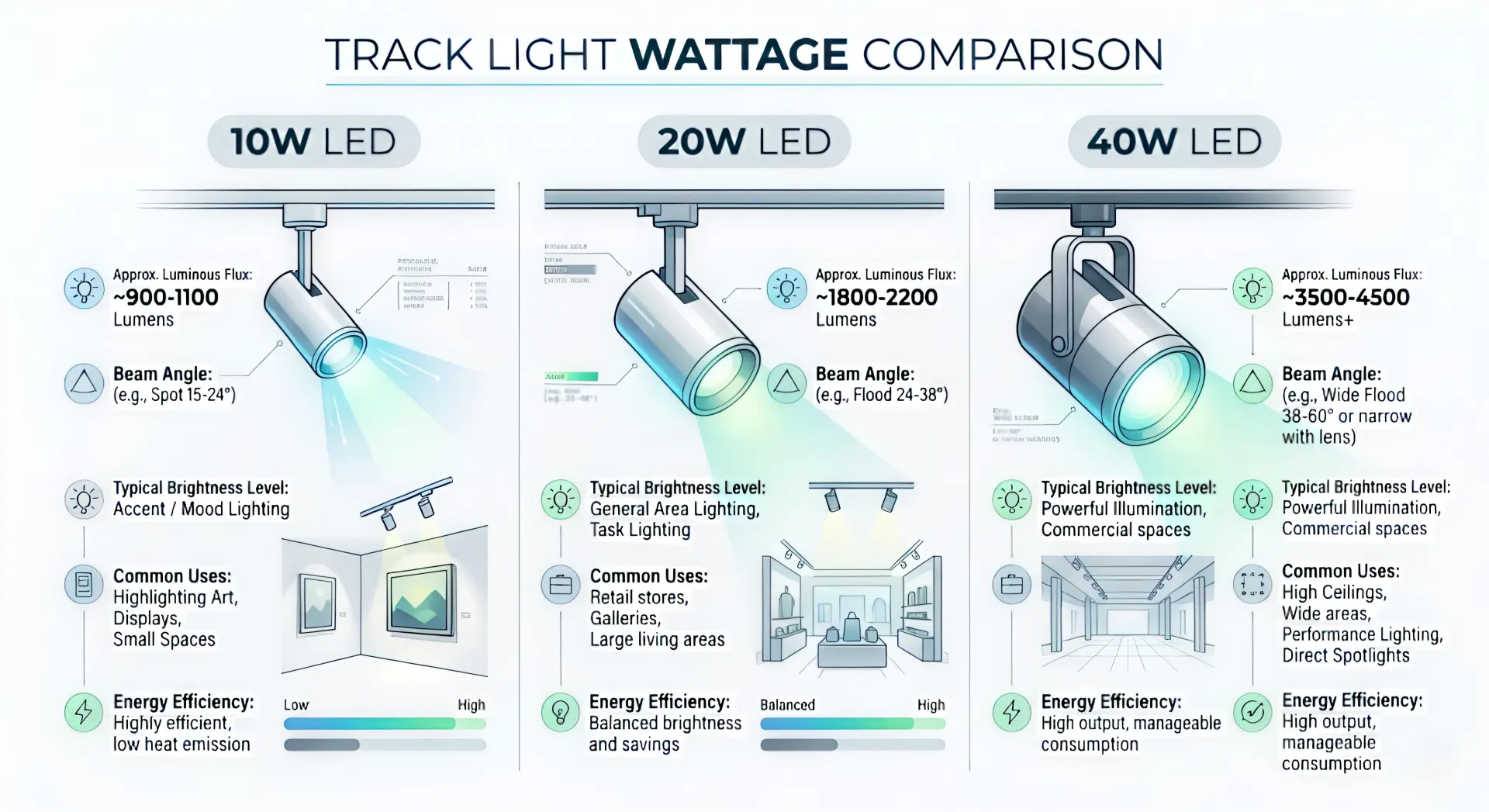
Typical LED track light wattages:
- 10W – Accent or display lighting
- 20W – General retail or commercial use
- 30W–40W – High ceilings or feature areas
Example:
A 20W LED track light used 8 hours per day:
- Monthly consumption ≈ 4.8 kWh
That’s extremely efficient compared to traditional lighting options.
Track Lighting Energy Comparison (LED vs Halogen vs CFL)
According to the U.S. Department of Energy, LED lighting uses significantly less energy than traditional halogen systems, often reducing consumption by up to 75% or more.
| Lighting Type | Typical Wattage | Brightness (Lumens) | Energy Cost |
|---|---|---|---|
| Halogen | 50W–75W | 600–800 lm | Very High |
| CFL | 13W–18W | 600–900 lm | Moderate |
| LED Track Light | 8W–12W | 800+ lm | Very Low |
👉 Bottom line:
LED track lighting delivers higher brightness with lower energy consumption.
How Much Does It Cost to Run Track Lights?
Let’s break it down with a real-world example:
Assumptions:
- 5 track light heads
- 6 hours per day
- Electricity rate: $0.15/kWh
Cost Formula:
Annual Cost=(P×N)×H×3651000×C\text{Annual Cost} = \frac{(P \times N) \times H \times 365}{1000} \times CAnnual Cost=1000(P×N)×H×365×C
Results:
- Halogen system (250W total)
→ ~$82.12 per year - LED system (50W total)
→ ~$16.42 per year
Key Takeaway
Switching to LED track lighting can reduce your lighting energy costs by up to 80% annually.
Why LED Track Lights Are So Efficient
1. High Luminous Efficacy
Modern LEDs can reach 100–130 lumens per watt, meaning more light with less power.
2. Directional Lighting
Track lights focus light exactly where it’s needed, reducing wasted illumination.
3. Minimal Heat Loss
Halogen bulbs convert up to 90% of energy into heat.
LEDs use most of their energy for light output instead.
👉 This also helps reduce cooling loads in air-conditioned spaces.
4 Factors That Affect Track Lighting Energy Use
Even with LEDs, energy consumption depends on how the system is designed:
1. Number of Fixtures
More heads = higher total wattage
👉 Optimize layout instead of over-lighting
2. Transformer Efficiency
Low-voltage systems (12V/24V) rely on transformers
👉 High-quality drivers reduce energy loss
3. Dimming Capability
LED dimming allows you to:
- Lower power usage
- Extend fixture lifespan
4. Smart Controls
Motion sensors and timers help eliminate unnecessary usage.
How to Reduce Electricity Costs with Track Lighting?
To maximize efficiency:
- Choose high-efficacy LED fixtures (≥120 lm/W)
- Use adjustable wattage (DIP switch) designs
- Divide long tracks into separate circuits
- Select the right beam angle for precise lighting
👉 These strategies are especially valuable in retail and hospitality environments.
Track Lights vs Ceiling Lights: Which Uses More Power?
Not necessarily.
If both systems use the same total wattage, energy consumption will be similar.
However, track lighting has one major advantage:
👉 Targeted lighting
You can illuminate only specific areas, which often allows you to:
- Use fewer fixtures
- Reduce overall energy usage
Frequently Asked Questions
Do track lights increase electricity bills?
No. LED track lights are energy-efficient and can actually lower your overall lighting costs.
Can I replace halogen track bulbs with LED?
In most cases, yes (GU10 or MR16 bases).
Just make sure they’re compatible with your transformer if it’s a low-voltage system.
Do track lights generate a lot of heat?
LED track lights produce very little heat compared to halogen bulbs.
Are track lights good for commercial spaces?
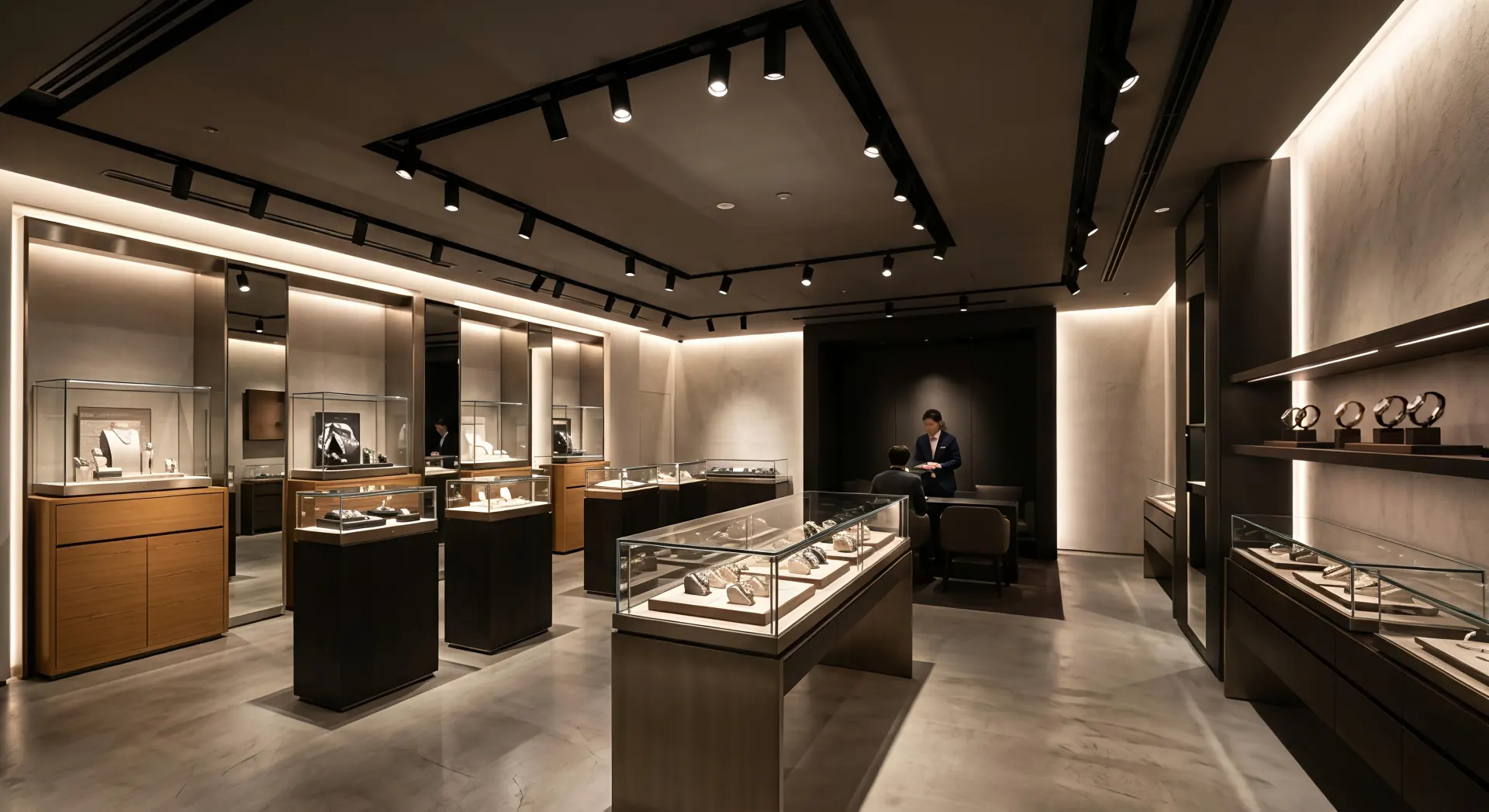
Absolutely. They are widely used in:
- Retail stores
- Showrooms
- Galleries
- Hotels
Final Verdict
Do track lights use a lot of electricity?
👉 No—modern LED track lighting is highly energy-efficient.
By switching from halogen to LED, you can reduce lighting energy consumption by up to 80%, while improving lighting quality and flexibility.

