



Why Accent Lighting for Commercial Spaces Is the Key to Retail Success
By Vincent
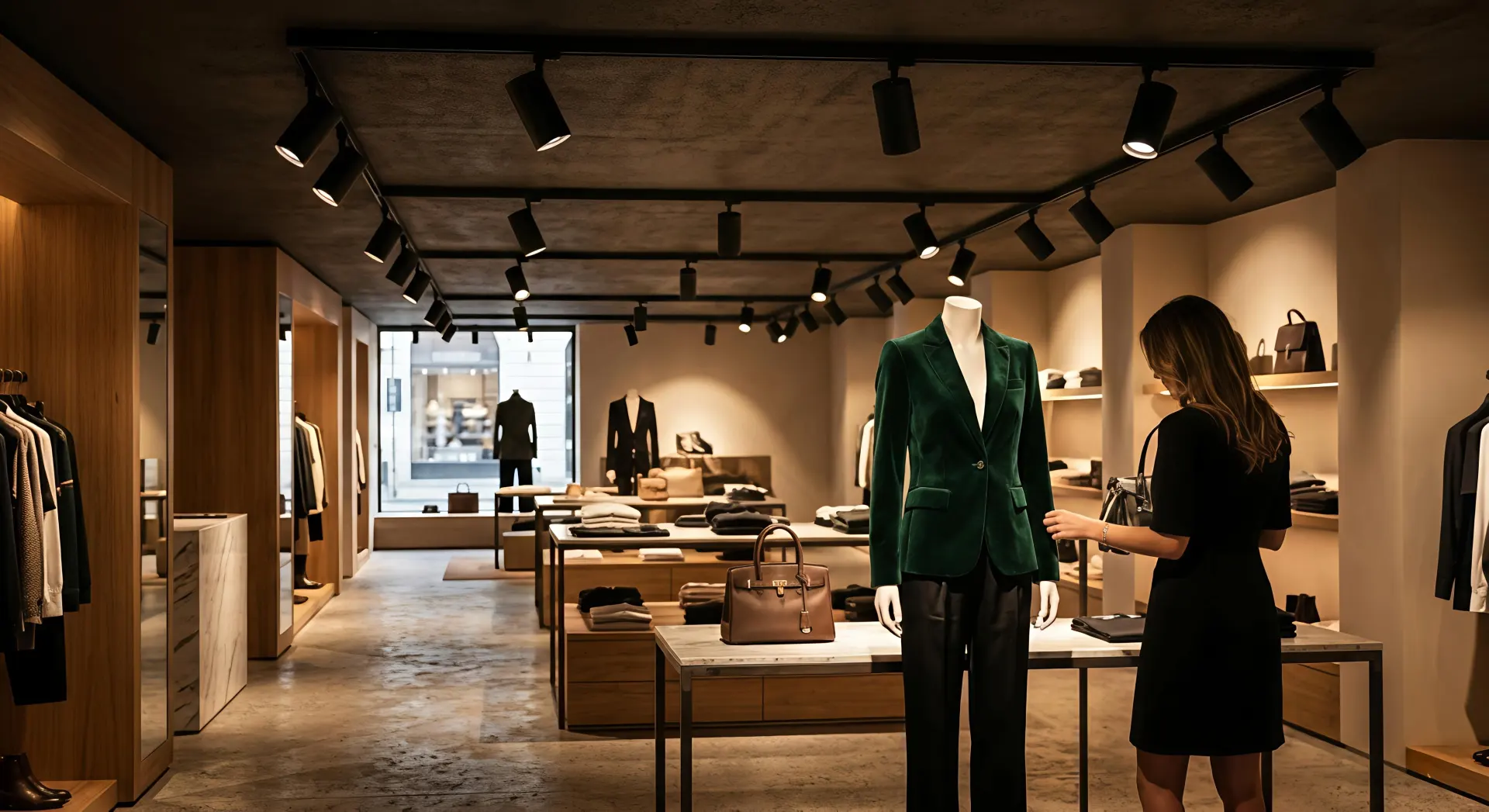
In today’s competitive retail environment, lighting is no longer just a technical requirement—it is a strategic business tool. Accent Lighting for Commercial Spaces plays a decisive role in shaping customer behavior, guiding visual attention, and increasing perceived product value.
A store can be bright and still feel uninspiring. It can meet basic illumination standards yet fail to drive engagement. The difference often lies not in brightness, but in hierarchy.
Successful commercial environments rely on a layered lighting strategy built around three essential components:
- Ambient lighting
- Accent lighting
- Decorative or atmospheric lighting
Among these, accent lighting acts as the sales driver.
The Three Layers of Commercial Lighting Design
Retail lighting should never be one-dimensional. Each layer serves a distinct purpose within the overall customer experience.
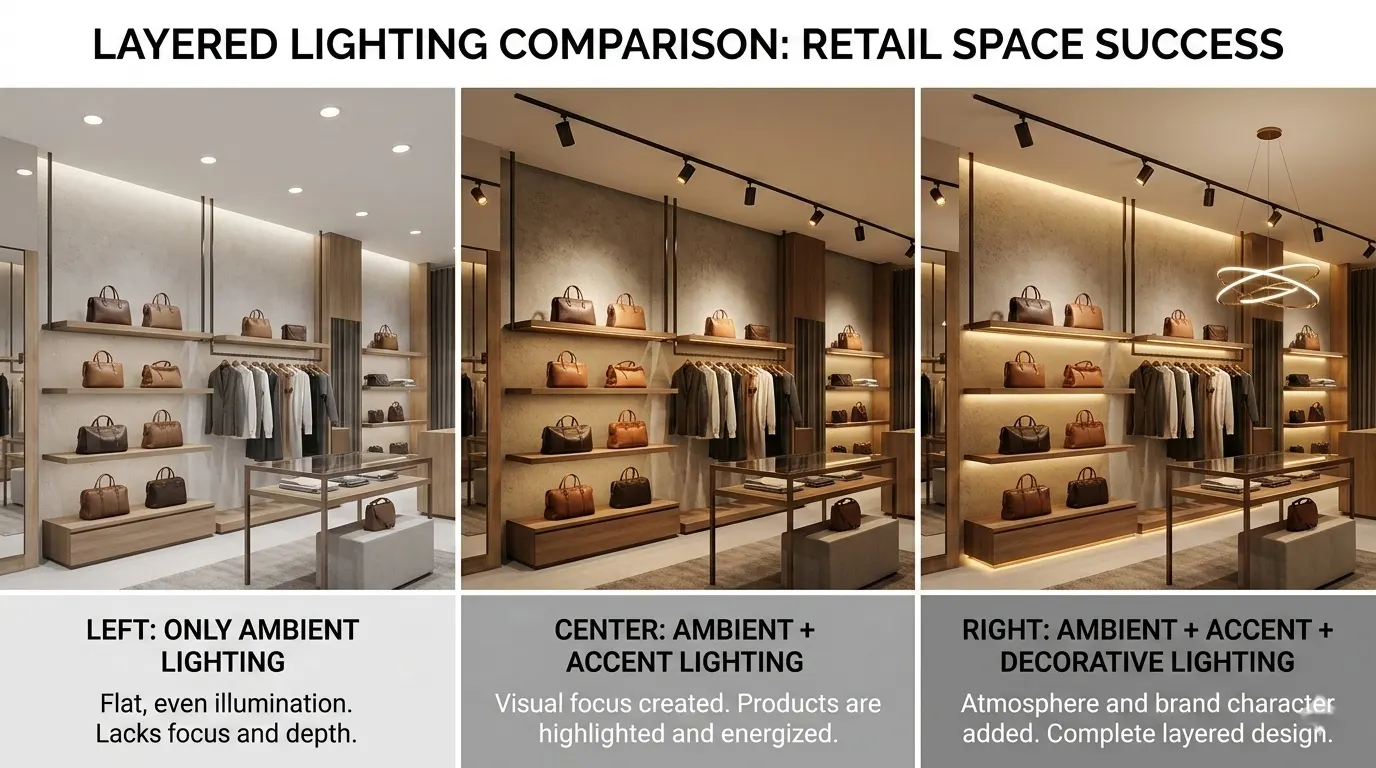
1. Ambient Lighting: The Foundation of Visual Comfort
Ambient lighting provides overall illumination and ensures that customers can navigate the space comfortably and safely.
Typical fixtures include:
- Recessed downlights
- Linear lighting systems
- Wide-beam track luminaires
- LED panels
Its primary goals are:
- Establishing base brightness
- Reducing eye strain
- Creating a clean, welcoming environment
However, relying solely on ambient lighting often results in flat, office-like interiors. Customers can see everything—but nothing stands out.
2. Accent Lighting for Commercial Spaces: Directing Attention and Driving Sales
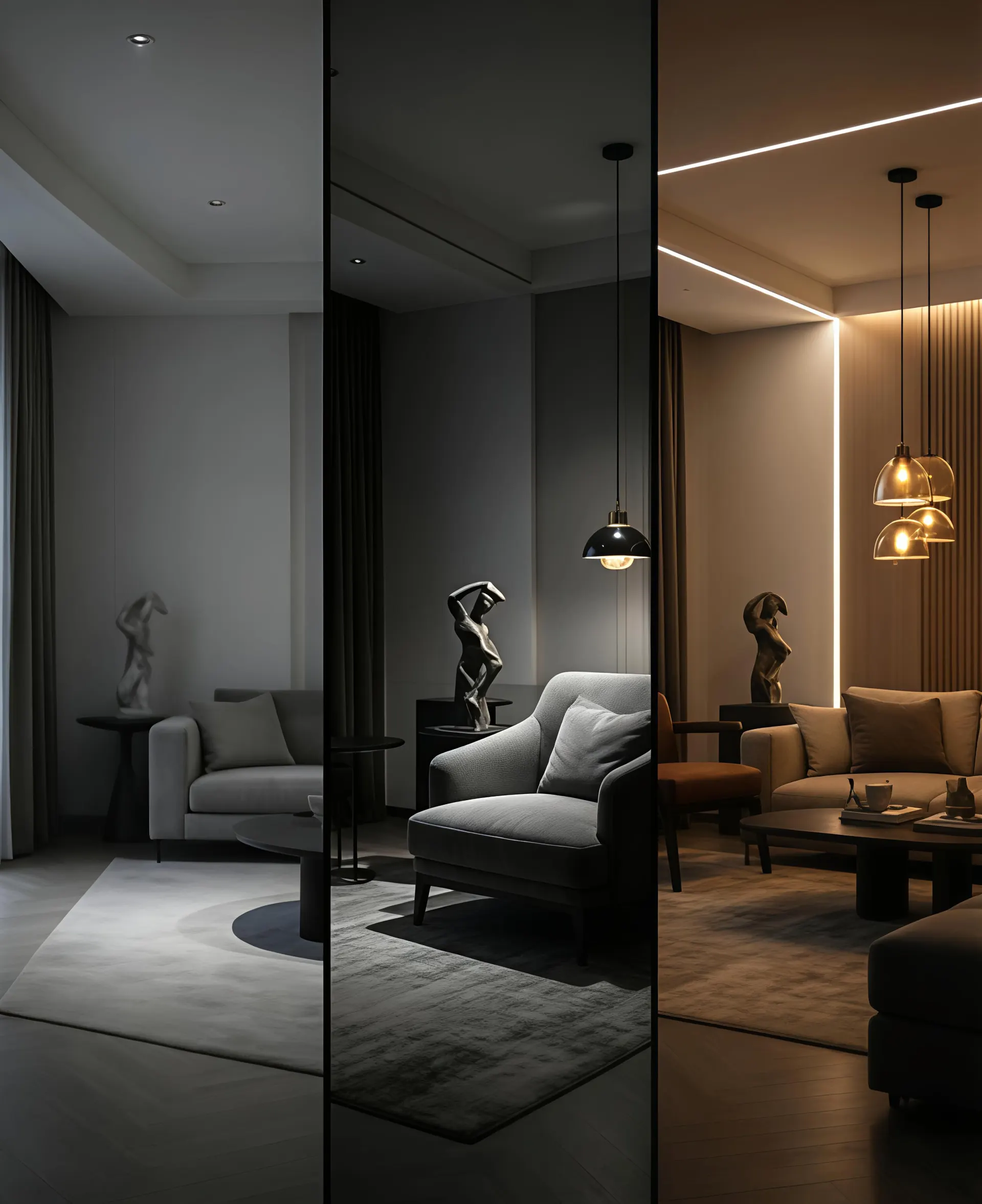
Accent lighting introduces contrast. It highlights specific merchandise, architectural details, or promotional zones.
Retail lighting designers typically recommend that focal areas be illuminated at three to five times the surrounding ambient level. Window displays may require even higher contrast to capture attention from outside.
Human vision naturally gravitates toward the brightest object in view. This psychological principle is why targeted lighting increases dwell time and product interaction.
Common applications include:
- Retail display spotlighting
- Highlighting premium merchandise
- Illuminating branding walls
- Creating visual anchors in large-format stores
According to guidance from the Illuminating Engineering Society, contrast and visual hierarchy are critical components of effective retail lighting design.
You can also explore practical lighting guidelines from the U.S. Department of Energy for energy-conscious commercial projects:
https://www.energy.gov/eere/ssl/lighting-design-lab
3. Decorative and Atmospheric Lighting: Reinforcing Brand Identity
Decorative lighting enhances mood and emotional connection. It may include:
- Statement pendant fixtures
- LED cove lighting
- Backlit feature walls
- Architectural light lines
While decorative elements do not always directly increase sales, they significantly influence brand perception and memorability.
In high-end retail stores, decorative lighting often works alongside precision spotlights to create immersive experiences.
How Accent Lighting Impacts Retail Performance
Effective lighting does more than improve visibility—it actively shapes purchasing behavior.
1. Guiding the Customer Journey
Without focal lighting, customers may wander without direction. Well-positioned track lights establish a visual pathway:
- Window display →
- Promotional zone →
- Featured product wall →
- Checkout counter
This structured flow improves store navigation and increases exposure to high-margin items.
2. Enhancing Perceived Product Value
The same product can appear dramatically different depending on how it is lit.
Narrow-beam spotlights:
- Emphasize texture
- Deepen shadows
- Increase visual contrast
- Improve material richness
The result is higher perceived quality.
Below is a simplified comparison:
| Lighting Type | Visual Effect | Customer Perception | Sales Impact |
|---|---|---|---|
| Uniform Ambient Only | Flat, evenly bright | Functional | Neutral |
| Layered with Accent | Dimensional, focused | Premium | Positive |
| Accent + Decorative | Emotional, immersive | Luxury | High conversion |
Retailers investing in focused illumination frequently report measurable improvements in product sell-through rates.
Recommended Fixtures for Commercial Accent Lighting
A cohesive system typically integrates track lights, downlights, and linear luminaires.
Track Lighting Systems
Track lighting remains the most versatile solution for retail spotlighting due to:
- Adjustable beam angles
- Interchangeable optics
- Flexible repositioning
- Compatibility with dimming systems
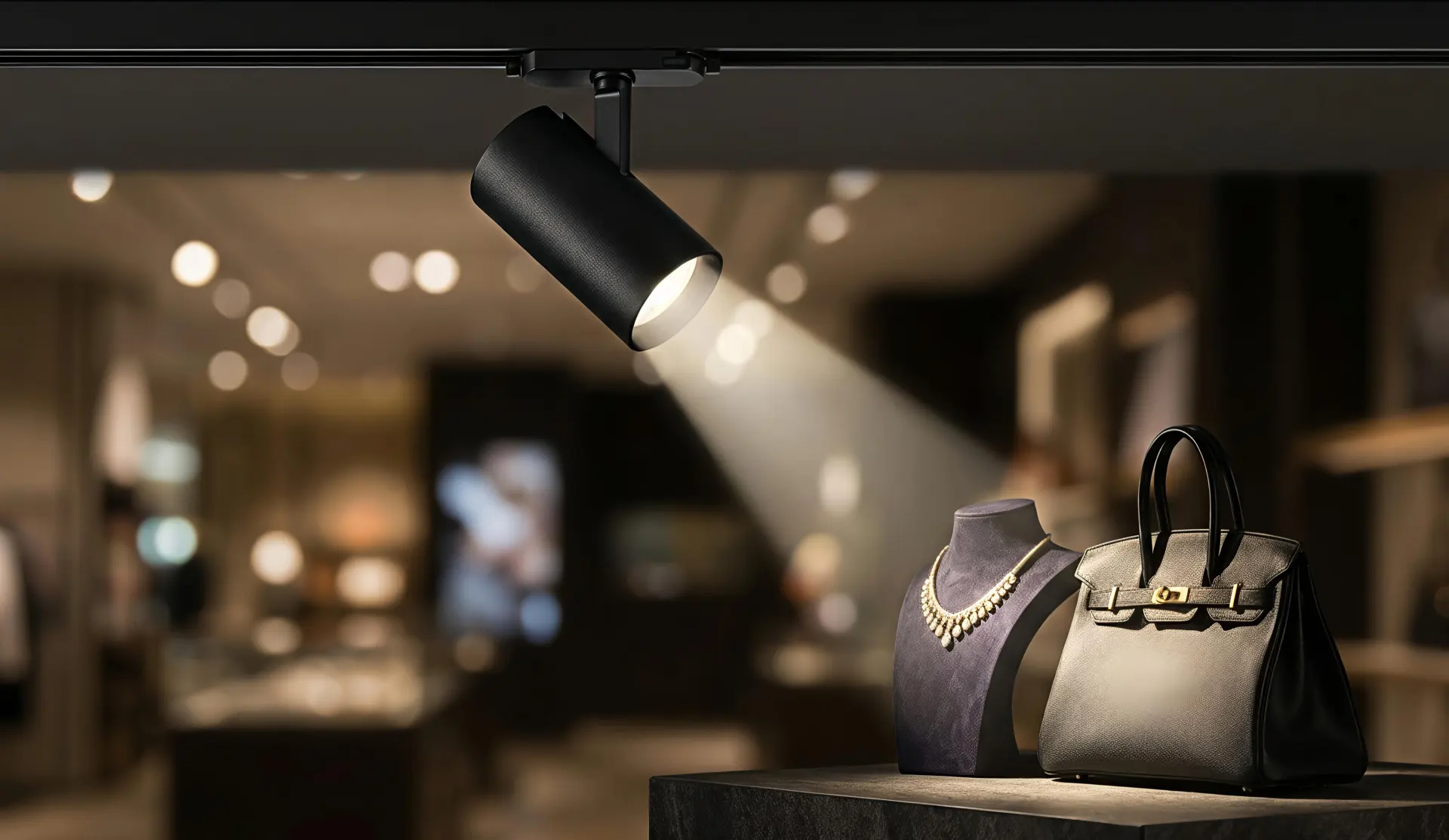
Beam angle selection matters:
| Beam Angle | Typical Use Case |
|---|---|
| 10°–15° | Jewelry, watches, luxury accessories |
| 24°–36° | Apparel, mannequins, product displays |
| 40°+ | Large installations, wall washing |
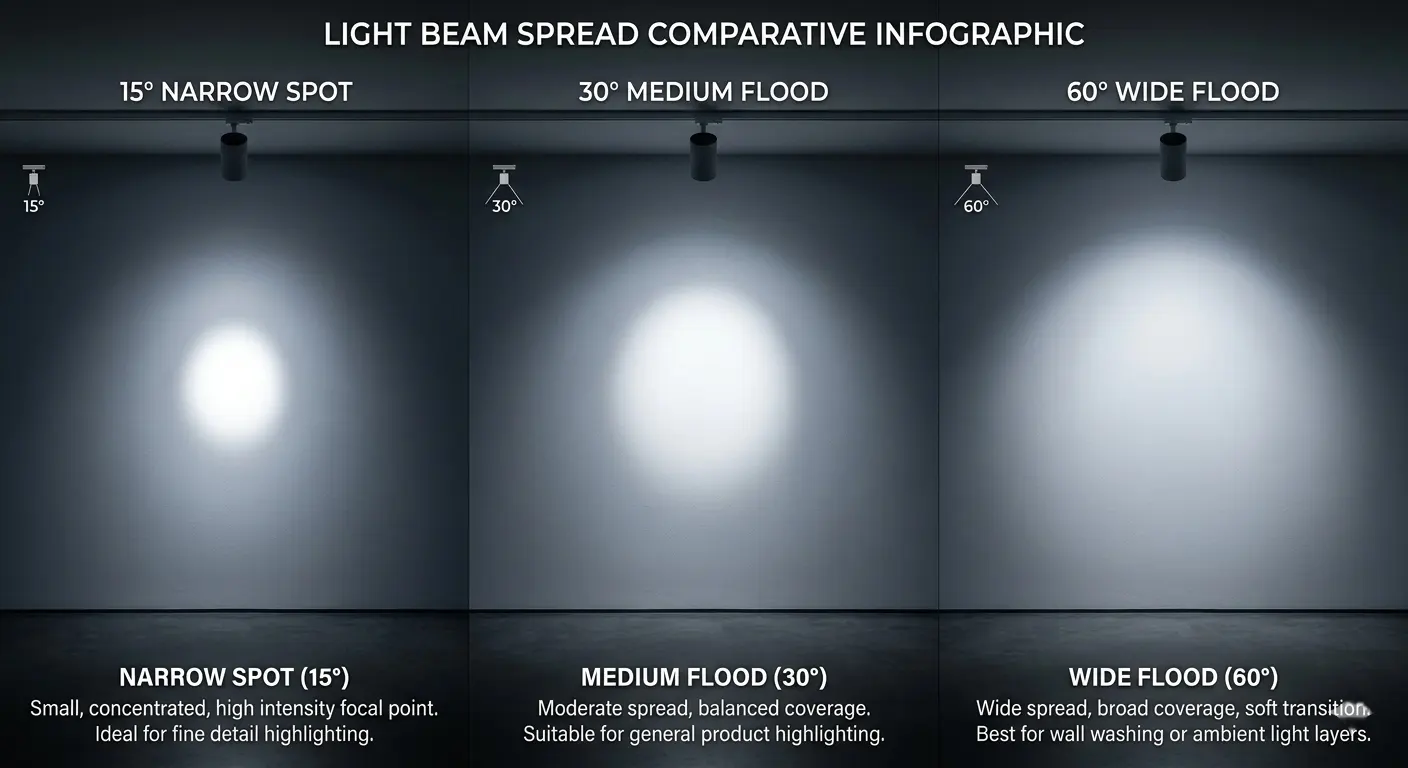
For stores with frequent layout updates, track systems allow quick adjustments without ceiling renovation.
Recessed Downlights
High-performance downlights support visual balance and vertical illumination. Key specifications include:
- CRI ≥ 90
- High R9 values for accurate reds
- Deep anti-glare design
- Consistent color temperature
They ensure comfort while preventing harsh glare that may distract customers.
Linear Lighting
Linear fixtures help define architectural geometry and enhance spatial depth. They are often used for:
- Ceiling detailing
- Shelving illumination
- Perimeter glow
- Wayfinding cues
Combined with focused luminaires, they reinforce store layout and branding.
Technical Considerations for Retail Lighting Projects
When specifying lighting systems for retail environments, consider the following:
| Factor | Recommendation | Why It Matters |
|---|---|---|
| CRI | ≥ 90 | Accurate color representation |
| R9 | High value | Essential for skin tones and fashion |
| CCT | 2700K–4000K | Aligns with brand positioning |
| Glare Control | UGR < 19 | Enhances visual comfort |
| Dimming | 0–10V / DALI | Enables scene control |
Consistency across fixtures prevents visual fragmentation.
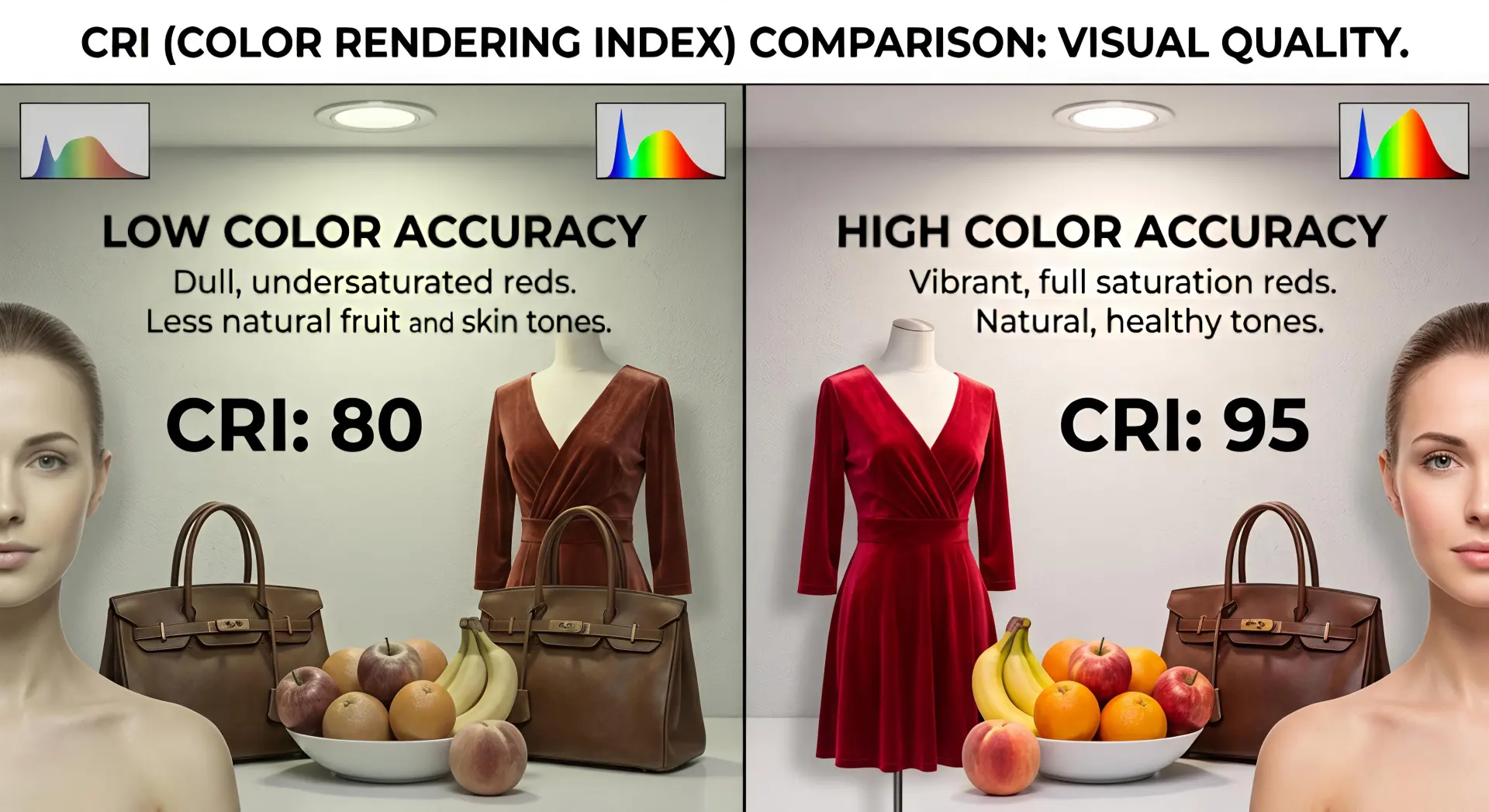
For further insights into retail lighting performance metrics, industry research published by the Lighting Research Center offers valuable technical references:
https://www.lrc.rpi.edu
Energy Efficiency and Smart Control
Contrary to common assumptions, adding focal lighting does not necessarily increase energy consumption.
By combining:
- LED high-efficacy luminaires
- Zoned switching
- Intelligent dimming
- Motion or daylight sensors
Retailers can maintain visual drama while optimizing operational costs.
Targeted lighting often allows for lower overall ambient levels, resulting in balanced energy performance.
Integrating Ambient, Accent, and Decorative Lighting
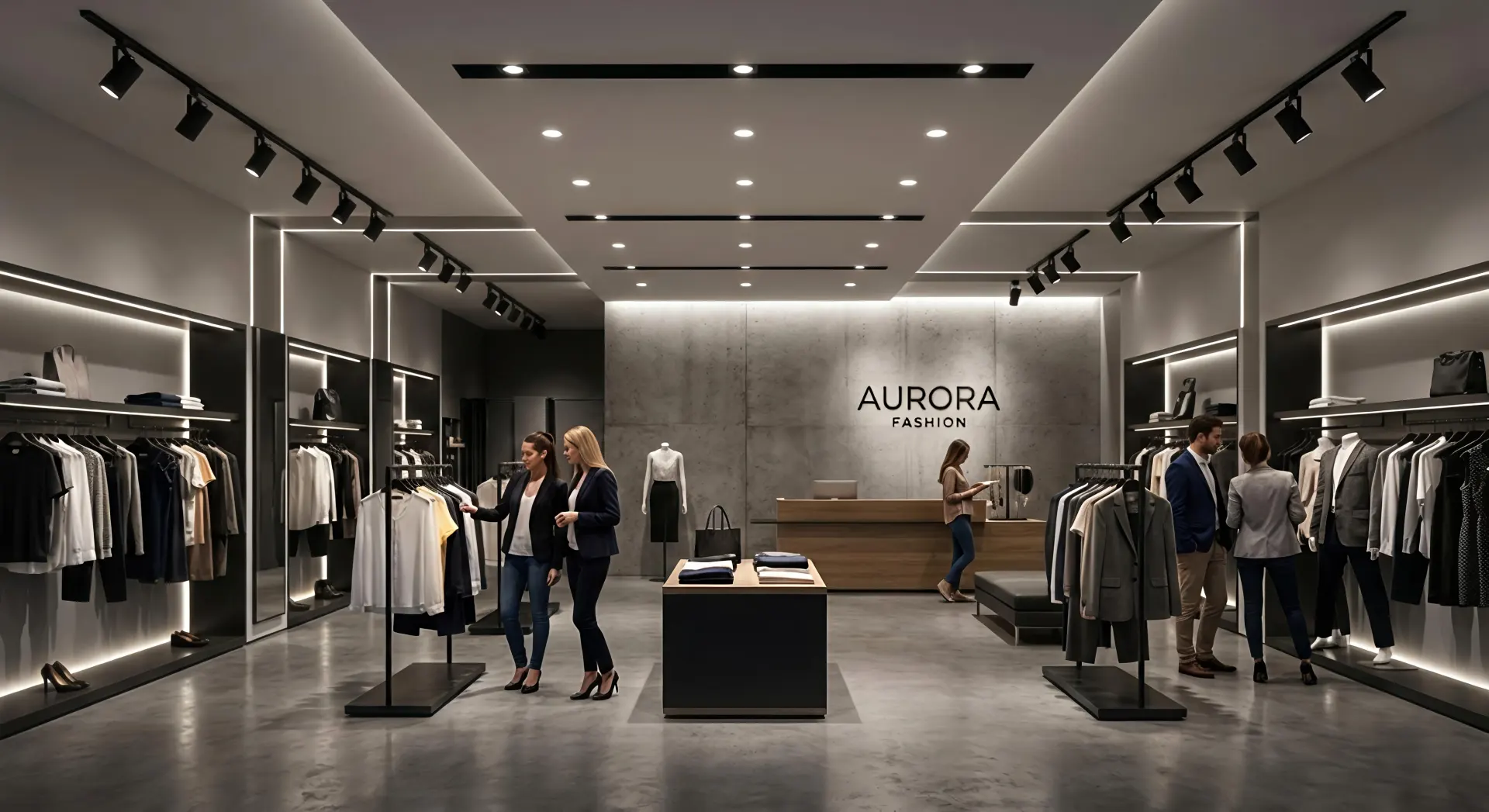
A strong retail lighting strategy blends all three layers.
- Ambient lighting ensures comfort.
- Decorative lighting builds atmosphere.
- Accent lighting shapes customer decisions.
Among them, accent illumination carries the strongest influence over buying behavior. It determines what customers notice first—and what they remember after leaving.
Final Thoughts
Lighting is no longer a background utility. In modern retail environments, it functions as silent sales support.
Well-designed spotlighting increases engagement.
Clear visual hierarchy improves navigation.
Precise beam control enhances perceived product quality.
When thoughtfully executed, a layered lighting approach transforms physical stores into high-performance commercial environments.
If your goal is to strengthen brand presence and boost in-store conversion, investing in a refined lighting strategy may be one of the most effective steps forward.

