



Why Restaurant LED Lighting Solutions Are Essential for Modern Foodservice
By Vincent
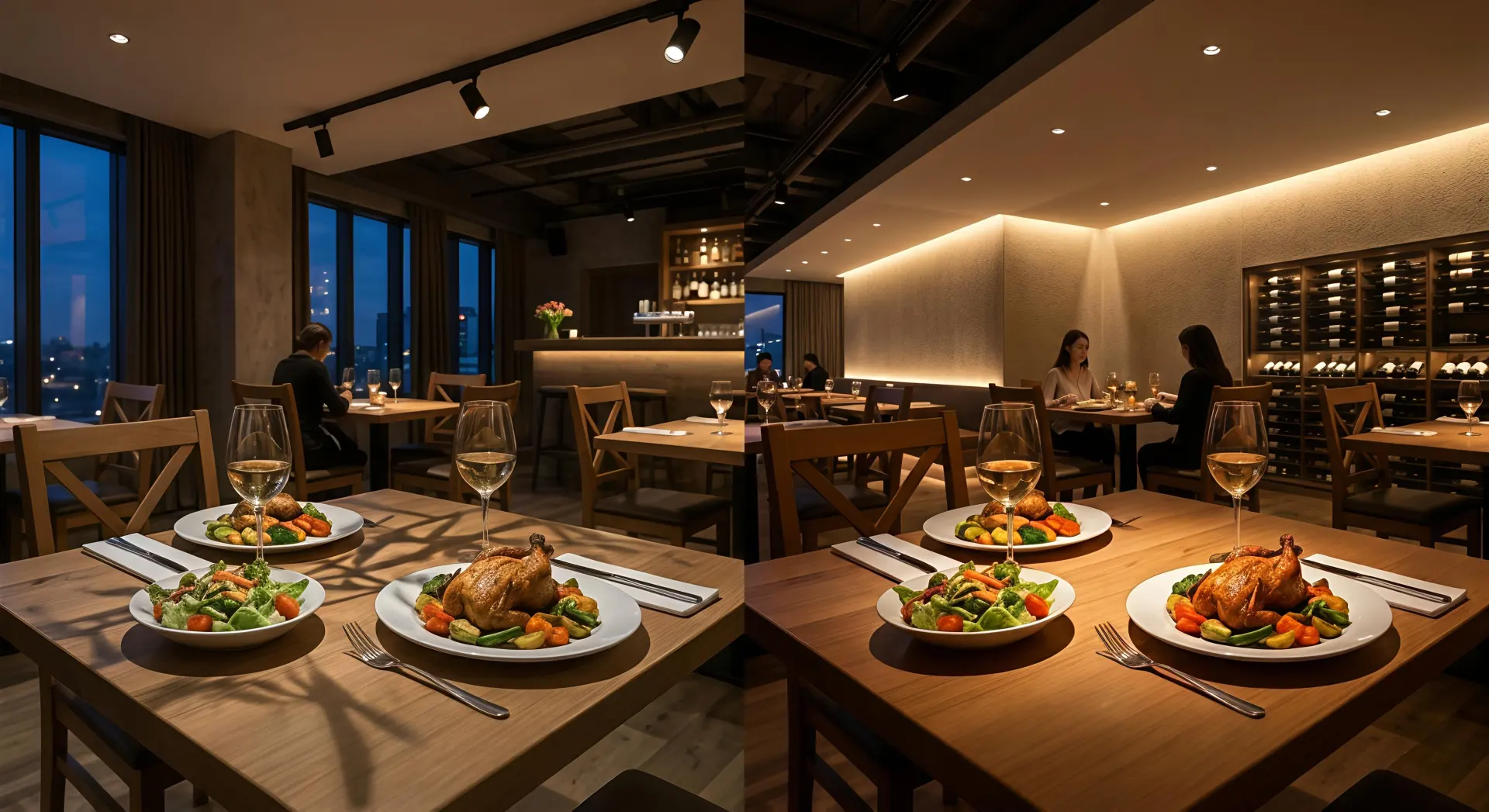
In today’s highly competitive foodservice industry, restaurants are no longer judged solely by taste or pricing. Guests evaluate the entire dining experience—from atmosphere and comfort to how photogenic the space appears on social media. Restaurant LED Lighting Solutions have therefore evolved from a basic operational necessity into a strategic business investment. Lighting influences first impressions, dwell time, customer satisfaction, and even online exposure. In 2026’s global hospitality landscape, lighting design is no longer a decorative afterthought—it is a core driver of brand value and profitability.
Traditional halogen, fluorescent, and metal halide systems struggle to meet the demands of modern dining spaces. They consume excessive energy, generate unwanted heat, require frequent maintenance, and fail to deliver the color accuracy needed for food presentation. In contrast, modern LED-based systems provide energy efficiency, flexibility, durability, and precision control. More importantly, they support the operational and branding goals of contemporary restaurants.
This article explores why Restaurant LED Lighting Solutions have become indispensable in modern foodservice—from operational cost savings to customer psychology, from layered lighting strategies to supplier selection.
1. What Defines Professional Restaurant LED Lighting Solutions?
Many operators confuse LED fixtures with a comprehensive lighting solution. In reality, a true solution integrates lighting design, product selection, intelligent controls, installation, and long-term maintenance planning.
Core Modules of Restaurant LED Lighting Solutions
| Module Type | Key Content | Core Value |
|---|---|---|
| Customized Lighting Design | Combine restaurant positioning, space structure and business scenarios to design layered lighting (ambient light, task light, accent light, decorative light) | Align light with space, dishes and brand tone |
| Adaptive LED Lamps | Commercial-grade lamps (pendant lights, track lights, linear lights) with high color rendering, oil-proof and waterproof features | Ensure durability and excellent lighting effect |
| Intelligent Control & Commissioning | Dimming and color temperature adjustment, scene mode switching, linkage with intelligent devices | Improve operational efficiency and adapt to diverse scenarios |
| After-sales Maintenance | Regular inspections, lamp maintenance, accessory replacement and lighting effect optimization | Avoid operational losses caused by lamp failures |
Rather than simply illuminating space, the goal is to enhance experience, increase efficiency, and reinforce brand identity.
For reference on structured lighting layers in commercial spaces, the principles of ambient, task, and accent lighting are widely explained by the Illuminating Engineering Society.
2. The Business Advantages of Restaurant LED Lighting Solutions
2.1. Energy Efficiency & ROI
Restaurants operate long hours. Lighting represents a major share of energy consumption.
| Metric | Traditional Lighting | LED-Based Solution |
|---|---|---|
| Energy Consumption | High | 50–80% lower |
| Lifespan | 1,000–10,000 hrs | 25,000–50,000 hrs |
| Heat Output | Very high | Minimal |
| Maintenance Frequency | Frequent | Low |
A medium-sized restaurant replacing halogen lamps with LED alternatives can recover initial investment within 12–18 months through energy savings alone.
Energy efficiency guidelines for commercial buildings can be further explored via the U.S. Department of Energy.
2.2. High CRI Lighting Improves Food Presentation
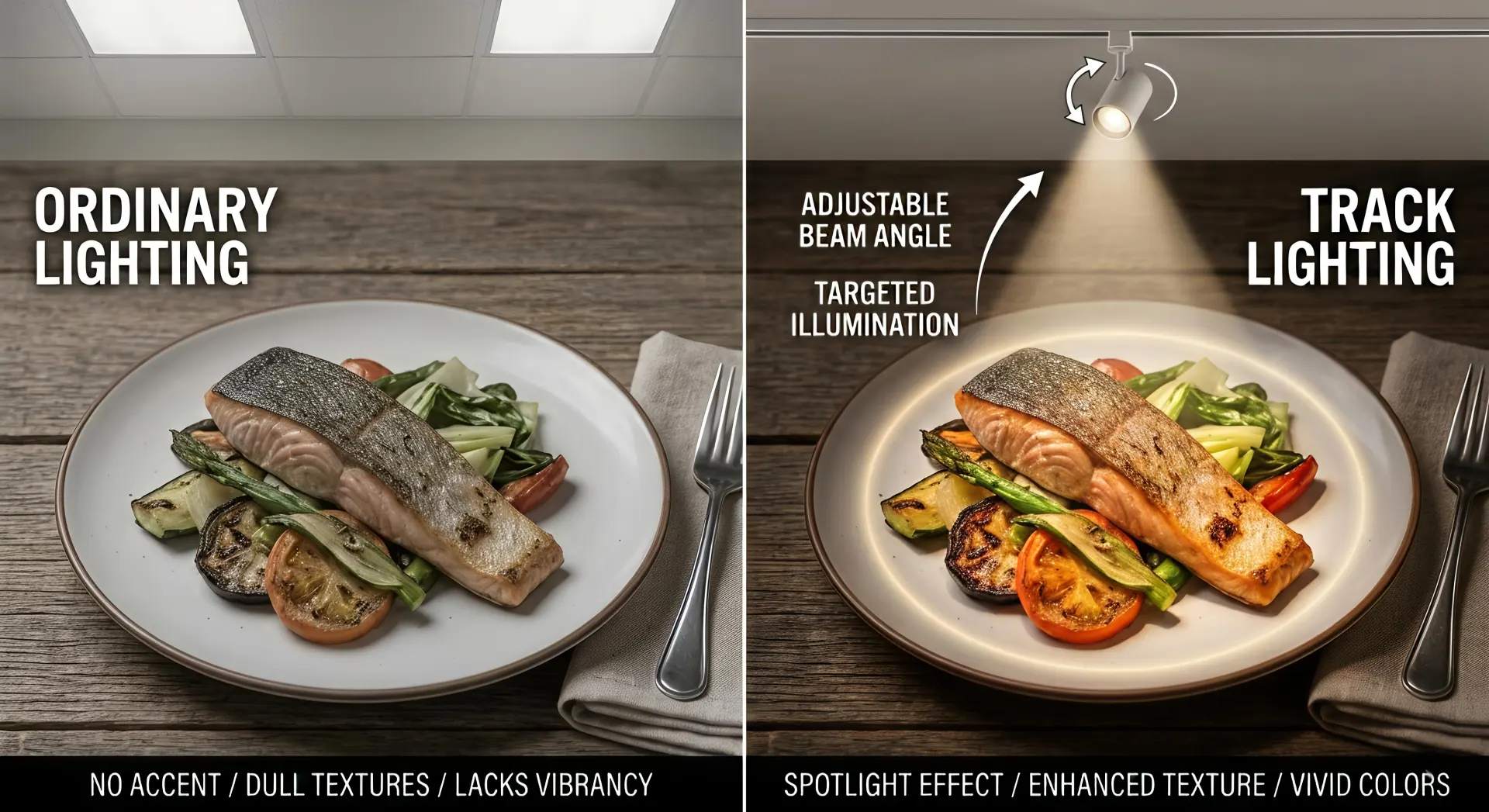
Color rendering is critical in foodservice environments.
Low CRI lighting:
- Makes vegetables look dull
- Reduces vibrancy of meats
- Flattens texture and contrast
High CRI LED lighting for restaurants (CRI ≥90 or ≥95) enhances:
- Freshness perception
- Texture visibility
- Appetite stimulation
- Social media photo quality
In the era of Instagram dining, lighting is essentially a marketing tool.
2.3. Dimmable and Tunable Lighting for Different Dayparts
Modern restaurants operate across multiple dayparts:
| Time of Day | Recommended Color Temperature | Lighting Goal |
|---|---|---|
| Breakfast | 3500K–4000K | Bright, energetic |
| Lunch | 3000K–3500K | Balanced efficiency |
| Dinner | 2700K–3000K | Warm, intimate |
| Late Night | 2200K–2700K | Relaxed ambiance |
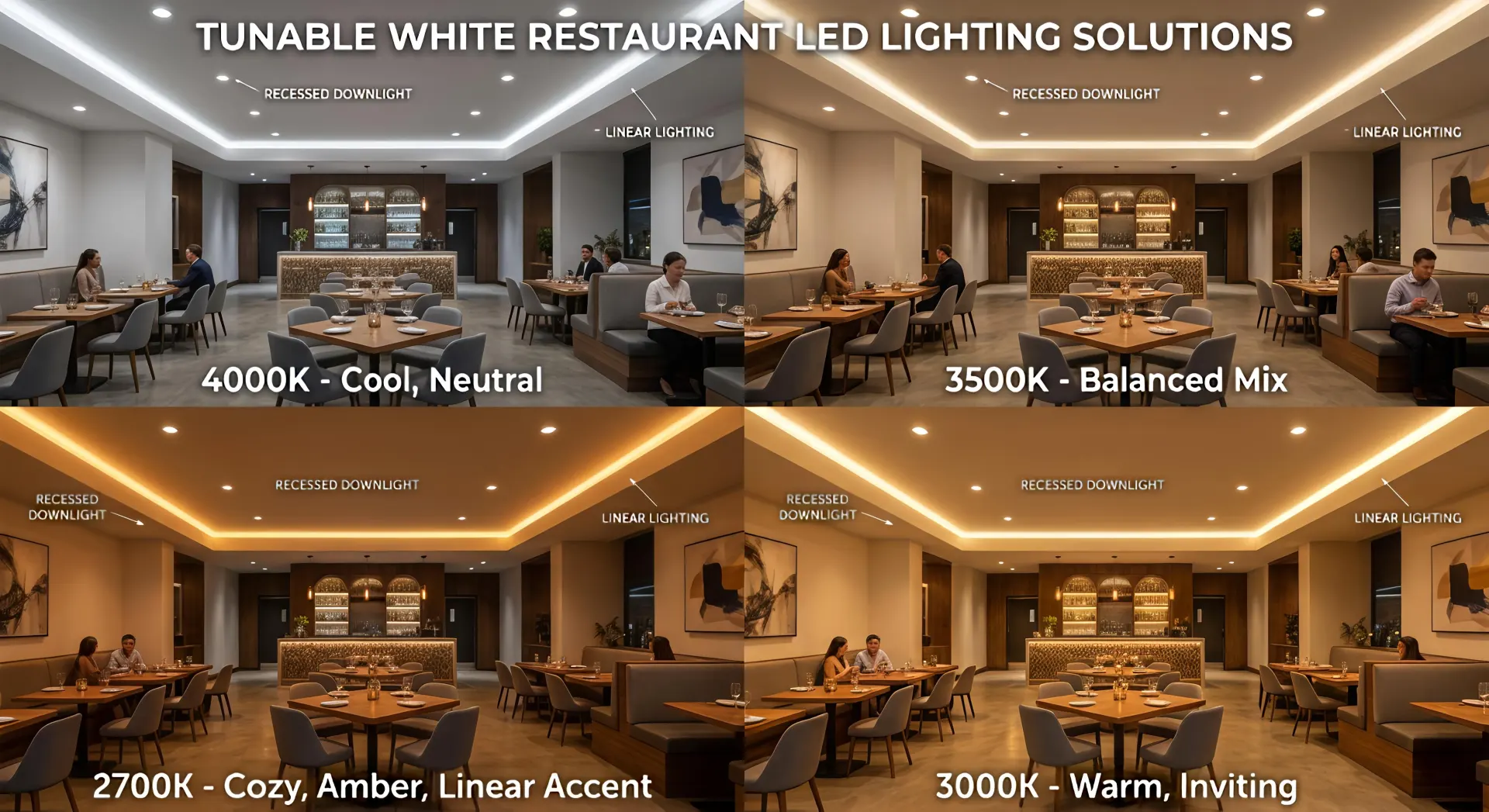
Advanced Restaurant LED Lighting Solutions allow seamless brightness and color temperature adjustment, supporting:
- Fine dining ambiance
- Quick-service turnover optimization
- Private dining mood transitions
- Event or celebration modes
This flexibility directly impacts customer dwell time and average ticket size.
3. Why Can’t Modern Foodservice Industry Do Without Restaurant LED Lighting Solutions?
If the core advantages of Restaurant LED Lighting Solutions are the “hardware foundation” for their popularity among catering businesses, then the development trend of the modern foodservice industry and the upgrading of consumer demand are the “software driving force” for them to become a “must-have”. In the era of experiential consumption, the core of competition in the foodservice industry has shifted from “dish competition” to “experience competition”, and lighting, as the core element of experience creation, directly determines the competitiveness of restaurants—the reason why modern catering cannot do without Restaurant LED Lighting Solutions is essentially the result of the joint action of three factors: industry development, consumer demand and operational needs.
3.1. Upgrading Consumer Demand: From “Eating Well” to “Eating Experience”, Lighting Becomes a Core Experience Element
With the improvement of residents’ income level, consumers’ demand for catering consumption has undergone fundamental changes—they are no longer satisfied with the basic demand of “eating enough and eating well”, but pursue experiential consumption of “eating with atmosphere, eating with a sense of ritual, and eating with memory points”. For diners, the dining process is not only a process of tasting food, but also a process of enjoying the environment and relaxing, and lighting, as the core element of creating an atmosphere in the catering space, directly affects diners’ dining mood and experience.
Surveys show that 70% of diners say that the lighting atmosphere of a restaurant will affect their dining intention; 65% of diners say that they will choose to revisit because of the good lighting effect; 58% of diners say that they will take the initiative to take photos of the restaurant environment and dishes with good lighting effects and post them on social media such as Moments, Xiaohongshu and Instagram. This means that lighting has become one of the important criteria for diners to judge a restaurant, and also the key to attracting and retaining diners. For more insights on how lighting affects customer experience, you can refer to hospitality lighting research.
3.2. Intensified Industry Competition: Under Homogenization, Lighting Becomes a Key Tool for Differentiated Competition
At present, the competition in the foodservice industry is becoming increasingly fierce. The rapid expansion of chain brands and the proliferation of independent restaurants have made the homogenization of the catering market more and more serious—dishes, decoration, services, prices, and even marketing methods are becoming more and more similar. Many restaurants are caught in the dilemma of “involution” and are difficult to stand out. In this context, how to create a differentiated brand image has become the key to the survival and development of catering businesses.
3.3. Upgrading Operational Needs: Cost Reduction, Efficiency Improvement and Standardized Operation
For catering businesses, “cost reduction and efficiency improvement” is an eternal operational goal, especially in the post-epidemic era, when the profit pressure of the foodservice industry is increasing, reducing operating costs and improving operational efficiency have become the core demands of catering businesses. Restaurant LED Lighting Solutions can just meet this demand—energy saving and power saving, long service life and low maintenance costs can help restaurants greatly reduce operating costs; intelligent control and convenient scene switching can improve operational efficiency and reduce labor costs.
4. Full-Scene Application of Restaurant LED Lighting Solutions, Covering Every Corner of the Restaurant
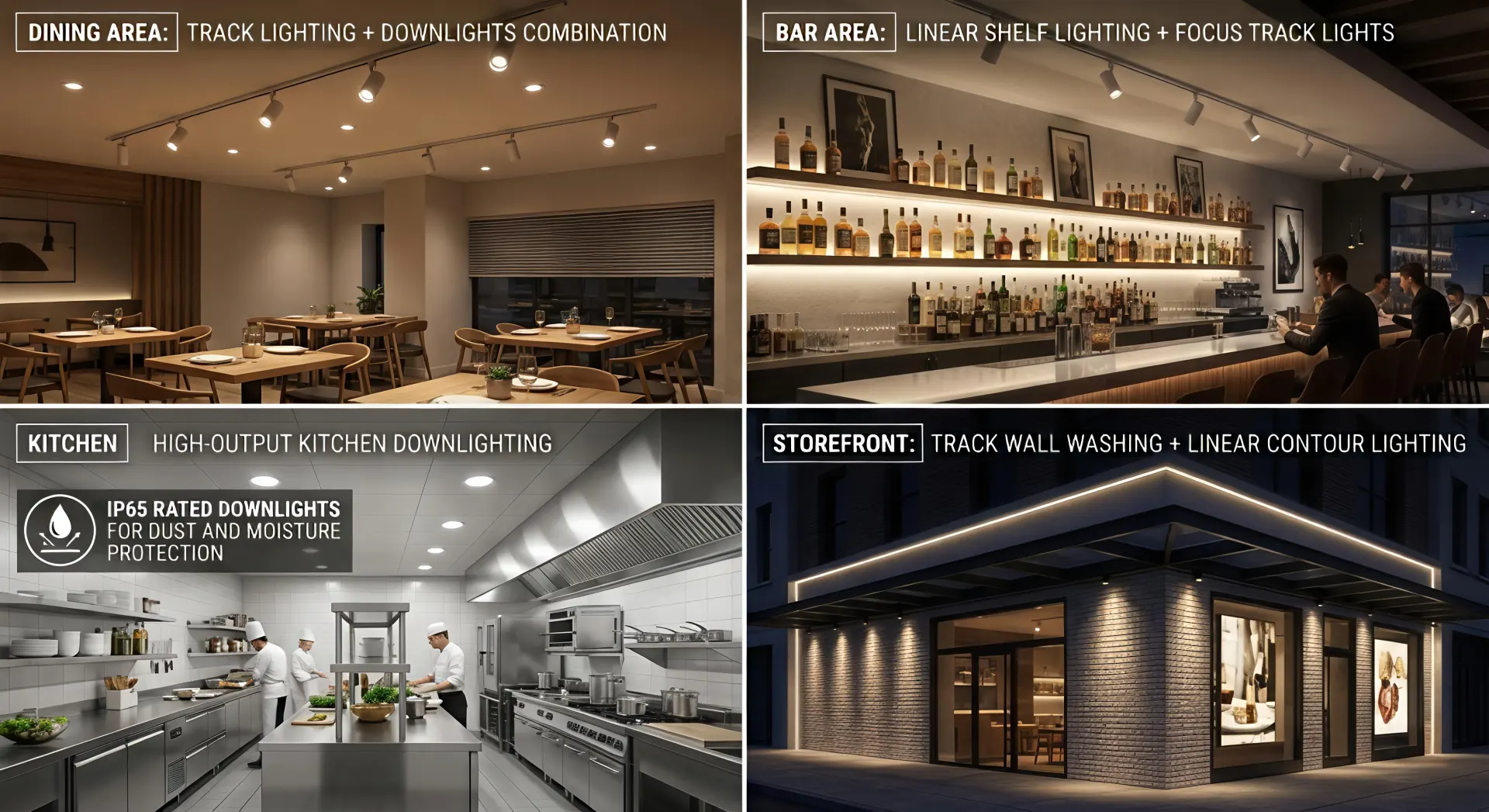
One of the core advantages of Restaurant LED Lighting Solutions is their strong adaptability, which can cover every scene of the restaurant. Whether it is the front hall, kitchen, storefront or outdoor area, it can provide targeted lighting solutions to achieve “both function and beauty, both practicality and experience”. The lighting needs of different scenes are different, and the design and lamp selection of the solution are also different, which can be specifically divided into the following core scenes:
Key Application Scenarios and Lighting Requirements
| Scene | Core Lighting Goal | Recommended Lamps & Parameters |
|---|---|---|
| Dining Area | Create comfortable atmosphere and highlight dish presentation | LED pendant lights (CRI≥90, 2700K-3500K); embedded downlights |
| Bar Area | Highlight appearance and display effect of drinks | LED linear lights, spotlights (IP44+, 3000K-3500K) |
| Kitchen Area | Ensure brightness, safety and practicality | Explosion-proof LED lights (IP65+, 4000K-5000K) |
| Storefront & Entrance | Attract customers and enhance brand recognition | LED light-emitting characters, wall washers (high brightness) |
5. Common Lighting Mistakes in Restaurants
Even with LED fixtures, poor design reduces effectiveness.
| Mistake | Consequence |
|---|---|
| Over-lighting | Cold, cafeteria feel |
| Wrong CCT selection | Brand mismatch |
| No accent lighting | Flat, lifeless space |
| Low CRI fixtures | Poor food appeal |
| No dimming system | Inflexible atmosphere |
A professionally planned Restaurant LED Lighting Solutions approach avoids these pitfalls through proper lighting calculations and scene planning.
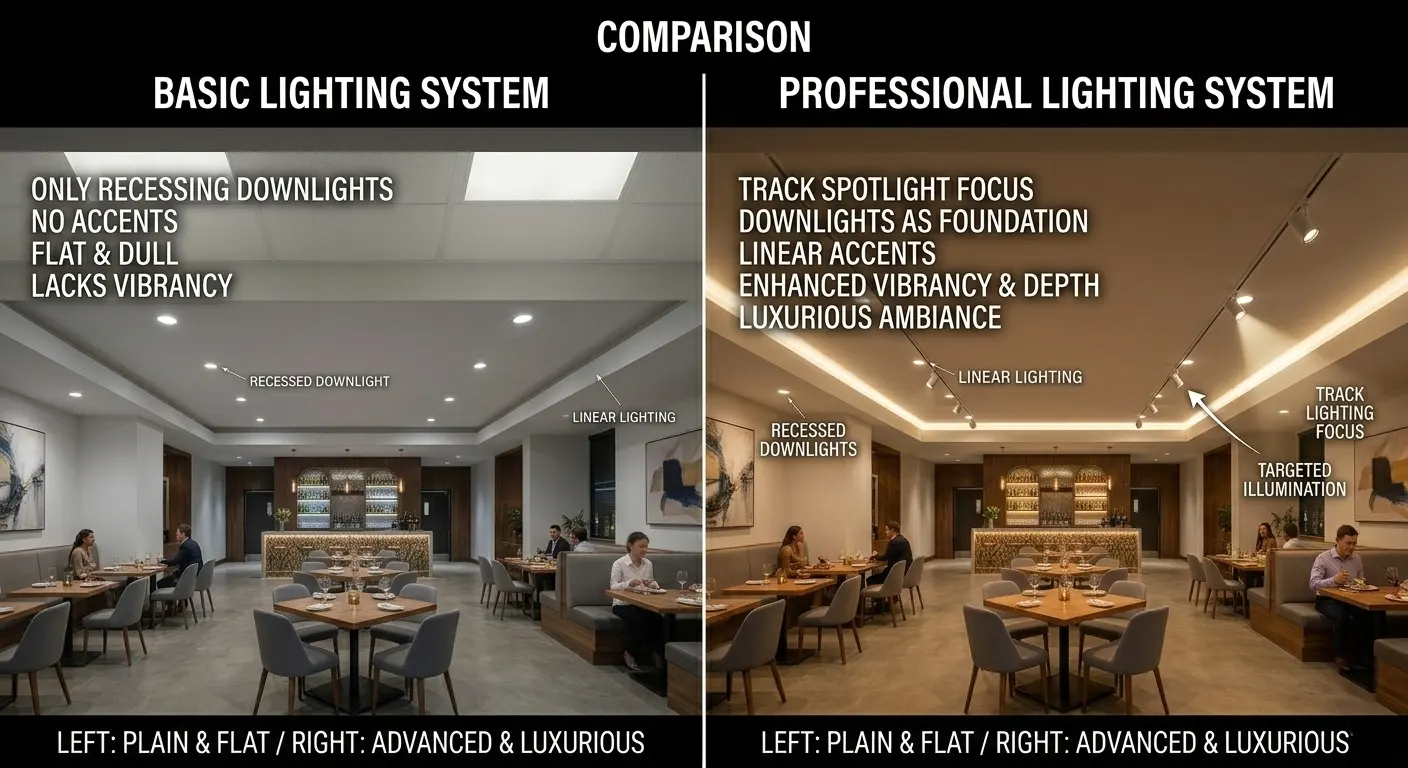
6. Case Comparison: Mediocre Lighting vs. Professional Restaurant LED Lighting Solutions
To more intuitively understand the value of professional Restaurant LED Lighting Solutions, we compare the core differences between the two lighting schemes, allowing catering businesses to clearly see the gap:
| Comparison Dimension | Ordinary Commercial Lighting | Professional Restaurant LED Lighting Solutions |
|---|---|---|
| Visual Effect | Stiff shadows, uneven light distribution, lack of layering, looking cheap | Soft transition, prominent focus (e.g., table center, dish display area), rich space layering, strong sense of high grade |
| Food Presentation | Low color rendering index, dull color, lack of vitality, affecting diners’ appetite | CRI≥90, bright color, full texture, restoring the true color of food, enhancing attractiveness |
| Customer Feedback | Eyes are easy to get tired, poor space experience, low repurchase rate, few active photo sharing | Comfortable environment, suitable for long-term socializing, high repurchase rate, easy to stimulate the willingness of photo sharing, helping brand communication |
| Operational Cost | High energy consumption, short lamp life, frequent maintenance, high long-term cost | Energy saving of more than 80%, long lamp life, low maintenance cost, recovery of purchase cost within 12-18 months |
When selecting a supplier, evaluate:
- Restaurant project experience
- Customization capability (beam angle, CCT, CRI)
- Smart control integration
- Factory-direct manufacturing capacity
- Warranty & after-sales service
Price alone should not determine choice. Long-term ROI matters more than initial cost.
8. Standard Lighting vs. Professional Restaurant LED Lighting Solutions
| Comparison | Basic Commercial Lighting | Professional LED Solution |
|---|---|---|
| Atmosphere | Uniform & flat | Layered & dynamic |
| Energy Use | High | Optimized |
| Food Appearance | Dull | Vibrant |
| Flexibility | Fixed | Scene-based |
| Brand Alignment | Generic | Customized |
| Lifecycle Cost | High | Reduced |
The difference is not just visual—it is financial and strategic.
Conclusion: Lighting as a Strategic Asset in Modern Foodservice
Restaurant LED Lighting Solutions are no longer a simple procurement decision. They are a long-term strategic asset that enhances customer psychology, protects profit margins, and strengthens brand differentiation.
Through:
- High CRI performance
- Intelligent dimming systems
- Energy-efficient operation
- Commercial-grade durability
- Customized design
Restaurants can transform lighting from a background utility into a silent sales driver.
As the foodservice industry continues evolving toward smarter, more experiential environments, forward-thinking operators recognize that lighting is not an expense—it is an investment.

