



IP65 LED Linear Lights for Covered Walkways Could Help You Cut Maintenance Costs. Here’s Why.
By JC
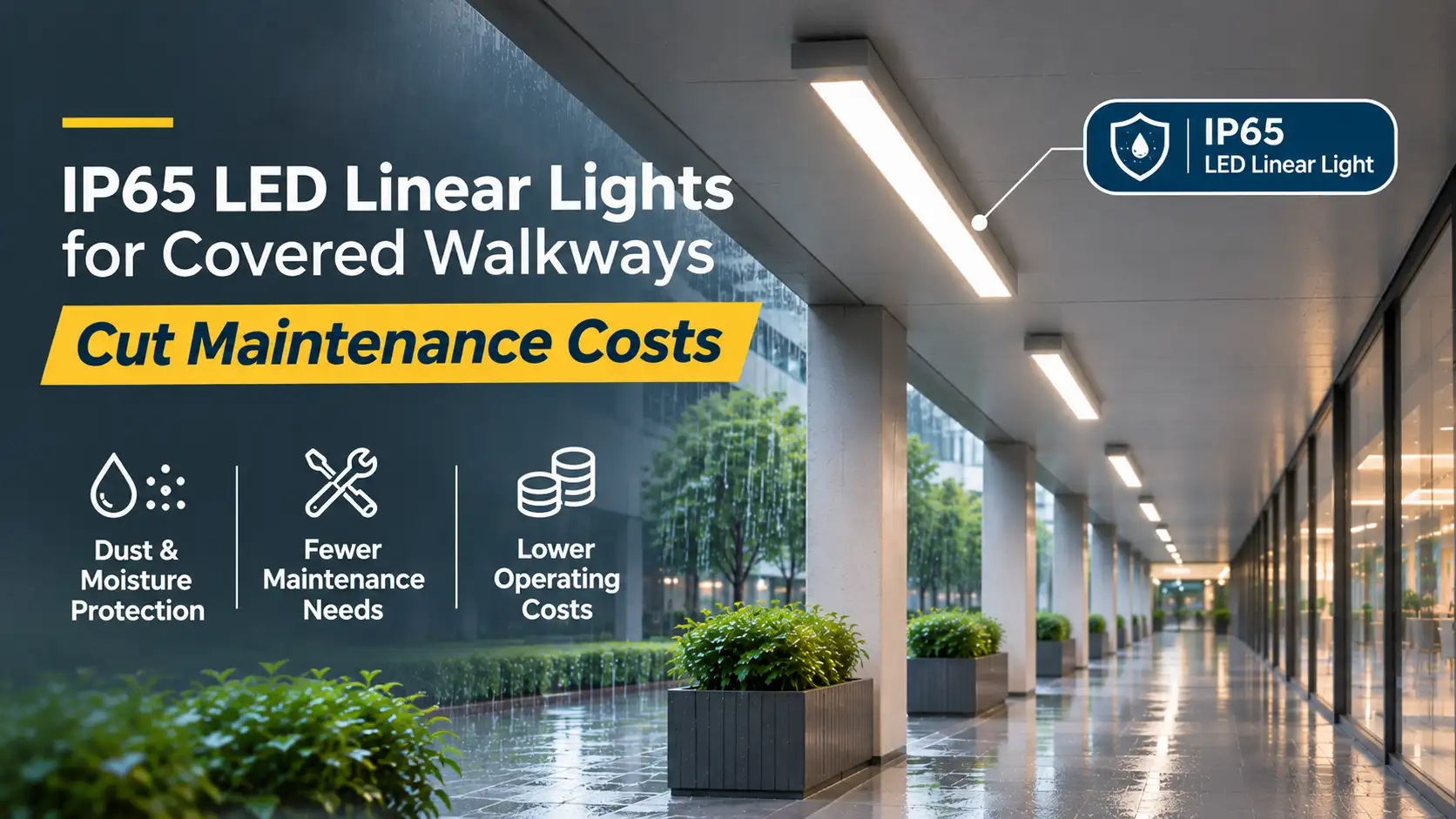
Covered walkways provide shelter from the rain, but can they truly keep out moisture? IP65 LED linear lights for covered walkways help protect lighting fixtures against water exposure.
Covered walkways are a common architectural feature in shopping malls, office buildings, hotels, and other commercial structures. The overhead canopy prevents rain from falling directly onto the path, creating a more comfortable environment for pedestrians.
However, having a roof does not mean these walkways are entirely shielded from the external environment.
Since some walkways are open to the outdoors on one or both sides, they remain exposed to atmospheric moisture, wind-driven rain, and dust.
In regions with frequent rainfall, high humidity, the operating conditions for lighting fixtures can differ from those found in typical indoor spaces.
Consequently, when planning lighting systems for such areas, it is essential to consider not only brightness, power, and aesthetics. The fixtures’ ability to withstand environmental factors also matters.
For projects where moisture or dust may be a concern, IP65-rated LED linear lights are an excellent lighting solution to consider for covered walkways.
1. Semi-Outdoor Walkway Lighting: Why do covered walkways still face issues with dampness?
Covered corridors are generally viewed as transitional spaces between the indoors and the outdoors. While their overhead structures can shield against vertically falling rain, the specific design of a corridor will influence the actual environment to which lighting fixtures are exposed.
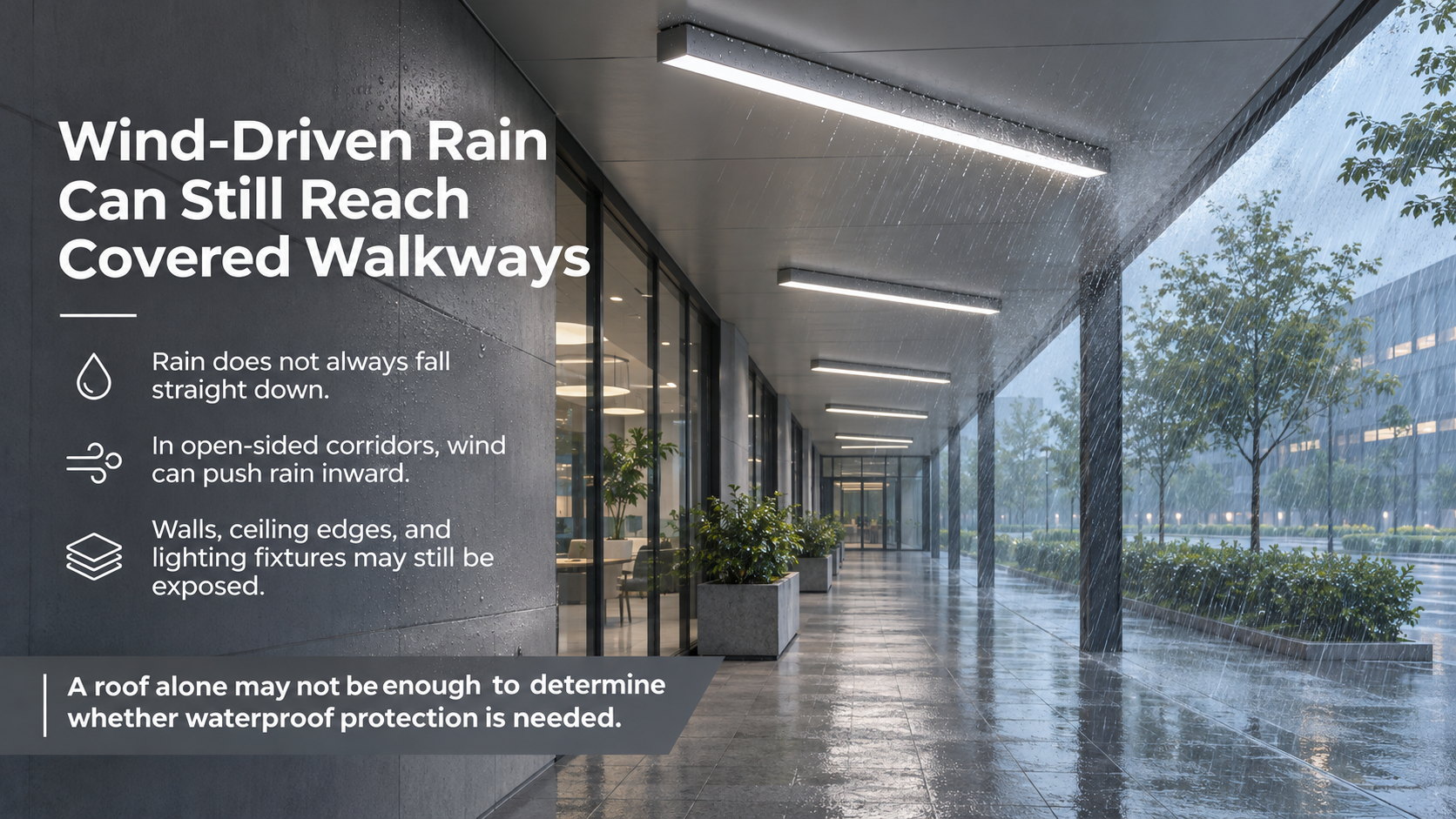
Wind-blown rain may enter open-air corridors
For corridors that are open on one or both sides, rainwater does not necessarily fall only from directly above.
In strong winds, rain may enter the corridor at an angle, coming into contact with walls, the edges of ceilings, or light fixtures installed in these areas.
This scenario is relatively common in exterior building walkways, connecting passages within commercial complexes, and the perimeters of open-air parking structures.
Changes in air humidity and temperature may pose a risk of condensation
In addition to rainfall, air humidity is another factor that must be considered for semi-outdoor lighting.
When humid air comes into contact with a cooler surface, water vapor may condense into tiny droplets, provided that specific temperature and humidity conditions are met.
In architectural areas subject to significant temperature fluctuations, condensation may form on the luminaire housing and its surrounding structures. If the luminaire’s structural design, seals, or electrical connections are not suited for such an environment, the risk of malfunction may increase over time.
Waterproof LED Linear Lights: What potential issues might arise when using standard indoor linear lights in semi-outdoor corridors?
Standard indoor LED linear lights are typically designed for spaces that are relatively dry and have stable environmental conditions.
Installing fixtures not suited for damp environments in semi-outdoor areas may introduce additional risks.
Moisture ingress may affect the internal components of the lighting fixture
A light fixture typically contains an LED light source, a circuit board, a power driver, and electrical connection components.
If the fixture housing is not sufficiently sealed, if wiring points lack proper protection, or if moisture enters the interior through other paths, it may increase the risk of corrosion to metal components, a decline in insulation performance, or electrical failure.
These issues may not necessarily appear immediately after installation; they can also emerge gradually as the unit remains exposed to the environment over time.
Lighting malfunctions may increase maintenance work in public areas
When corridor lights require repairs, staff may need to use ladders or lifting equipment, or even temporarily close off sections of a passageway.
Consequently, considering the specific environmental protection requirements during the procurement phase can help mitigate the risk of future maintenance issues stemming from improper product selection.
It should be noted, however, that the use of waterproof lighting does not equate to a completely maintenance-free solution. Factors such as product quality, installation methods, and actual operating conditions will continue to influence long-term performance.
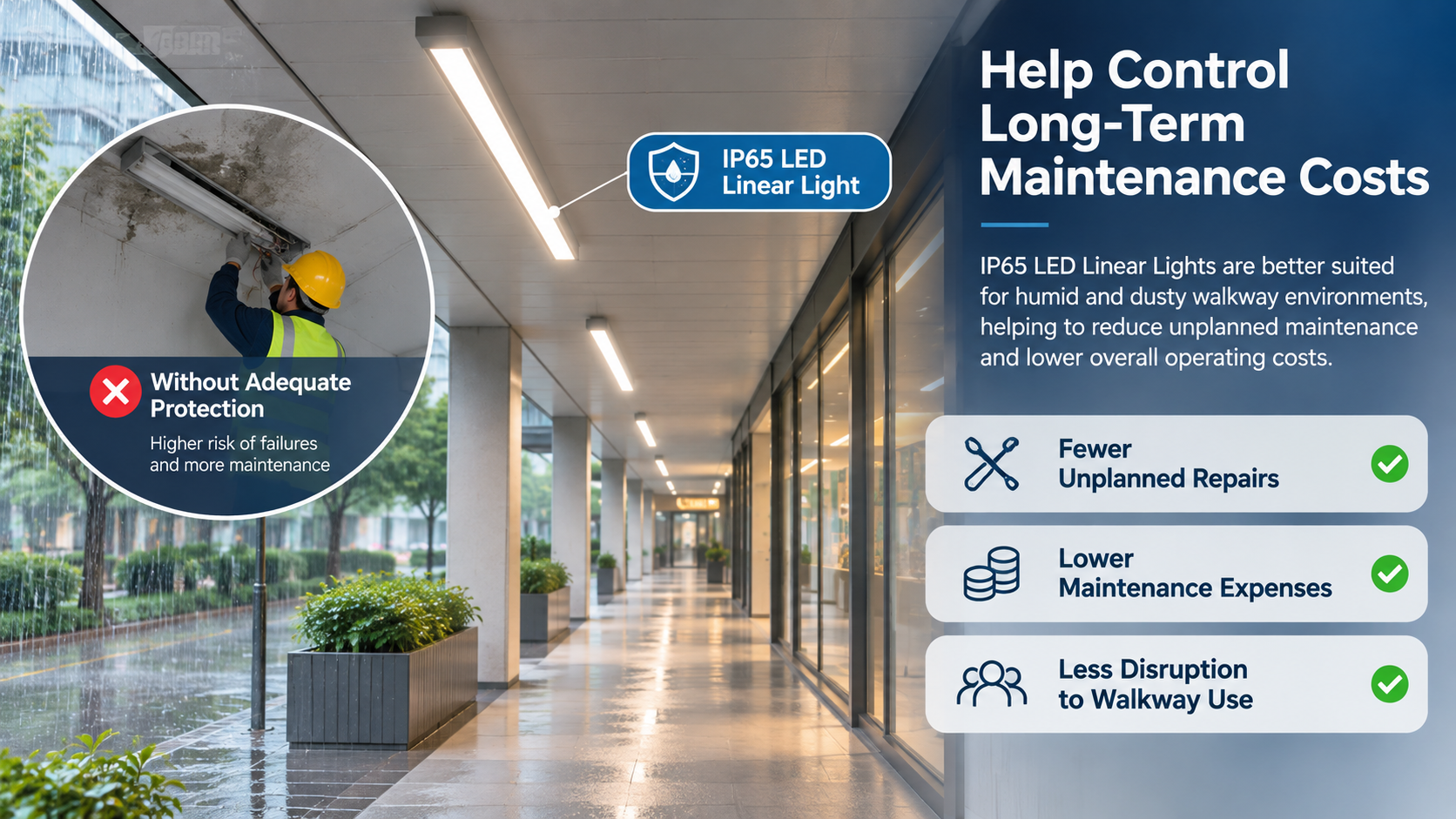
Reduce Unexpected Lighting Maintenance
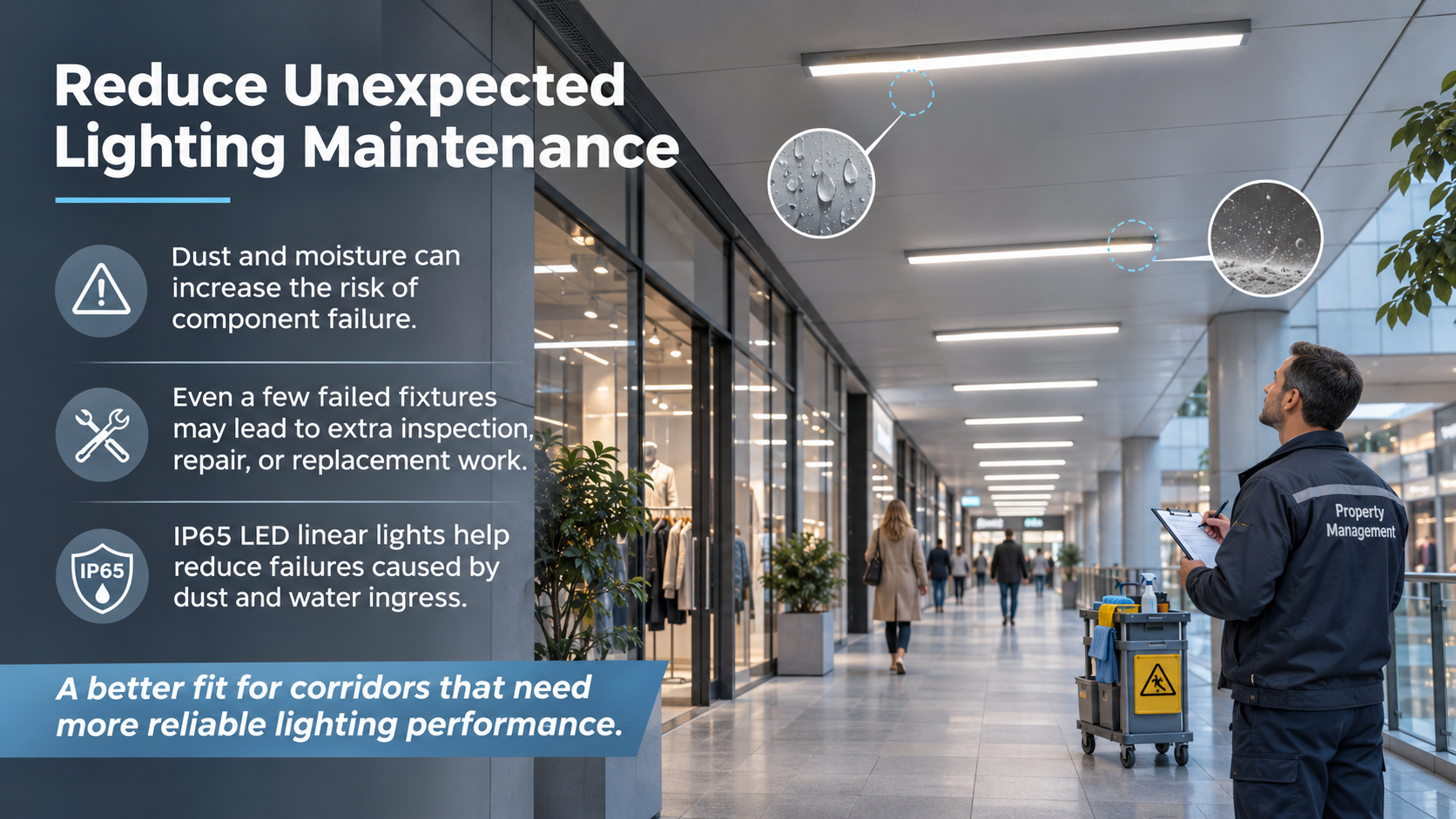
If lighting fixtures lack adequate water protection, the ingress of moisture can electrical component failure or damage to internal parts.
In commercial buildings with multiple corridors or extensive public passageways, even the failure of just a few lighting fixtures may require property management to arrange for inspections, repairs, or replacements.
Selecting IP65-rated LED linear lights—which are designed for such environments—helps mitigate the risk of malfunctions caused by the ingress of dust and moisture, thereby reducing the need for unplanned, ad-hoc maintenance.
Help Control Long-Term Maintenance Costs
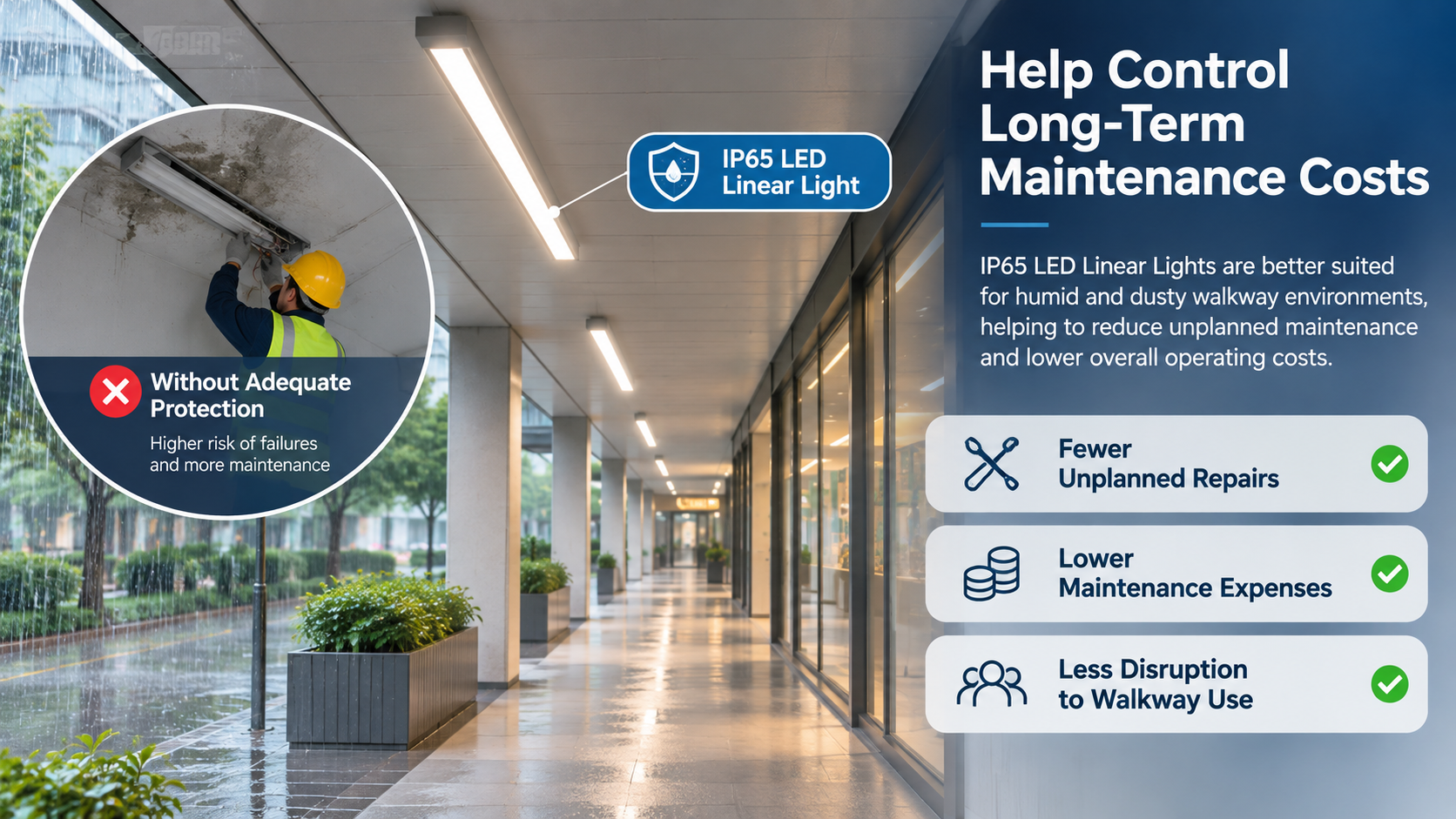
The purchase price of lighting fixtures represents only a portion of the total cost of a commercial lighting project.
For building owners, ongoing expenses—such as labor for repairs, equipment replacement, the rental of access equipment (like lifts), and the coordination of maintenance work—can lead to significant additional costs.
For instance, if a light fixture located in a high-ceilinged corridor fails, the property management may need to arrange for maintenance personnel and specialized equipment; in some cases, this might even require temporarily restricting access to certain areas.
Selecting lighting fixtures that are better suited to the specific site conditions—such as environments prone to moisture or dust—can help reduce unplanned repairs caused by environmental factors, thereby enabling owners to better control long-term maintenance expenditures.
Ultimately, however, the extent of any cost savings will depend on factors such as the quality of the fixtures, installation conditions, the frequency of maintenance, and the actual operating environment.
| Environmental Challenges | IP65 Protection | Benefits for Building Owners |
|---|---|---|
| Dust exposure | Dust-tight enclosure helps prevent dust ingress | Reduces dust-related failure risks |
| Wind-driven rain | Protection against water jets under specified test conditions | Helps reduce the risk of water ingress |
| Humid environments | IP65 provides ingress protection but does not guarantee condensation resistance | Encourages appropriate fixture selection |
| Long-term environmental exposure | Helps protect internal components from dust and water ingress | May reduce unplanned maintenance needs |
The overall protection of a lighting fixture is more important than the individual IP rating digits
Moisture can enter a lighting system through junction boxes, cable connection points, or sealing structures that have been compromised during installation.
In environments where condensation may occur, it is also essential to verify that the luminaire is suitably designed to withstand the prevailing temperature and humidity conditions.
When selecting IP65 linear lights, the key is not merely to look at the protection rating, but to ensure that the entire lighting system is capable of adapting to the actual environment of the project.
How to Choose IP65 LED Linear Lights for Covered Walkways: What Selection Factors Should Be Considered?
For engineering contractors, lighting designers, and procurement personnel, suitable lighting fixtures must not only provide the necessary level of protection but also meet the specific lighting and operational requirements of a project.
IP65 LED Linear Lights for Covered Walkways help reduce moisture-related maintenance risks and support more reliable lighting for commercial spaces.
Evaluate corridor width, length, and installation height
Before determining the number of light fixtures, it is essential to understand the basic dimensions of the corridor and how it will be used.
Narrow passageways and wide commercial walkways may have different requirements regarding the coverage area and arrangement of lighting fixtures.
For instance, a wider corridor might necessitate specific light distribution patterns or a multi-row fixture layout, while a longer corridor requires careful attention to the spacing between fixtures to avoid noticeable gaps in illumination.
Evaluate lighting performance and long-term operating costs
Public corridors in commercial buildings often require long daily lighting durations, making energy consumption an important consideration.
Luminous efficacy—typically expressed in lm/W—measures the amount of luminous flux a luminaire produces per watt of electrical power consumed.
Provided that functional lighting requirements are met, luminaires with higher luminous efficacy can help reduce a project’s electricity consumption.
Consider the ease of maintaining the lighting fixtures
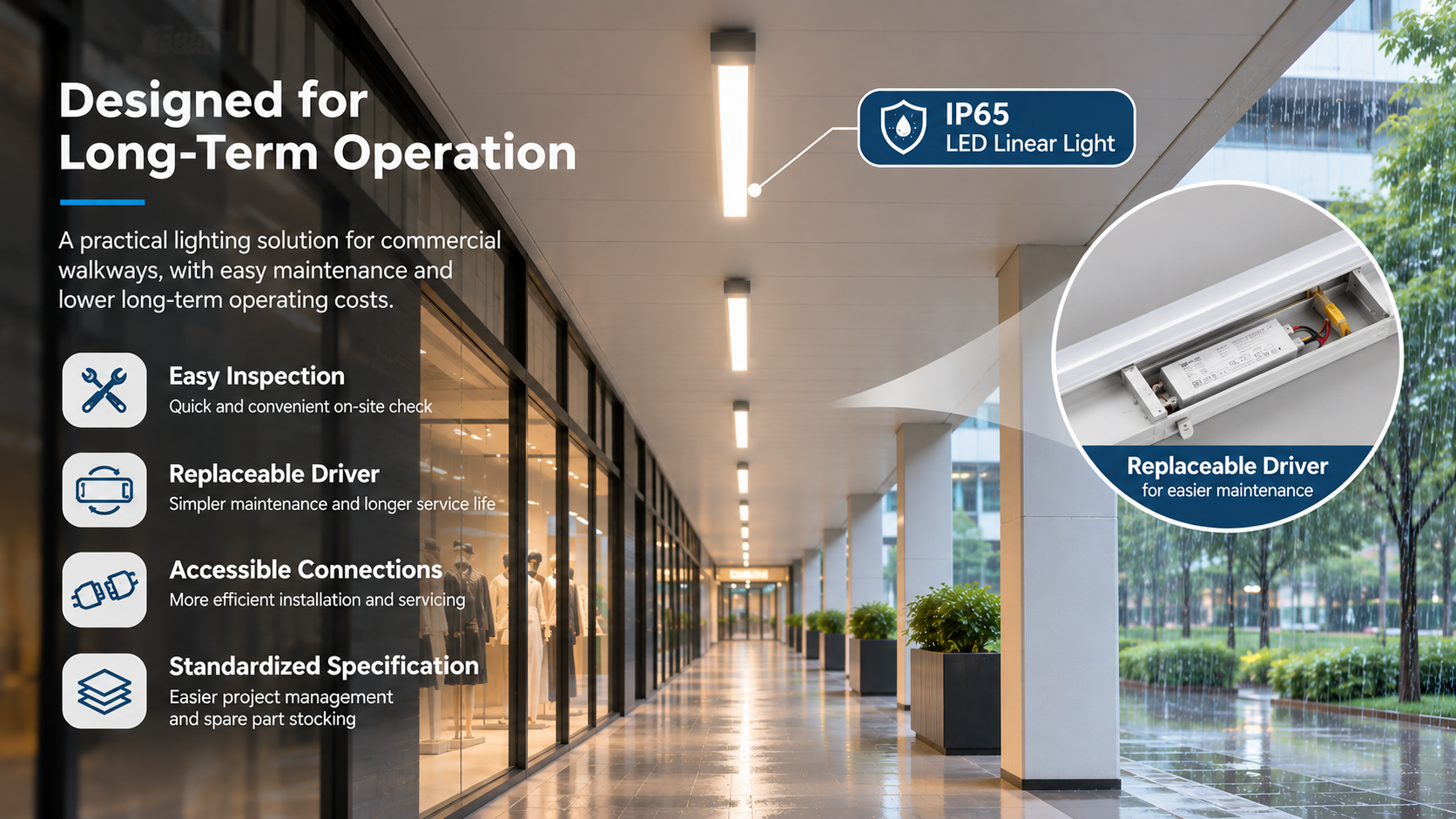
Beyond energy consumption, maintenance is a significant component of the long-term costs associated with commercial lighting.
Factors such as the ease of inspecting installed fixtures, the replaceability of LED drivers, the accessibility of connection components, and the ability to standardize lighting specifications across a project can all impact operational efficiency over time.
For long commercial corridors, considering these aspects in advance helps prevent a procurement approach that focuses solely on the initial purchase price while overlooking long-term maintenance requirements.
How IP65 LED Linear Lights Benefit Commercial Building Owners
| Challenges | Potential Impact on Building Owners | Benefits of Suitable IP65 Linear Lights |
|---|---|---|
| Dust and moisture exposure | Increased risk of lighting failures | Helps prevent dust and water ingress |
| Frequent fixture maintenance | Additional labor and replacement costs | May reduce unplanned maintenance |
| Lighting repairs in busy walkways | Temporary disruption to daily operations | Helps reduce maintenance-related interruptions |
| Lighting failures in public areas | Uneven lighting and a poorer visual experience | Supports more consistent lighting performance |
Confirm whether the product is truly suitable for semi-outdoor environments
Finally, it is necessary to verify the environmental operating range of the actual product, including its working temperature, permissible humidity levels, tolerance for condensation, and restrictions regarding direct exposure to rain.
For projects located near the coast or in environments exposed to salt spray or corrosive substances, it may also be necessary to confirm the corrosion resistance of the materials and surface treatments used.
It is particularly important to note that not all indoor luminaires with an IP65 rating are suitable for use in semi-outdoor corridors. If a product is approved only for indoor environments where condensation does not occur, an IP65 rating is not sufficient to deem it suitable for long-term semi-outdoor installation.
Only after completing these checks can engineering personnel proceed to evaluate how well the product aligns with the specific requirements of the project.
IP65 Commercial Linear Lighting: How to Balance Protection, Lighting Experience, and Long-term Maintenance?
When selecting lighting for a covered corridor, one must look beyond whether the fixtures can provide sufficient brightness.
Although the overhead structure offers some protection from direct rainfall, the open-air environment—characterized by humidity, dust, and wind-driven rain—imposes additional requirements for fixture durability and protection.
For commercial projects where such environmental risks are present, IP65-rated LED linear lights are a viable lighting solution.
Furthermore, factors such as optimal light distribution, appropriate mounting methods, and ease of future maintenance significantly influence both the overall performance and the long-term costs of the project.
For clients planning to use these lights in semi-outdoor corridors, we recommend providing details regarding the project environment, installation height, and specific protection requirements. This will allow us to verify whether the selected models and the proposed installation scheme are appropriate for your needs.
An appropriate lighting solution for a commercial corridor involves more than just selecting a fixture with an adequate waterproof rating; it requires aligning protective capabilities, lighting requirements, architectural structure, and long-term maintenance needs.

