



High Lumen Downlight: How to Choose the Right LED Lighting for Large Spaces
By Vincent
1. What Is a High Lumen Downlight and Why Do Large Spaces Need It?
In commercial lighting projects, how bright the lights are directly affects how the space feels, the lighting effect, and your ongoing running costs. Especially for places like shopping malls, supermarkets, car showrooms, hotel lobbies and big exhibition halls, regular low-wattage downlights usually can’t hit the brightness you need. That’s why more and more commercial lighting buyers are looking at high lumen downlight.
So what exactly is a high lumen downlight?
Simply put, it’s an LED downlight that puts out a lot of light. Lumen (lm) is the unit that measures how much visible light a fixture produces. Generally, the higher the lumen count, the more light you get.
But here’s the thing: high lumens don’t automatically mean high wattage. A really good high lumen downlight needs strong light output, and it also has to be energy-efficient, have good beam distribution, and stay reliable over time.
For large commercial spaces, picking the right high lumen downlight lets you meet lighting requirements while cutting down on the number of fixtures and your overall power use.
2. Why Do Large Spaces Need High Lumen Downlights?
Unlike residential spaces, large commercial buildings often have higher ceilings, wider floor areas, and longer daily operating hours.
Using a large number of low-wattage fixtures may increase installation work, wiring complexity, and maintenance requirements.
High lumen downlights offer several advantages for these applications.
2.1 More Light Output for High Ceilings
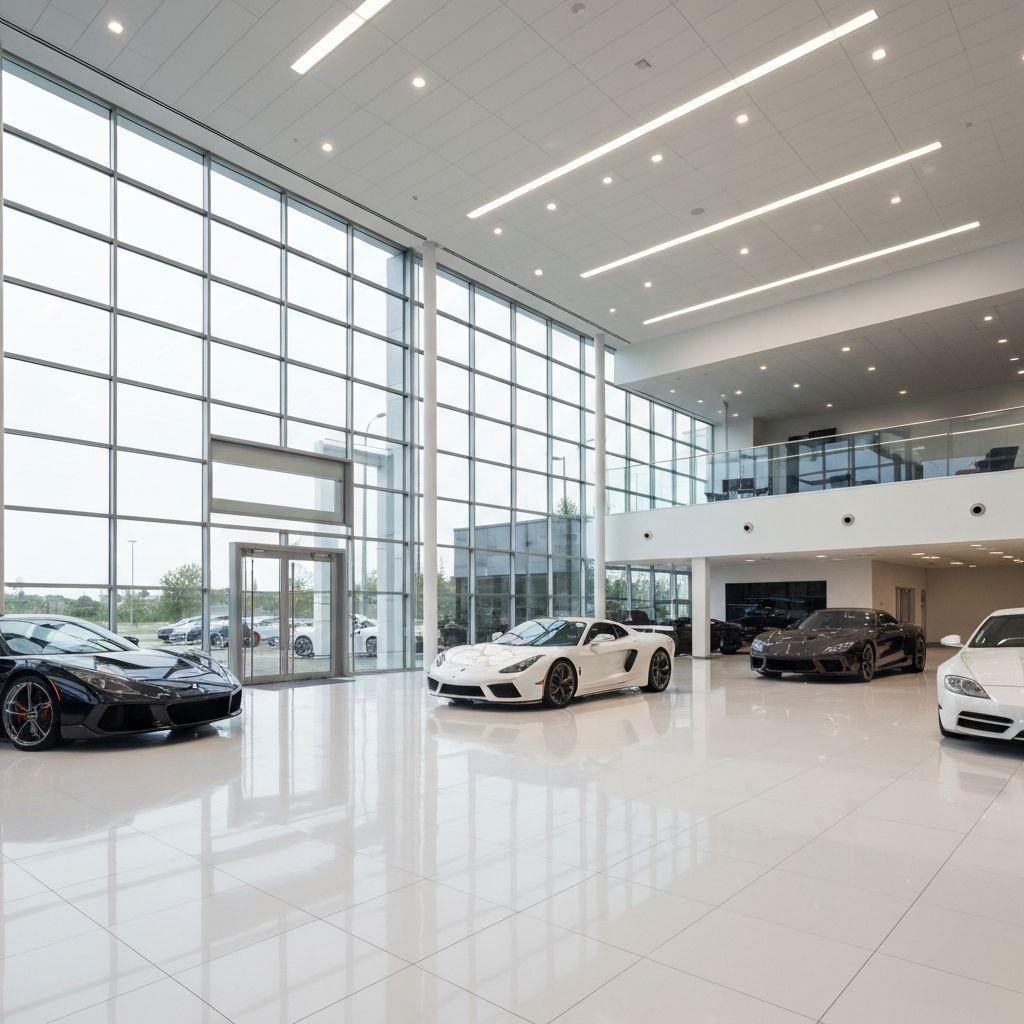
In spaces with high ceilings, light travels a longer distance before reaching the floor or working surface. As the mounting height increases, maintaining the required illuminance becomes more challenging.
That’s why high-ceiling projects often need fixtures with higher lumen output.
Think about automobile showrooms, shopping mall atriums, and large hotel lobbies. These spaces need enough light to keep the entire area bright and visually comfortable.
A high lumen downlight can deliver more light from each fixture, making it a practical option for these applications.
2.2 Fewer Fixtures, More Efficient Layout
High lumen downlights provide greater light output per fixture.
When the lighting layout is properly designed, using fixtures with higher lumen output may reduce the number of lighting points needed to achieve the target illuminance and uniformity.
This can create a cleaner ceiling design while potentially reducing fixture purchasing, wiring, and installation costs.
Of course, the final number of fixtures should always be determined by lighting calculations and actual site conditions.
2.3 Lower Energy Consumption for Commercial Buildings
Shopping malls, supermarkets, and large retail stores often keep their lights on for many hours every day.
Over time, lighting can become a significant part of a building’s electricity bill.
Choosing high-efficiency LED downlights means getting more light from every watt of electricity consumed.
For commercial projects with long operating hours, high lumen and high-efficiency downlights can make a real difference in long-term energy costs.
3. High Lumen vs. High Wattage vs. High Luminous Efficacy
When choosing a high lumen downlight, it’s easy to confuse three important terms: Lumen, Wattage, and Luminous Efficacy.
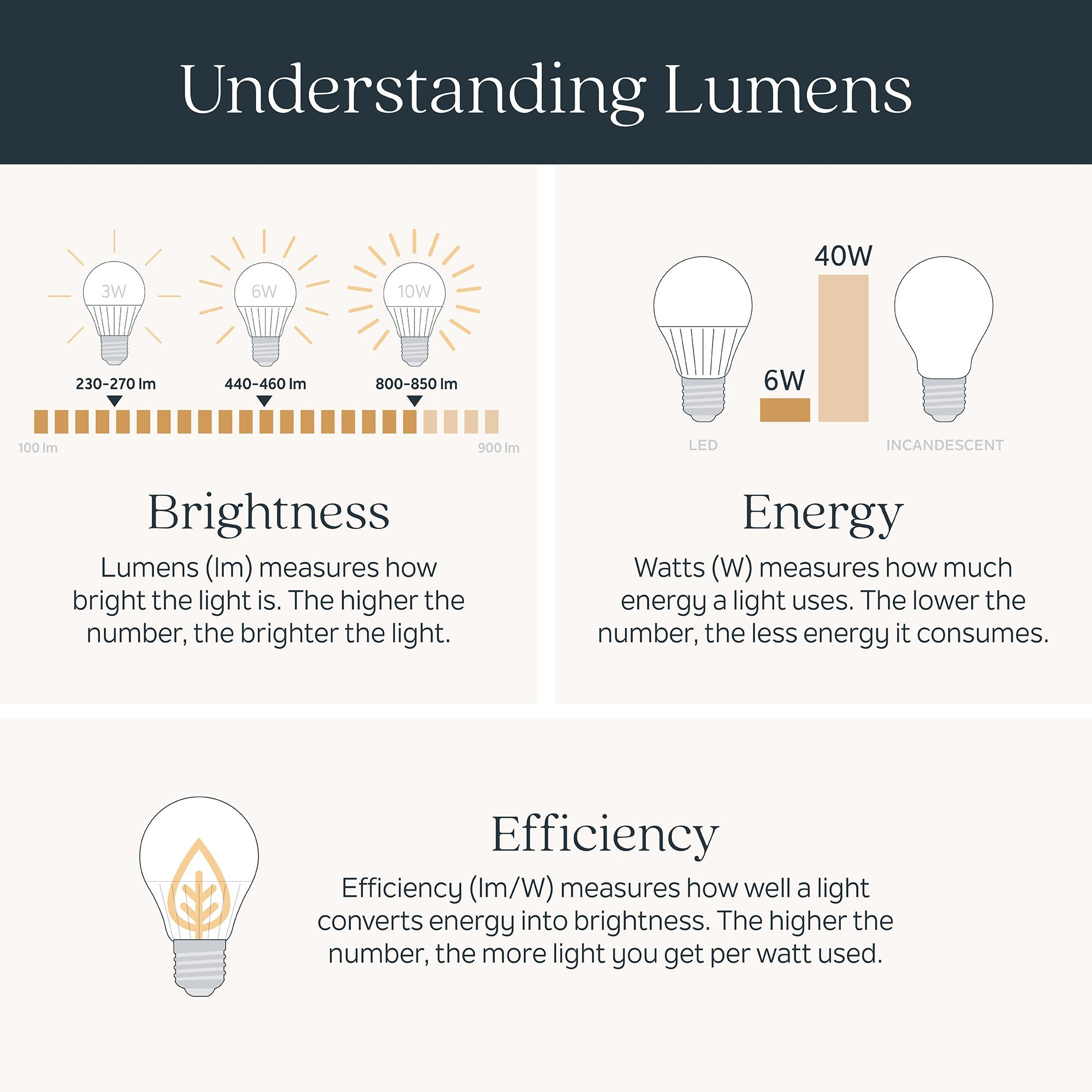
They are related, but each tells you something different about a lighting fixture.
| Parameter | What It Means | Unit |
|---|---|---|
| Lumen | The total amount of light produced by a fixture | lm |
| Wattage | The electrical power consumed by a fixture | W |
| Luminous Efficacy | How much light a fixture produces per watt of electricity | lm/W |
For example, a 100W LED downlight with an efficacy of 180 lm/W can theoretically produce:
100W × 180 lm/W = 18,000 lm
Let’s look at another example. If a project requires 18,000 lumens, here’s how much power different efficacy levels would need:
| Luminous Efficacy | Power Required |
|---|---|
| 100 lm/W | 180W |
| 120 lm/W | 150W |
| 150 lm/W | 120W |
| 180 lm/W | 100W |
As you can see, a higher-efficacy fixture needs less electrical power to deliver the same amount of light.
That’s why you shouldn’t look at wattage alone when buying a high lumen LED downlight. Actual system efficacy is just as important.
4. 5 Key Factors When Choosing a High Lumen Downlight
Choosing the right high lumen downlight for a commercial project involves more than simply looking for the highest lumen output.
Here are five important factors worth checking before making a decision.
4.1 High Luminous Efficacy
Luminous efficacy tells you how efficiently a fixture converts electrical power into light.
For commercial buildings that operate for long hours, choosing high-efficacy LED downlights can help reduce electricity consumption.
For example, a downlight reaching 180 lm/W can deliver more light with less power compared with a conventional fixture with lower efficacy.
Over the lifetime of a commercial lighting system, this can translate into meaningful energy savings.
4.2 Suitable Beam Angle
Beam angle determines how widely light spreads from a fixture.
Common downlight beam angles include 60°, 90°, and 120°.
- 60°: A relatively concentrated beam, suitable for applications that need more focused illumination.
- 90°: A good balance between light concentration and coverage, suitable for many commercial lighting applications.
- 120°: A wide flood distribution, ideal for general lighting across larger areas.
For large commercial spaces, the right beam angle should be selected based on ceiling height, fixture spacing, and the required illuminance.
A wider beam isn’t always better. What matters is how well the light distribution matches the actual space.
4.3 High-Power Capability
Large spaces often require a high level of light output from individual fixtures.
That’s where high-power LED downlights come in.
A high-power design can deliver greater lumen output per fixture, making it easier to meet the lighting requirements of large areas and high ceilings.
However, power alone doesn’t guarantee good performance. Heat dissipation, driver quality, and overall product reliability are also important.
Always look at the complete fixture design rather than just its wattage.
4.4 Color Rendering and Color Temperature
Color Rendering Index (CRI) measures how naturally colors appear under a light source.
For general corridors and public areas, Ra80 is often sufficient.
For automobile showrooms, branded retail stores, and product display areas, Ra90 or higher may be a better choice because accurate color presentation is more important.
Color temperature also affects the atmosphere of a space.
For example:
- 3000K: Warm and welcoming, suitable for hospitality and premium retail environments.
- 4000K: Clean and balanced, ideal for modern commercial spaces.
Choosing the right CRI and CCT helps create a lighting environment that fits the purpose of the project.
4.5 Installation and Thermal Management
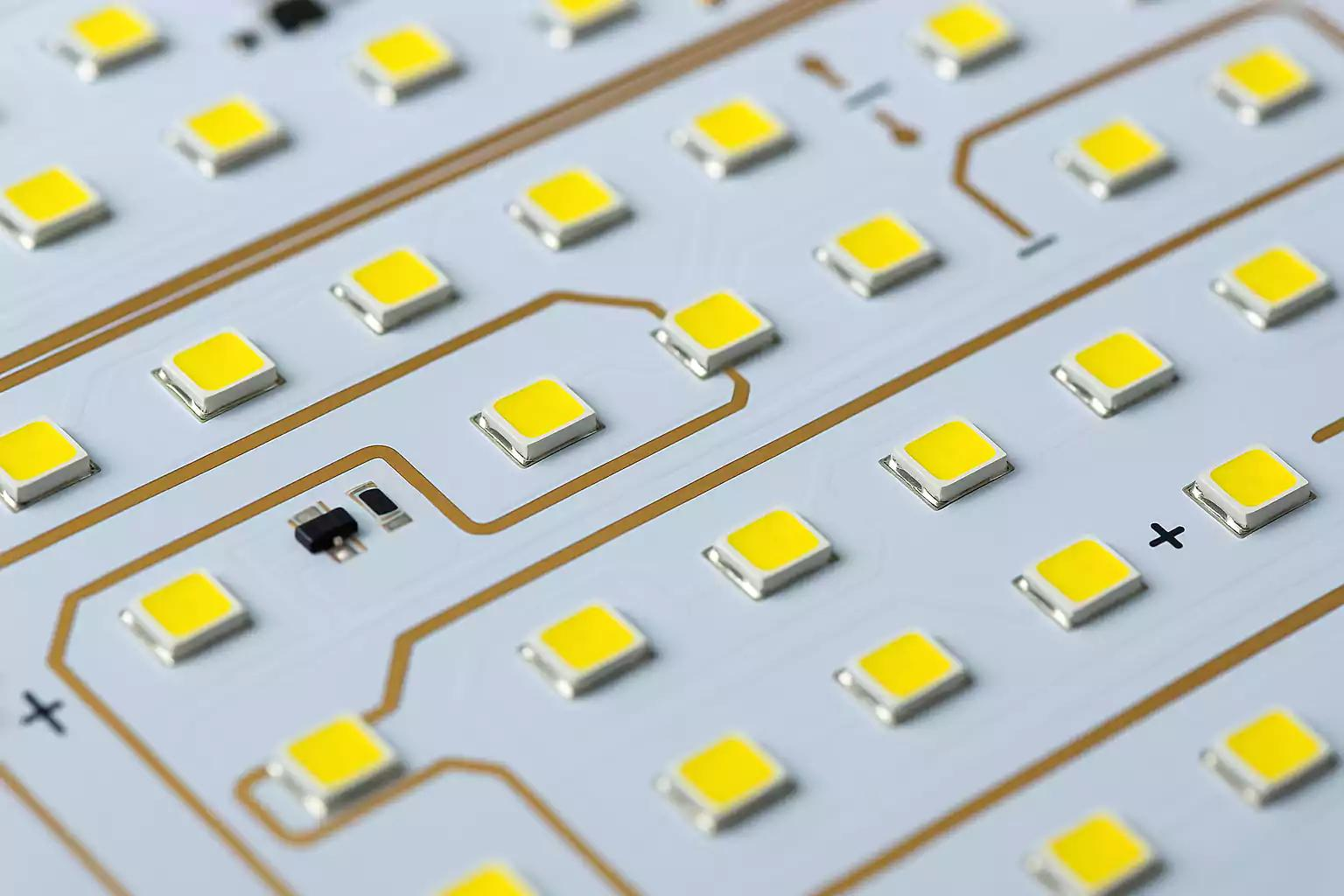
High-output LED downlights need proper thermal management to maintain stable performance.
A well-designed die-cast aluminum heat sink helps dissipate heat generated during operation.
You should also check the fixture’s cutout size, installation height, and available ceiling space before ordering.
This is especially important for renovation projects where ceiling depth may be limited.
A fixture that delivers excellent performance but doesn’t fit the ceiling is obviously not the right choice.
5. How to Reduce Energy Costs with High-Efficiency Downlights
A high lumen downlight should do more than provide enough brightness. It should also help commercial building owners reduce long-term electricity costs.
Let’s take a simple example.
Imagine a large retail store installing 100 downlights. Each fixture operates for 12 hours per day, 365 days a year. The electricity rate is assumed to be $0.30 per kWh.
We’ll compare two lighting solutions that deliver the same total lumen output.
| Parameter | Conventional Lighting | High-Efficiency Lighting |
|---|---|---|
| System Efficacy | 100 lm/W | 180 lm/W |
| Lumen Output per Fixture | 18,000 lm | 18,000 lm |
| Power per Fixture | 180W | 100W |
| Number of Fixtures | 100 | 100 |
| Total Power | 18 kW | 10 kW |
| Daily Energy Consumption | 216 kWh | 120 kWh |
| Annual Energy Consumption | 78,840 kWh | 43,800 kWh |
Annual Energy Savings:
78,840 – 43,800 = 35,040 kWh
Annual Electricity Cost Savings:
35,040 × $0.30 = $10,512
That’s over $10,000 in potential electricity savings every year!
For commercial operators with multiple stores or large buildings, the savings can become even more significant.
Note: This is a theoretical comparison based on equal lumen output and assumed operating conditions. Actual energy savings depend on lighting design, product performance, electricity rates, and operating hours.
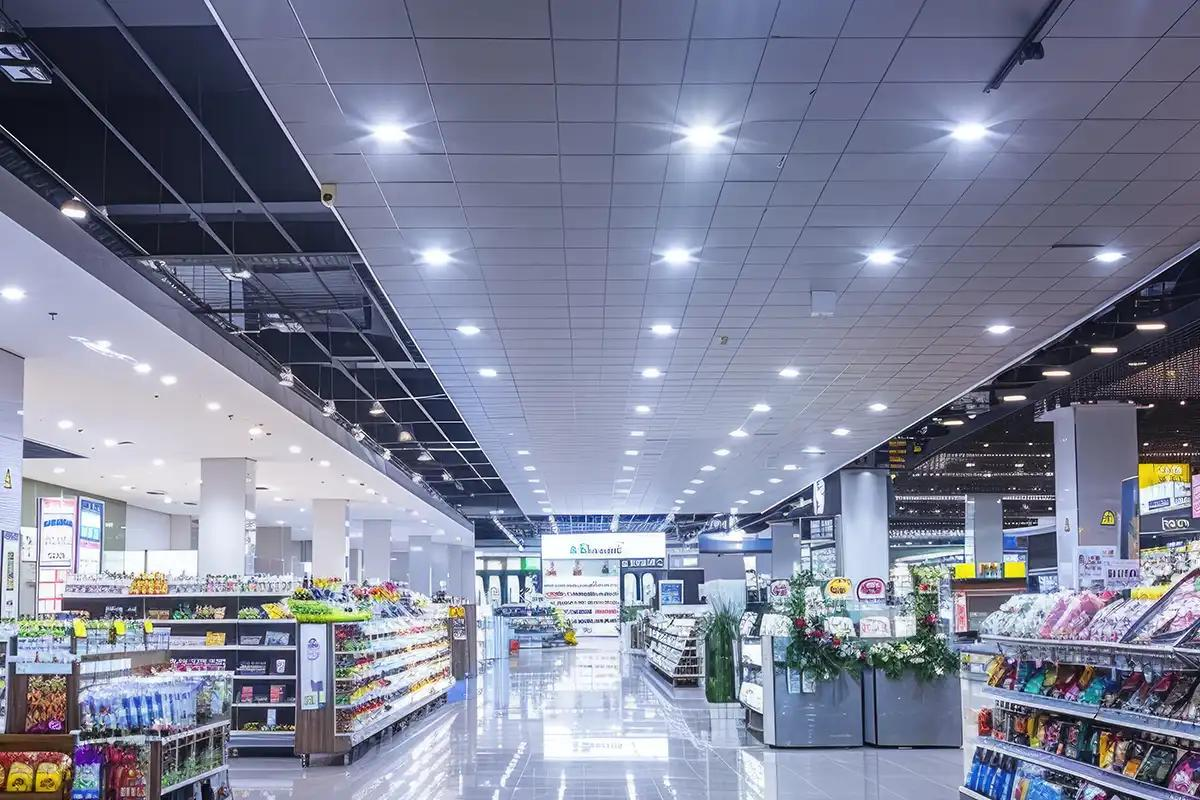
6. Life Series A18: A High-Efficiency High-Power LED Downlight for Large Spaces
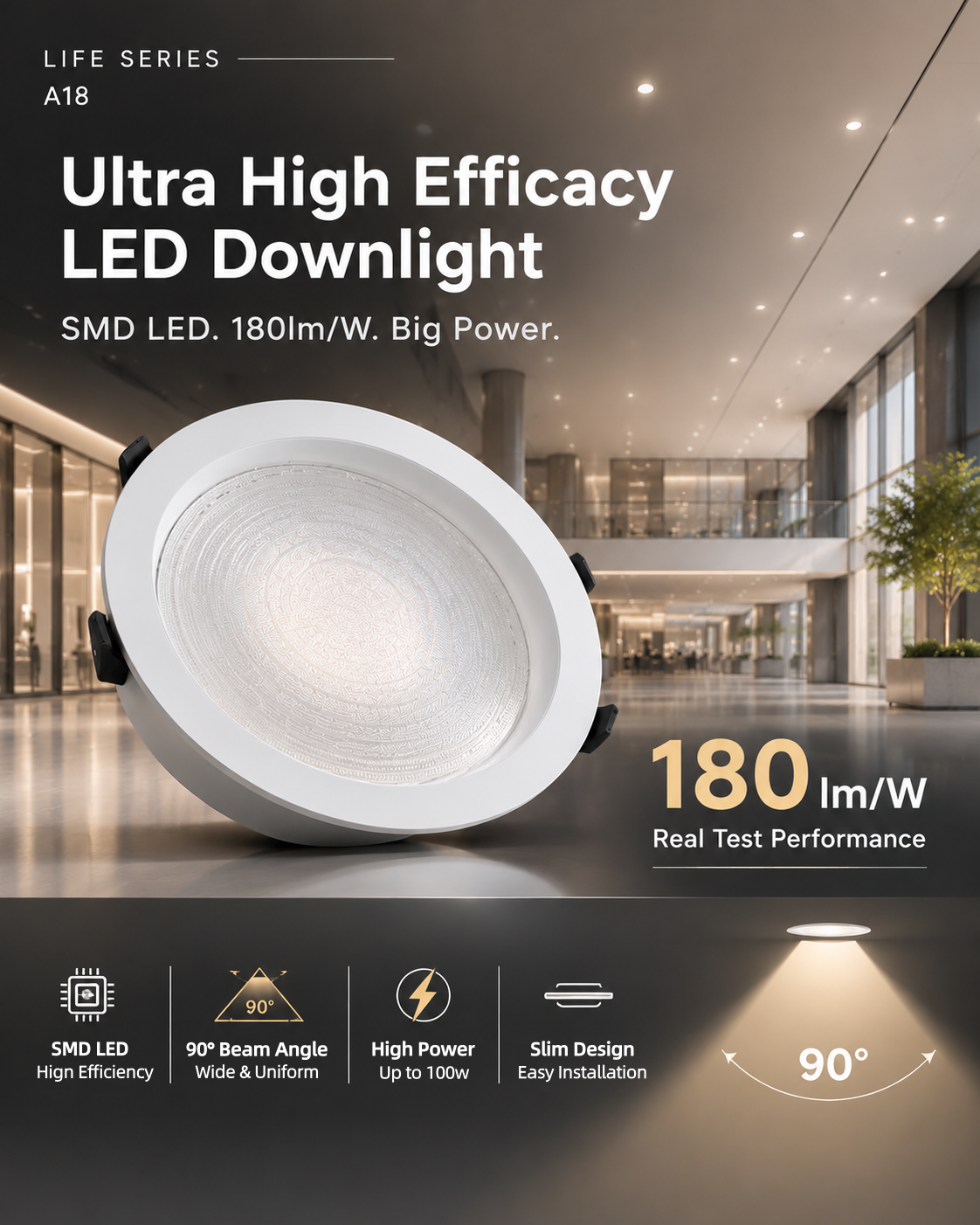
If you’re looking for an LED downlight that combines high light output, excellent energy efficiency, and powerful performance, Powerstar Life Series A18 is worth considering.
The A18 features SMD LED technology, combining high luminous efficacy with high-power capability. It’s designed for commercial projects where both brightness and energy efficiency matter.
Here are its key advantages.
1. 180 lm/W Real Tested System Efficacy
The Life Series A18 achieves a tested system efficacy of up to 180 lm/W, delivering more light output from every watt of electricity.
For commercial spaces that keep their lights on for extended hours, this helps reduce energy consumption and long-term operating costs.
2. SMD LED Technology
The A18 uses SMD LED light sources to support high-efficiency lighting performance.
Combined with proper optical design and thermal management, it provides a practical solution for commercial applications that require high light output and reliable operation.
3. 90° Beam Angle
With a 90° beam angle, the A18 provides a relatively controlled light distribution, balancing coverage and illumination concentration.
It’s suitable for general lighting in shopping malls, supermarkets, showrooms, and other commercial environments.
4. High-Power Output for Large Spaces
The A18 supports high-power configurations and delivers strong lumen output to meet the lighting demands of large commercial areas and high-ceiling spaces.
With proper lighting design, it can help optimize fixture layouts and potentially reduce installation costs.
Recommended Applications:
- Shopping Malls
- Supermarkets
- Automobile Showrooms
- Exhibition Halls
- Hotel Lobbies
- Large Retail Stores
Whether you’re planning a new commercial lighting project or upgrading an existing lighting system, the Life Series A18 combines high luminous efficacy, powerful output, and practical beam distribution to help create a more energy-efficient lighting solution.
Conclusion
Choosing the right high lumen downlight isn’t simply about selecting a fixture with higher wattage.
You need to consider the complete picture: lumen output, luminous efficacy, beam angle, color rendering, and thermal performance.
For large commercial spaces, a high-efficiency, high-power LED downlight can deliver sufficient illumination while helping reduce energy consumption and optimize installation costs.
With its SMD LED technology, 180 lm/W tested system efficacy, 90° beam angle, and high-power capability, the Powerstar Life Series A18 offers a practical lighting solution for modern commercial environments.
More Light. Less Energy. Better Lighting for Large Spaces.

