



DMX Recessed Downlight for Stage Lighting: How It Improves Flexible Scene Control
By JC
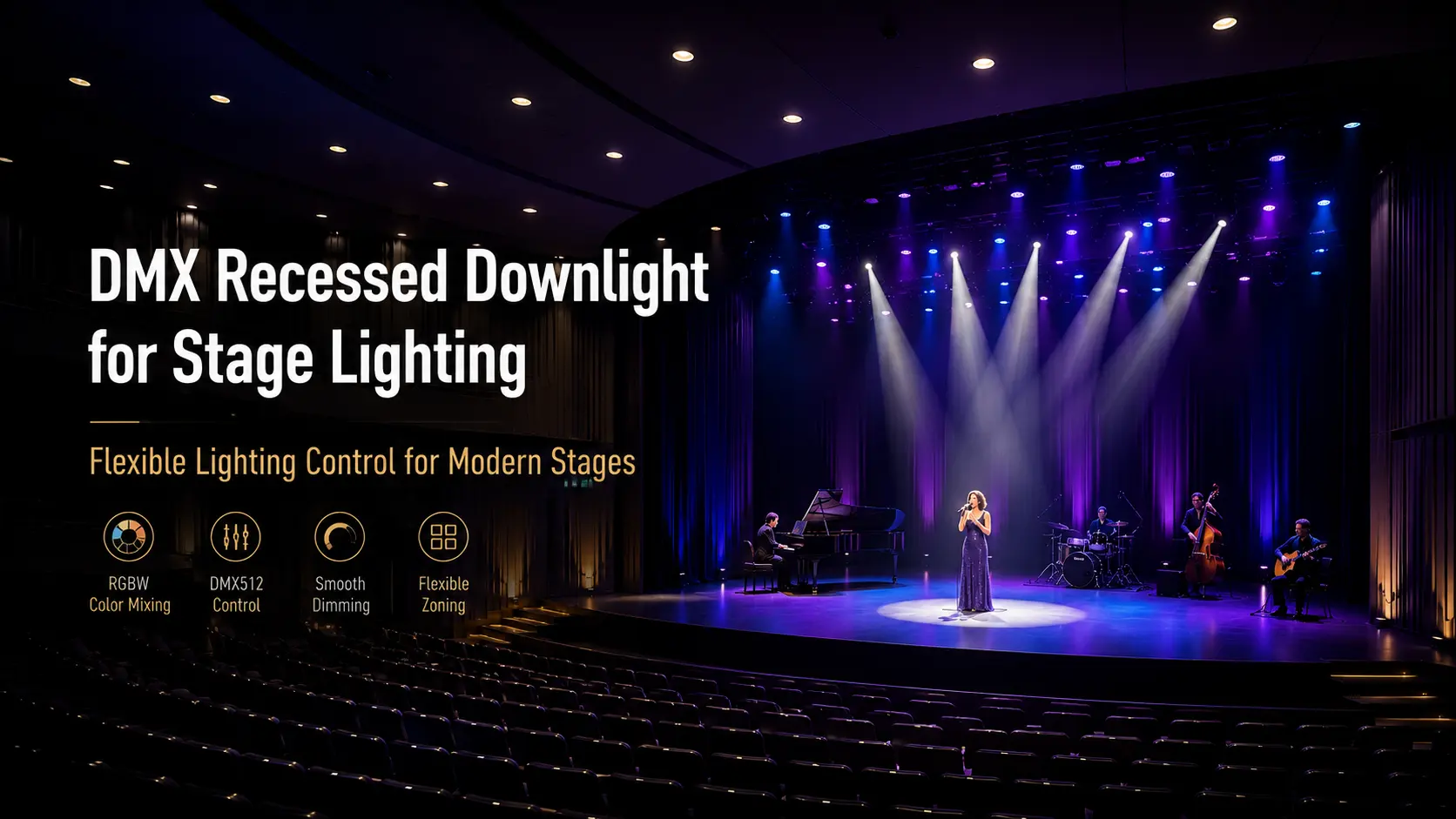
DMX recessed downlight for stage lighting is becoming an increasingly popular solution in modern performance venues, theatres, event halls, cultural centers, and multipurpose spaces. While traditional stage lighting fixtures remain essential for creating dramatic visual effects, recessed downlights can play an important supporting role by providing ambient illumination, audience lighting, architectural lighting, and scene-based atmosphere control.
Modern stages are no longer used only for theatrical performances. The same venue may host concerts, conferences, product launches, fashion shows, exhibitions, ceremonies, and corporate events. Because every event requires different lighting conditions, flexibility has become one of the most important requirements in stage lighting design.
By combining recessed architectural lighting with DMX control, designers can create dynamic lighting scenes while maintaining a clean and professional ceiling appearance. This approach allows stage venues to achieve both functional lighting and visual atmosphere from a single integrated lighting system.
Why Stage Lighting Requires More Than Traditional Fixtures
Many people associate stage lighting with moving heads, spotlights, wash lights, and effect lighting. While these fixtures are essential for performances, they do not always provide sufficient lighting for every area within the venue.
Audience seating areas, entrances, side aisles, balconies, backstage corridors, and waiting spaces all require different levels of illumination throughout an event.
Multiple Lighting Conditions Throughout an Event
A stage venue often operates under several lighting conditions during a single event.
Before the show begins, visitors need comfortable and welcoming lighting to find their seats.
During the performance, audience areas may need to dim significantly while maintaining safety.
During intermission, brightness levels often increase to support movement and circulation.
After the event, maintenance and cleaning staff require high-output illumination throughout the venue.
Managing these lighting transitions manually can be inefficient. DMX recessed downlights allow operators to switch between programmed lighting scenes quickly and accurately.
Architectural Lighting Is Becoming More Important
Modern venue design places increasing emphasis on architectural aesthetics. Large visible lighting fixtures can sometimes conflict with the desired visual appearance of the space.
Recessed downlights help maintain clean ceiling lines while still providing advanced lighting functionality. When integrated with DMX systems, they become part of the overall stage lighting strategy rather than simply serving as basic illumination.
What Is a DMX Recessed Downlight?
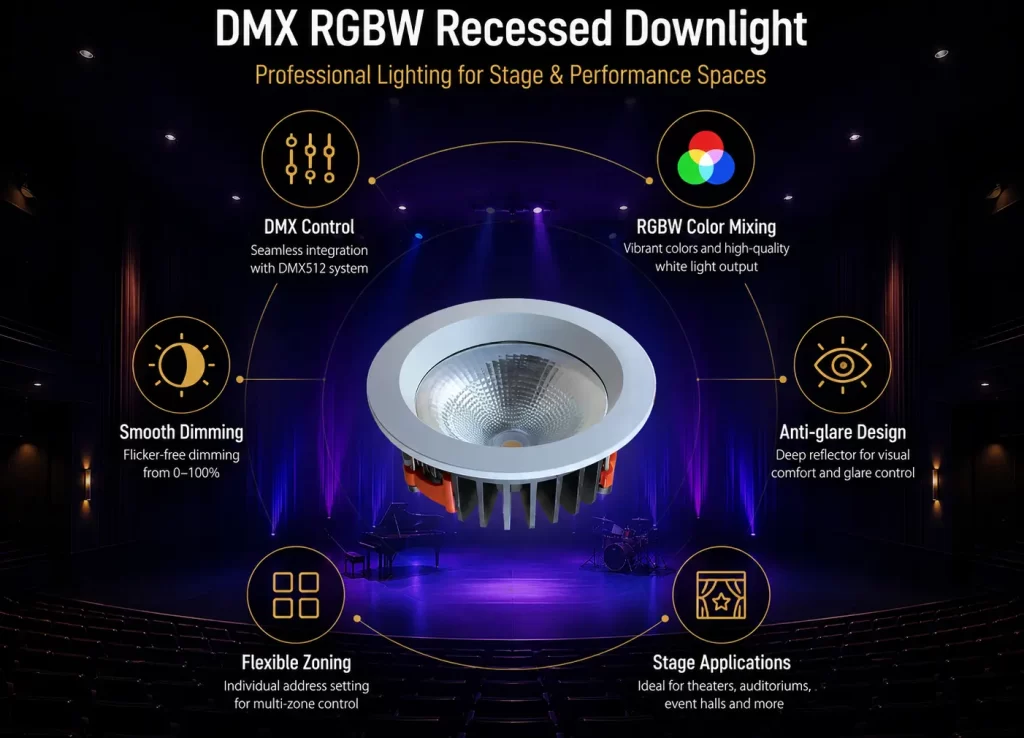
A DMX recessed downlight is an architectural lighting fixture that supports DMX control protocols, allowing the light to be dimmed, grouped, addressed, and programmed alongside other stage lighting equipment.
Unlike standard recessed downlights, DMX-controlled models can participate in dynamic lighting scenes and respond to commands from a central control system.
Individual Fixture Addressing
Each fixture can be assigned a unique DMX address.
This allows lighting designers to control individual fixtures or create separate lighting zones throughout the venue. Seating areas, stage surroundings, balconies, corridors, and entrances can all operate independently.
This level of flexibility is especially valuable in larger venues where different areas require different lighting conditions.
Smooth Dimming Capabilities
Stage lighting transitions should feel natural and professional.
A high-quality DMX recessed downlight provides smooth dimming performance without noticeable flicker or sudden brightness changes. This allows gradual fade-ins and fade-outs that support the overall audience experience.
Smooth dimming is particularly important during scene transitions, audience entry periods, and performance openings.
RGBW Color Control
Many modern DMX recessed downlights are available with RGBW technology.
RGBW combines red, green, blue, and white LEDs within a single fixture. This enables both colored lighting effects and high-quality white illumination.
For stage venues, RGBW lighting allows the ceiling and architectural elements to contribute to the overall atmosphere without relying solely on traditional stage fixtures.
Key Applications of DMX Recessed Downlight for Stage Lighting
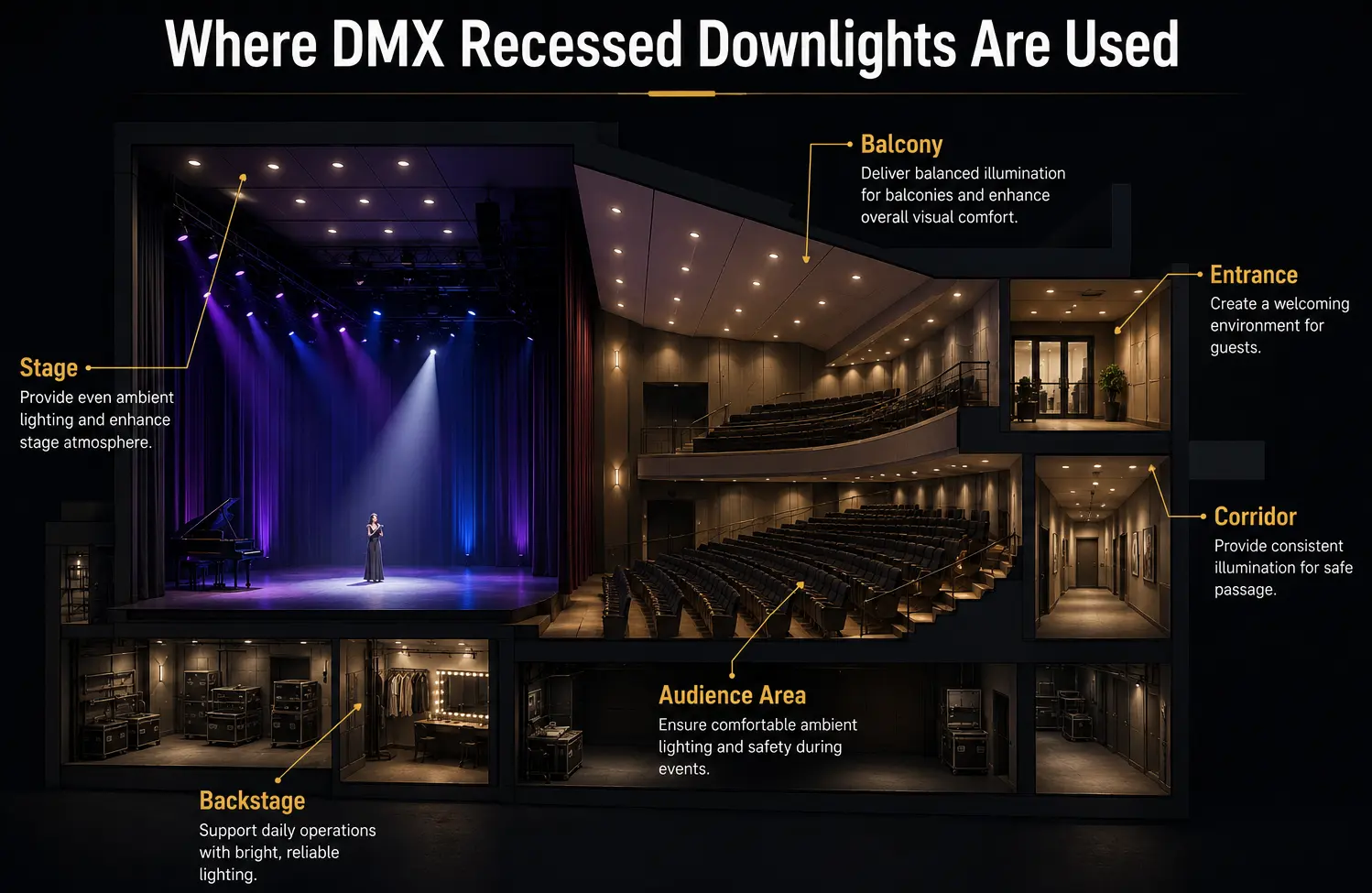
DMX recessed downlights can be used in many different areas throughout a stage venue.
Audience Seating Areas
Audience comfort is an important part of venue design.
Recessed downlights can provide low-level ambient lighting before and after performances while maintaining a comfortable visual environment.
With DMX control, seating areas can be divided into multiple zones. Front sections, middle sections, balconies, and side seating areas can all be adjusted independently.
This creates a more flexible and professional lighting environment.
Stage Perimeter Lighting
The areas surrounding the main stage often require lighting support.
Recessed downlights can provide subtle illumination around stage edges, backstage access points, side wings, and transition areas.
This helps improve safety while maintaining the desired visual atmosphere.
Entrance and Lobby Areas
First impressions matter.
Visitors often form opinions about a venue before entering the performance space. Entrance areas and lobby spaces should provide comfortable lighting that reflects the venue’s identity.
DMX-controlled recessed downlights allow operators to adjust lighting levels according to event schedules, creating a consistent visual experience from arrival to departure.
Corridors and Circulation Spaces
Large venues typically include multiple circulation routes.
Corridors, staircases, and aisles must remain functional while also matching the overall lighting concept.
DMX recessed downlights can be integrated into venue-wide lighting scenes so that circulation areas automatically adjust according to operational requirements.
Multipurpose Event Spaces
Many modern venues are designed to host different types of events.
A conference may require bright neutral lighting. A concert may require dramatic RGBW effects. A product launch may benefit from brand-colored lighting scenes.
DMX recessed downlights help venues adapt quickly without requiring physical changes to the lighting infrastructure.
Benefits of DMX Recessed Downlights in Stage Lighting Projects
The value of DMX recessed downlights extends beyond simple illumination.
They help venue owners improve operational flexibility, audience experience, and overall lighting quality.
Flexible Scene Management
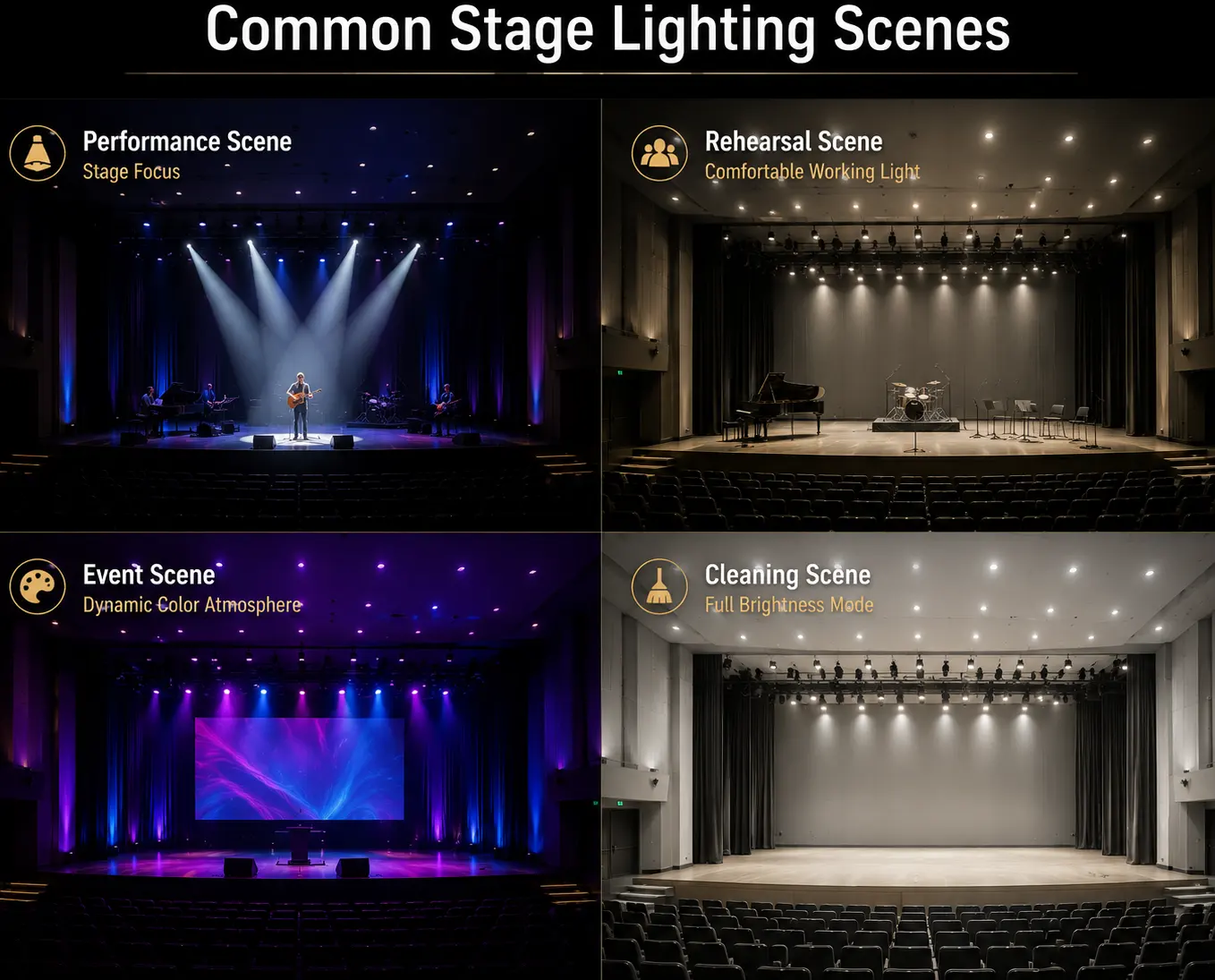
One of the biggest advantages is the ability to create multiple preset lighting scenes.
Common scenes may include:
- Audience Arrival Scene
- Performance Scene
- Intermission Scene
- Event Scene
- Cleaning Scene
- Maintenance Scene
Operators can switch between these scenes instantly through a DMX controller or building management system.
This simplifies daily operation and improves consistency.
Better Atmosphere Creation
Lighting strongly influences how audiences perceive a space.
Warm white lighting can create a welcoming atmosphere.
Cooler white lighting can support conferences and presentations.
RGBW colors can create excitement, energy, or dramatic visual effects depending on the event type.
DMX control allows these atmospheres to be created and adjusted quickly.
Improved Energy Efficiency
Modern LED recessed downlights consume significantly less power than traditional lighting technologies.
Combined with scene-based control, venues can use only the amount of light required for each activity.
This helps reduce operating costs while maintaining excellent lighting quality.
Cleaner Architectural Appearance
Architects often prefer recessed fixtures because they blend into the ceiling.
Unlike large surface-mounted fixtures, recessed downlights remain visually discreet.
This allows the architecture of the venue to remain the primary focus while still supporting advanced lighting functionality.
Important Features to Look For
Not all DMX recessed downlights are designed for stage lighting applications.
Several features should be considered during product selection.
Reliable DMX Communication
Signal stability is essential.
Large venues may contain dozens or even hundreds of fixtures connected within the same control network.
Reliable DMX communication helps ensure consistent performance and prevents unexpected behavior during events.
High-Quality Dimming
Stage environments often require low brightness levels.
The fixture should deliver smooth dimming throughout the entire range, including very low output levels.
This improves visual comfort and helps maintain professional lighting transitions.
Consistent Color Performance
For RGBW fixtures, color consistency is important.
Multiple fixtures should produce matching colors across the venue.
Poor color consistency can create an unprofessional appearance and reduce the effectiveness of lighting scenes.
Anti-Glare Design
Audience comfort should never be overlooked.
Deep reflectors and anti-glare optics help reduce direct light exposure and improve visual comfort.
This is especially important in seating areas where people remain in the same position for extended periods.
Appropriate Beam Angles
Different venue areas require different lighting distributions.
Wider beams are often suitable for audience seating and circulation areas.
Narrower beams may be preferred for accent lighting and architectural highlights.
Choosing the correct beam angle improves both efficiency and visual quality.
DMX Recessed Downlight vs Standard Recessed Downlight
A standard recessed downlight is primarily designed for basic illumination.
It can provide reliable light output but offers limited flexibility.
A DMX recessed downlight adds advanced control capabilities that support professional stage environments.
Fixtures can be dimmed, grouped, addressed, and integrated into lighting scenes alongside other DMX-controlled equipment.
For venues that require dynamic lighting conditions, this additional flexibility can significantly improve overall functionality.
Typical Projects Using DMX Recessed Downlights
DMX recessed downlights are suitable for a wide range of stage and performance applications.
Common projects include:
- Theatre stages
- Auditorium venues
- Cultural centers
- Concert halls
- Event venues
- Multipurpose halls
- Conference centers
- Hotel ballrooms
- School performance spaces
- Exhibition venues
- Fashion show stages
- Corporate presentation spaces
In these environments, lighting must support both operational requirements and visual presentation.
DMX control helps achieve this balance more effectively.
Conclusion
DMX recessed downlight for stage lighting provides a practical solution for venues that require flexible control, architectural integration, and professional scene management. By combining recessed installation with DMX technology, these fixtures support audience comfort, venue operation, and atmosphere creation while maintaining a clean ceiling appearance.
Whether used in theatres, event halls, conference venues, or multipurpose performance spaces, DMX recessed downlights help create lighting environments that are adaptable, efficient, and visually engaging. As stage venues continue to demand greater flexibility, DMX-controlled architectural lighting will play an increasingly important role in modern lighting design.

