



Recessed Linear Lighting Design Guide for Modern Commercial Spaces
By Vincent
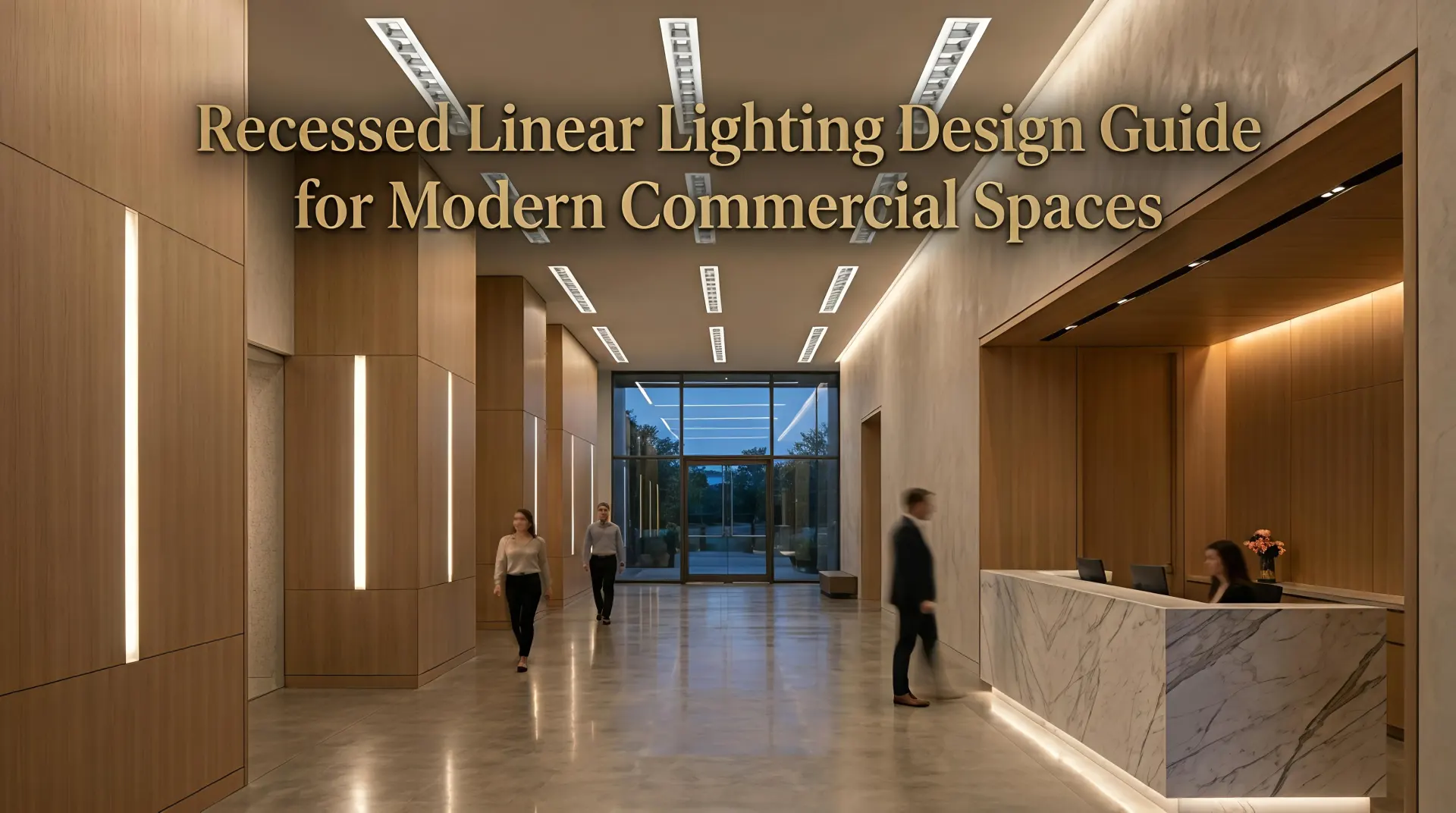
Modern commercial interiors are moving away from decorative ceilings and oversized fixtures in favor of cleaner architectural lines and more efficient lighting systems. In this shift, recessed linear lighting has become one of the defining elements of contemporary office, retail, and hospitality design. Instead of treating lighting as a separate object, architects now use integrated linear lighting systems to shape circulation, enhance spatial rhythm, and create visually seamless environments.
From minimalist offices to luxury retail stores, recessed linear LED lighting offers a balance between aesthetics, comfort, and performance that traditional downlights often struggle to achieve.
In this guide, we’ll explore how architectural linear lighting works, how to specify the right system, and what designers should know before installation.
What Is Recessed Linear Lighting in Commercial Design?
Recessed linear lighting refers to a lighting system installed flush within ceilings, walls, or architectural surfaces. Unlike surface-mounted fixtures, these systems are designed to visually disappear into the building structure while delivering continuous and controlled illumination.
Today’s commercial linear lighting systems are commonly used in:
- Open office layouts
- Retail environments
- Hotel lobbies
- Educational facilities
- Healthcare spaces
Most recessed fixtures use LED technology for energy efficiency, longer lifespan, and compatibility with smart lighting controls.
Common system types include:
| Recessed Lighting Type | Typical Application |
|---|---|
| Trimless linear lighting | High-end minimalist interiors |
| Flanged recessed lighting | Standard commercial ceilings |
| Continuous linear lighting | Offices and circulation areas |
| Wall recessed linear fixtures | Accent and wall washing |
For additional lighting efficiency guidelines, designers often reference standards from the U.S. Department of Energy Lighting Program.
Why Architectural Linear Lighting Is Dominating Modern Commercial Spaces
Recessed Lighting Creates Cleaner Architectural Lines
One of the biggest reasons designers prefer recessed linear lighting is visual simplicity.
Traditional ceiling layouts filled with downlights can make a ceiling feel fragmented and cluttered. Integrated linear fixtures preserve clean ceiling planes and reinforce architectural geometry.
This approach is especially popular in:
- Tech offices
- Luxury showrooms
- Modern hospitality projects
- Minimalist retail stores
Trimless recessed lighting systems are particularly effective because they create a “light without fixture” appearance.
Linear LED Systems Improve Spatial Flow
Lighting lines naturally guide the eye.
In long corridors, open-plan offices, or retail pathways, continuous linear LED lighting helps define circulation and subtly direct movement throughout the space.
Depending on orientation:
- Horizontal lines visually widen a room
- Vertical lines emphasize depth
- Grid layouts create rhythm and order
This is why many designers now treat lighting layouts as part of the architectural composition rather than a purely technical layer.
Low-Glare Linear Lighting Improves Visual Comfort
Commercial spaces demand more than brightness alone.
Poor glare control can lead to eye strain, reduced productivity, and uncomfortable environments—especially in offices.
High-quality recessed linear lighting systems typically include:
- Deep-set optics
- Micro-prismatic diffusers
- Anti-glare louvers
For office lighting, many designers target a Unified Glare Rating (UGR) below 19 in line with recommendations from the Illuminating Engineering Society (IES).
How to Specify Recessed Linear LED Lighting Systems
Choosing the wrong fixture can undermine the entire lighting design. Successful commercial projects usually focus on four key specification areas.
Trimless vs Flanged Recessed Linear Fixtures
| Feature | Trimless System | Flanged System |
| Visual Appearance | Seamless minimalist look | Visible narrow frame |
| Installation Difficulty | High | Moderate |
| Best For | Premium architectural spaces | Fast-track commercial projects |
| Ceiling Compatibility | Drywall ceilings | Grid or modular ceilings |
Trimless recessed linear lighting requires precise coordination with drywall contractors before finishing begins. While the visual result is cleaner, installation tolerance is far lower.
Flanged fixtures are easier to install and often preferred for projects with tighter schedules or budgets.
Optical Performance for Commercial Linear Lighting
Different applications require different light distribution strategies.
Diffused Linear Lighting
Best suited for:
- General ambient lighting
- Corridors
- Shared public spaces
This configuration creates soft and uniform illumination.
Asymmetric Wall Wash Lighting
Ideal for:
- Reception walls
- Brand displays
- Vertical architectural surfaces
Wall washing helps add depth and visual hierarchy to commercial interiors.
Color Temperature and CRI for Interior Linear Lighting
Lighting color directly affects how people perceive a space.
Below are common recommendations for commercial interiors:
| Space Type | Recommended CCT |
| Office environments | 4000K |
| Retail stores | 3000K–3500K |
| Hospitality spaces | 2700K–3000K |
For retail and display applications, designers typically recommend:
- CRI above 90
- Strong R9 performance
This ensures materials, fabrics, and merchandise appear more natural and vibrant.
Smart Recessed Lighting and Tunable White Systems
Human-centric lighting has become increasingly important in commercial design.
Many modern recessed linear lighting systems now support:
- Tunable white lighting
- DALI dimming
- 0–10V controls
- Motion sensors
- Daylight harvesting
These technologies allow lighting conditions to adapt throughout the day, improving comfort while reducing energy consumption.
Long-tail keywords naturally related to this topic include:
- recessed linear lighting for office ceilings
- low glare linear lighting systems
- trimless recessed linear lighting
- commercial LED linear lighting fixtures
- architectural recessed lighting solutions
Recessed Linear Lighting Applications by Commercial Sector
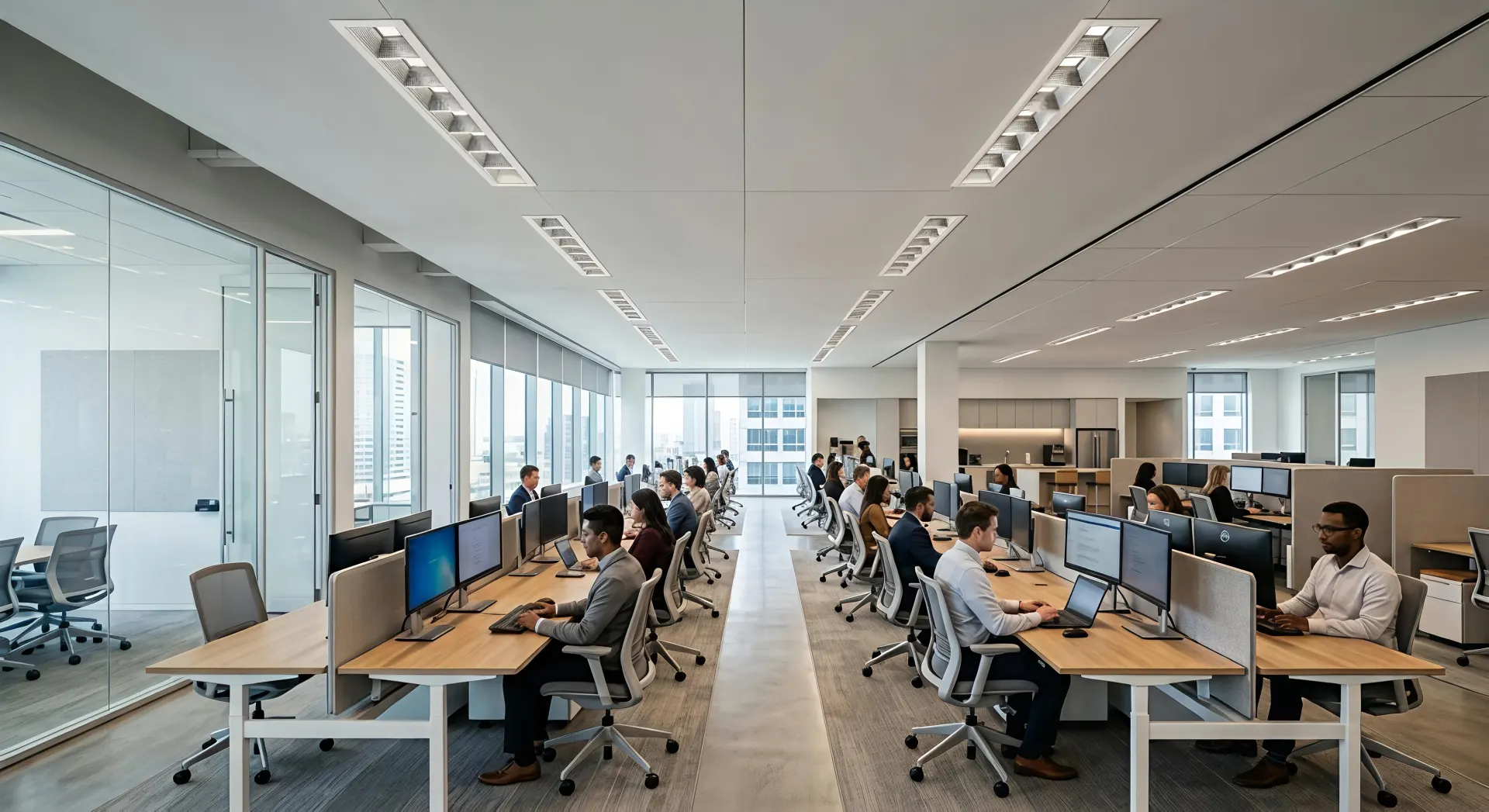
Office Linear Lighting Layouts
In workplace environments, designers prioritize:
- Visual comfort
- Uniform illumination
- Reduced glare
Parallel linear runs above workstations are among the most common layouts for modern offices.
Retail Recessed Lighting for Brand Environments
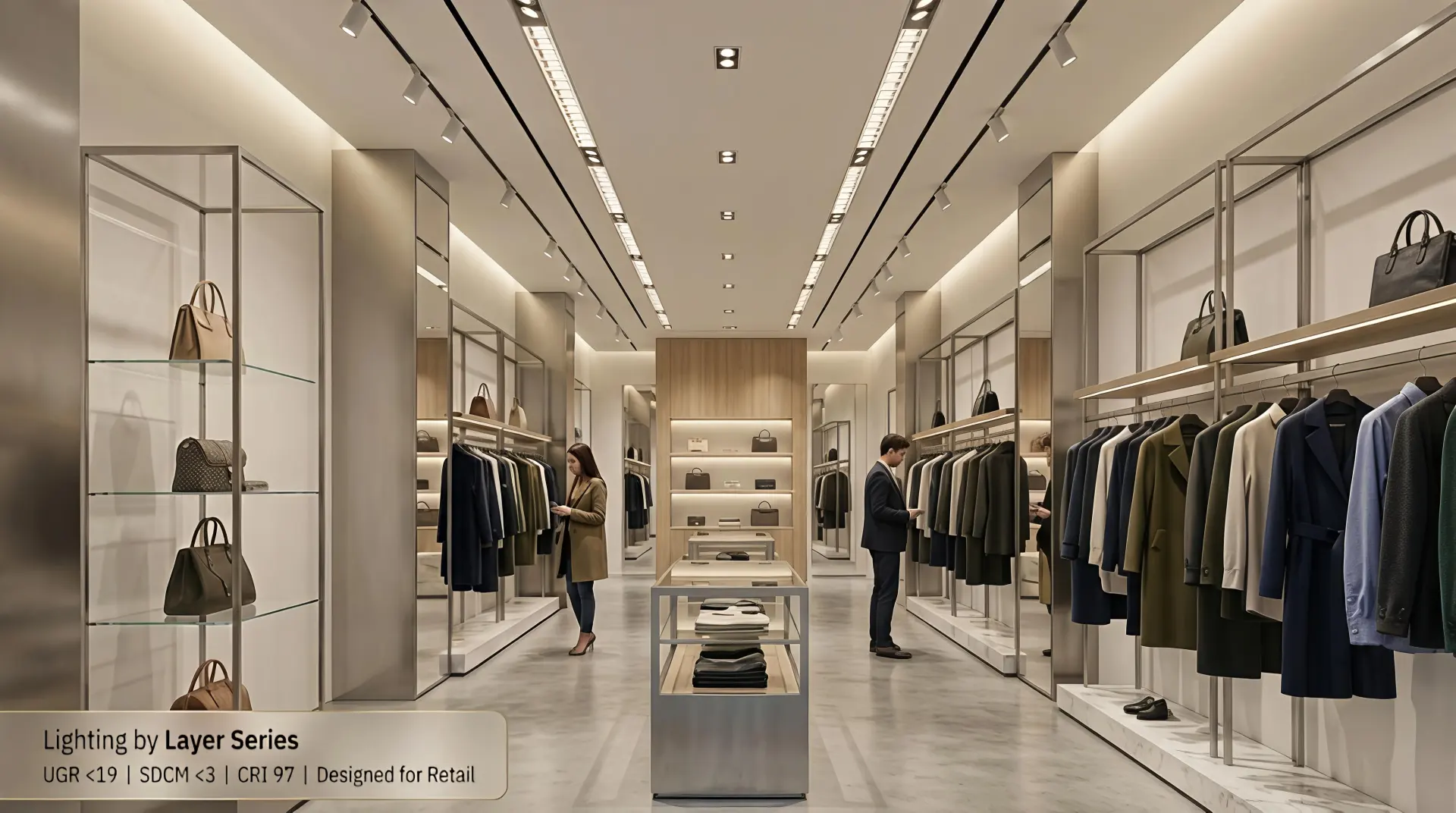
Retail lighting needs to balance ambient illumination with focal accents.
Many luxury retailers combine recessed linear LED lighting with adjustable spot modules to highlight products while maintaining a clean ceiling appearance.
Hospitality Linear Lighting Design
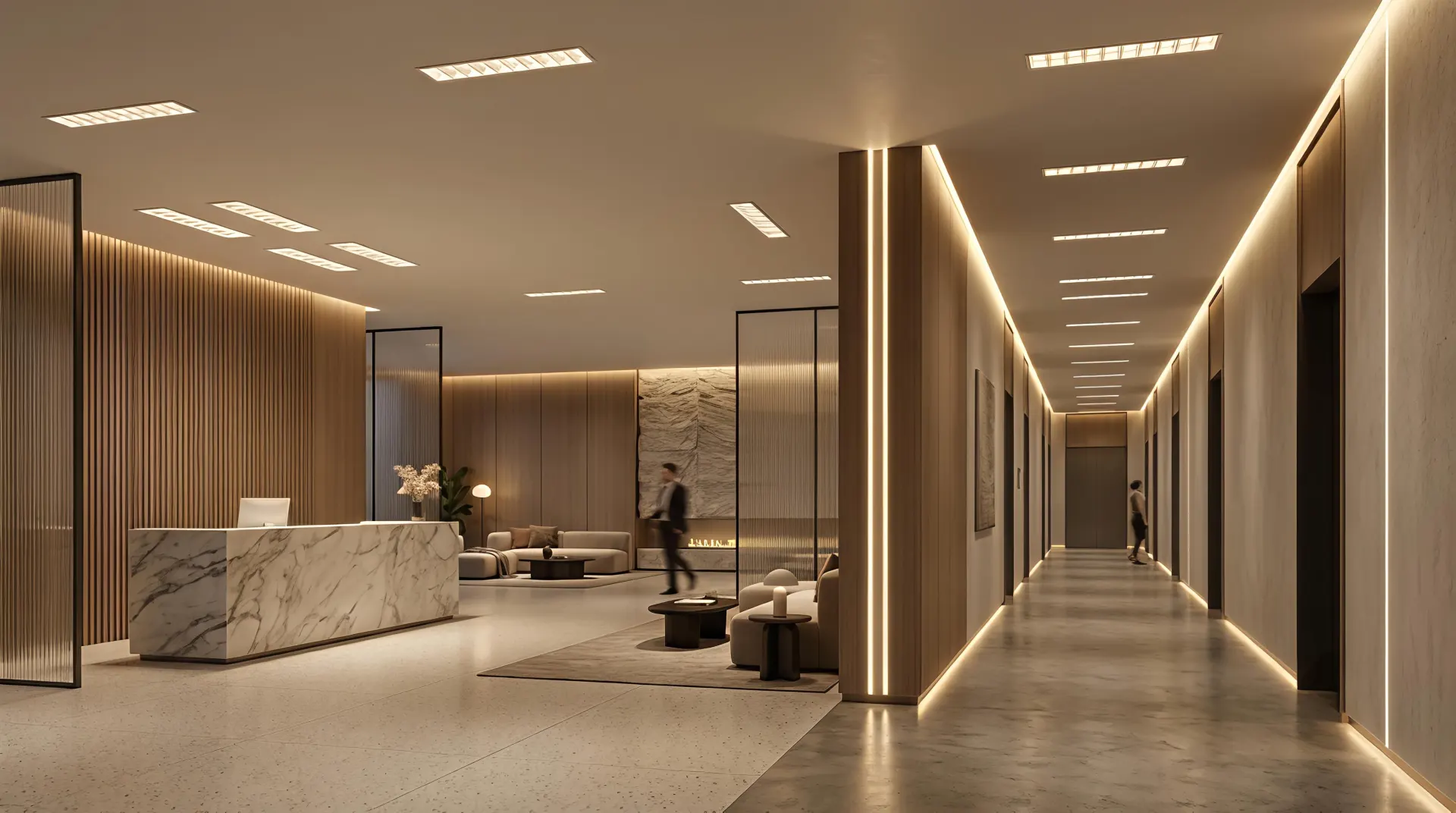
Hotels often use integrated linear lighting to create mood, warmth, and architectural drama.
Popular strategies include:
- Indirect cove lighting
- Continuous ceiling-to-wall transitions
- Warm 3000K lighting schemes
These elements help create a more immersive guest experience.
Installation Tips for Continuous Linear Lighting Systems
Even premium fixtures can fail visually if installation quality is poor.
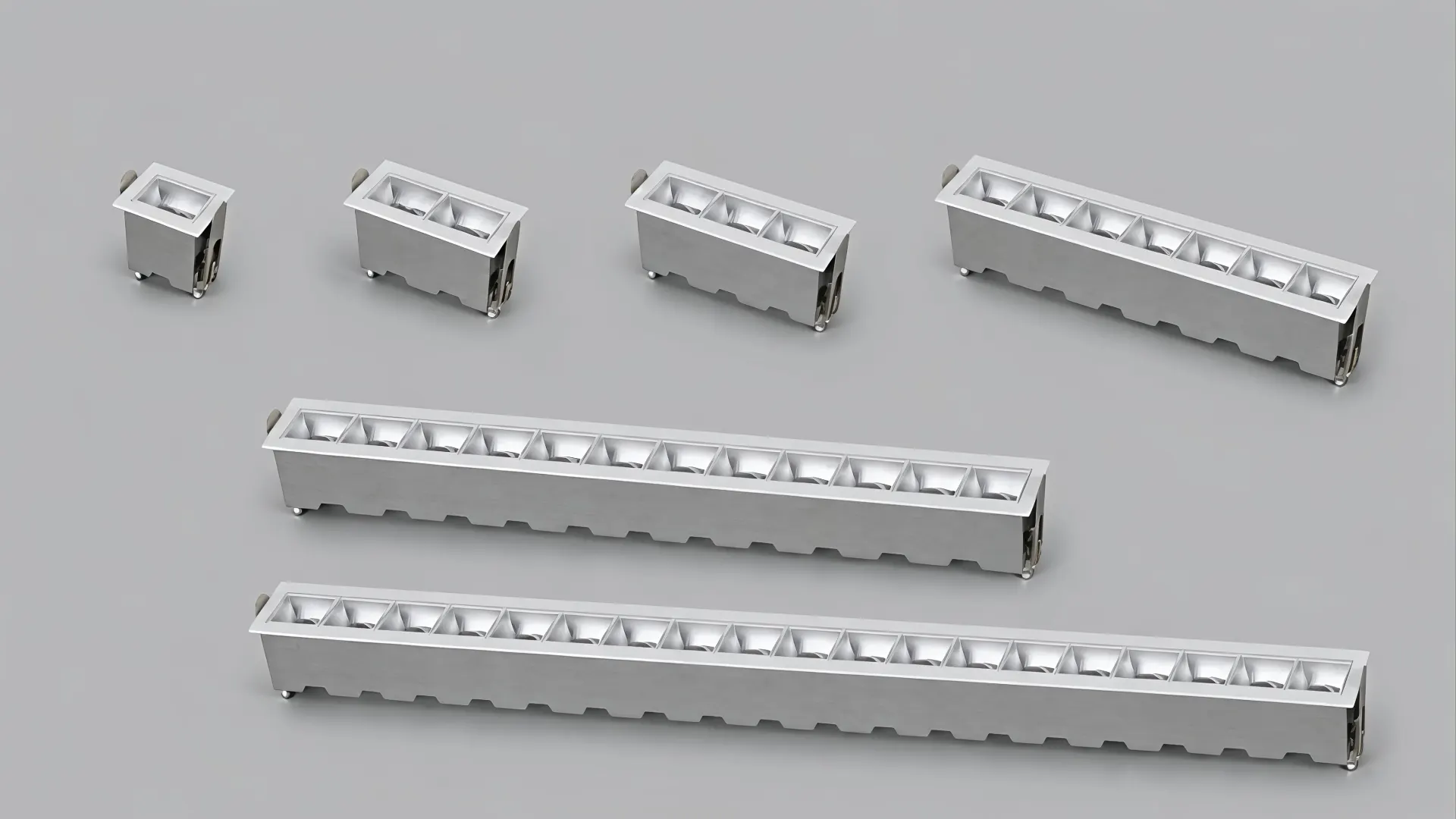
Maintain Seamless Fixture Connections
Continuous runs should appear visually uninterrupted.
To avoid dark gaps or light leaks:
- Use systems designed for continuous mounting
- Ensure diffuser alignment
- Coordinate joint details carefully
Coordinate Ceiling Details Early
Trimless recessed lighting must be planned before drywall finishing begins.
Lighting designers should provide detailed ceiling sections showing:
- Mounting depth
- Ceiling cut dimensions
- Driver placement
- Framing coordination
Allow Access to LED Drivers
One of the most common maintenance mistakes is burying drivers above inaccessible ceilings.
Drivers should always remain accessible through:
- Ceiling access panels
- Remote driver boxes
- Serviceable mounting systems
Otherwise, replacing a failed driver may require removing entire ceiling sections.
FAQ About Recessed Linear Lighting
Is recessed linear lighting suitable for offices?
Yes. Low-glare recessed linear lighting is widely used in modern offices because it provides uniform illumination and better visual comfort compared to traditional downlights.
What is the difference between trimless and flanged recessed lighting?
Trimless systems create a completely seamless ceiling appearance, while flanged systems include a visible edge that simplifies installation and ceiling finishing.
What color temperature is best for commercial spaces?
It depends on the application:
- 4000K for offices
- 3000K–3500K for retail
- 2700K–3000K for hospitality
Are recessed linear LED fixtures energy efficient?
Yes. Most commercial-grade LED linear lighting systems consume significantly less energy than fluorescent fixtures while offering longer operational life and smart control compatibility.
Final Thoughts on Recessed Linear Lighting Design
Recessed linear lighting is no longer just a lighting product—it has become part of the architectural language of modern commercial interiors.
When properly specified and installed, integrated linear lighting systems can improve visual comfort, strengthen spatial identity, and elevate the overall perception of a space.
From optical performance to ceiling coordination, successful projects depend on treating lighting as an essential architectural component rather than an afterthought.

