



Human Centric Lighting for Offices: Understanding CS Value in Modern Workplace Design
By Vincent
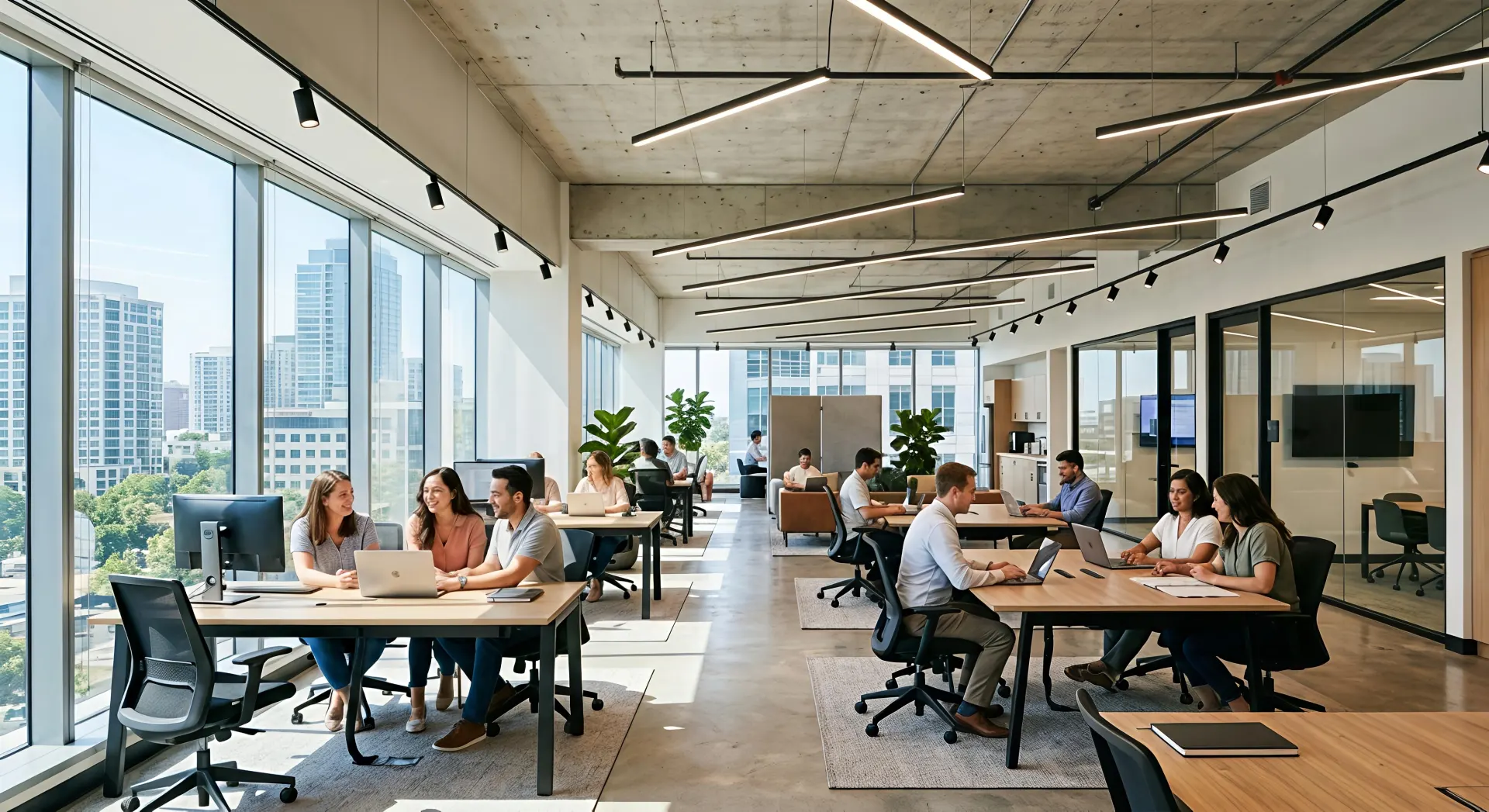
From simply “lighting a space” to truly “supporting human performance,” modern lighting design is undergoing a fundamental shift. Human Centric Lighting for offices is no longer a niche concept—it is becoming a core requirement in contemporary workplaces.
For years, office lighting focused mainly on technical metrics such as Lux levels, CRI, and UGR. While these remain important, they overlook a deeper reality:
👉 Light does not only affect what we see—it directly impacts how we feel, think, and perform.
Today, employees spend more than 8 hours per day under artificial lighting. Poor lighting conditions can lead to:
- visual fatigue
- reduced concentration
- disrupted circadian rhythms
- lower productivity during afternoon hours
As a result, Human Centric Lighting is now widely adopted in corporate headquarters, co-working spaces, and modern office buildings. At the center of this approach lies a critical metric:
👉 Circadian Stimulus (CS value)
This article explores how CS value works, why it matters, and how to implement it effectively in real office environments using advanced lighting solutions.
Human Centric Lighting for Offices: Beyond Visibility to Biological Support
Traditional office lighting was designed with a simple goal: visibility. However, modern workplaces demand more.
Human Centric Lighting shifts the focus from space-centered design to human-centered experience. It is built on three key principles:
- Biological impact: lighting supports circadian rhythms
- Dynamic adjustment: light changes throughout the day
- Scenario-based design: different spaces require different lighting strategies
Research and standards such as the WELL Building Standard emphasize the importance of lighting for human health and productivity. You can learn more about WELL here:
👉 https://www.wellcertified.com/
Studies show that well-designed office lighting can:
- improve productivity by 20–30%
- reduce visual fatigue complaints
- enhance sleep quality
This is why Human Centric Lighting for Offices is rapidly becoming a competitive advantage for modern businesses.
Understanding CS Value in Human Centric Lighting for Offices
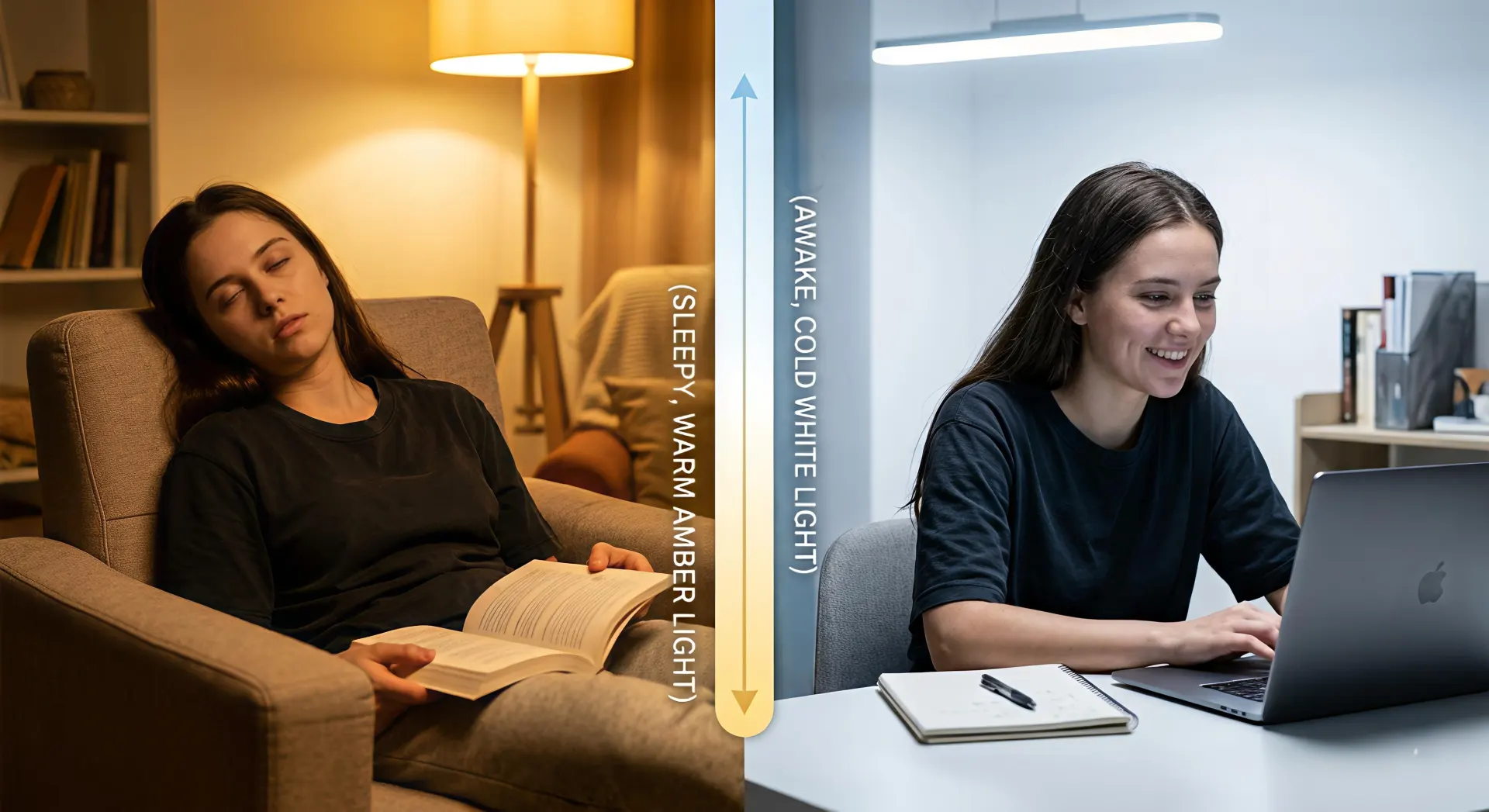
When discussing circadian lighting, many assume higher color temperature equals better performance. This is a common misconception.
👉 The real metric is Circadian Stimulus (CS value).
Developed by the Lighting Research Center, CS value measures how effectively light stimulates the human circadian system.
👉 Simply put:
CS value = how strongly light promotes alertness
For more technical details, you can refer to LRC resources:
👉 https://www.lrc.rpi.edu/
CS Value Range and Effects
| CS Value | Effect on Human Body | Typical Use |
|---|---|---|
| 0.0 | No stimulation | Night / rest areas |
| 0.1–0.2 | Low stimulation | Relaxation zones |
| 0.3–0.4 | Effective alertness | Offices (recommended) |
| ≥0.5 | Strong stimulation | High-focus tasks |
👉 Industry consensus suggests:
CS ≥ 0.3 is ideal for office environments
What Determines CS Value?
CS value is influenced by multiple factors—not just color temperature:
- spectral power distribution (especially blue light content)
- illuminance level
- light direction (vertical illuminance to the eye)
- exposure duration
👉 This explains why some high-CCT lighting still fails to deliver effective circadian impact.
Why CS Value Is Critical in Office Lighting
In Human Centric Lighting for Offices, CS value directly impacts employee performance and well-being.
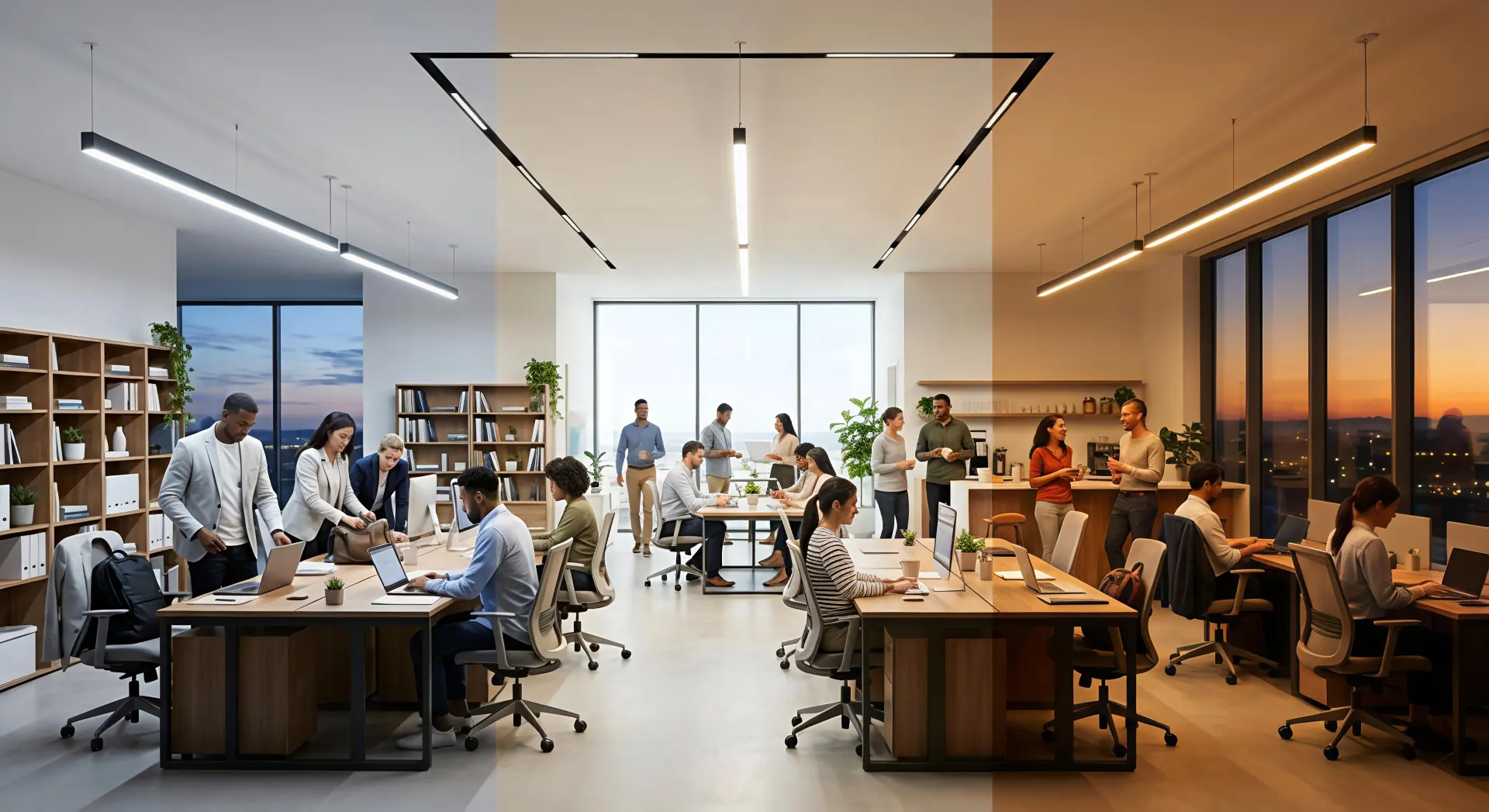
Productivity and Focus
Higher CS levels in the morning help:
- improve concentration
- increase alertness
- reduce errors
Fatigue Reduction
Proper CS control can:
- delay afternoon energy drops
- stabilize daily performance
Health and Well-being
Balanced circadian lighting supports:
- better sleep quality
- improved mood
- long-term health
Recommended CS Values for Office Scenarios
Unlike traditional static lighting, Human Centric Lighting for Offices requires dynamic adjustment throughout the day.
Daily CS Strategy (Recommended)
| Time Period | Target CS Value | Lighting Strategy |
|---|---|---|
| Morning (9–11 AM) | ≥0.3–0.4 | Boost alertness |
| Midday (11–2 PM) | 0.2–0.3 | Maintain stability |
| Afternoon (2–4 PM) | ≥0.25 | Reduce fatigue |
| Late Day (After 4 PM) | <0.2 | Prepare for relaxation |
By Office Area
- Open offices → stable CS ≥ 0.3
- Meeting rooms → adjustable CS levels
- Break areas → low CS, warm lighting
- Private offices → personalized control
How to Achieve Effective CS Value in Offices
Implementing Human Centric Lighting for Offices requires more than replacing fixtures—it demands a system approach.
1. Optimize Light Spectrum
Enhanced blue-green spectrum improves circadian response while maintaining high CRI.
2. Increase Vertical Illuminance
👉 Light must reach the eyes, not just the desk surface.
3. Use Tunable White Lighting
Dynamic adjustment from 2700K to 6500K enables:
- high CS during the day
- low CS in the evening
4. Flexible Lighting Layout
Linear lighting and track systems allow precise control of light direction and distribution.
Our Human Centric Lighting for Offices Solutions
Based on these principles, we provide advanced lighting systems designed specifically for modern workplaces.
Core Product Types
- LED panel lights
- linear lighting systems
- magnetic track lighting
Key Features
- tunable white (2700K–6500K)
- smooth dimming control
- high luminous efficacy
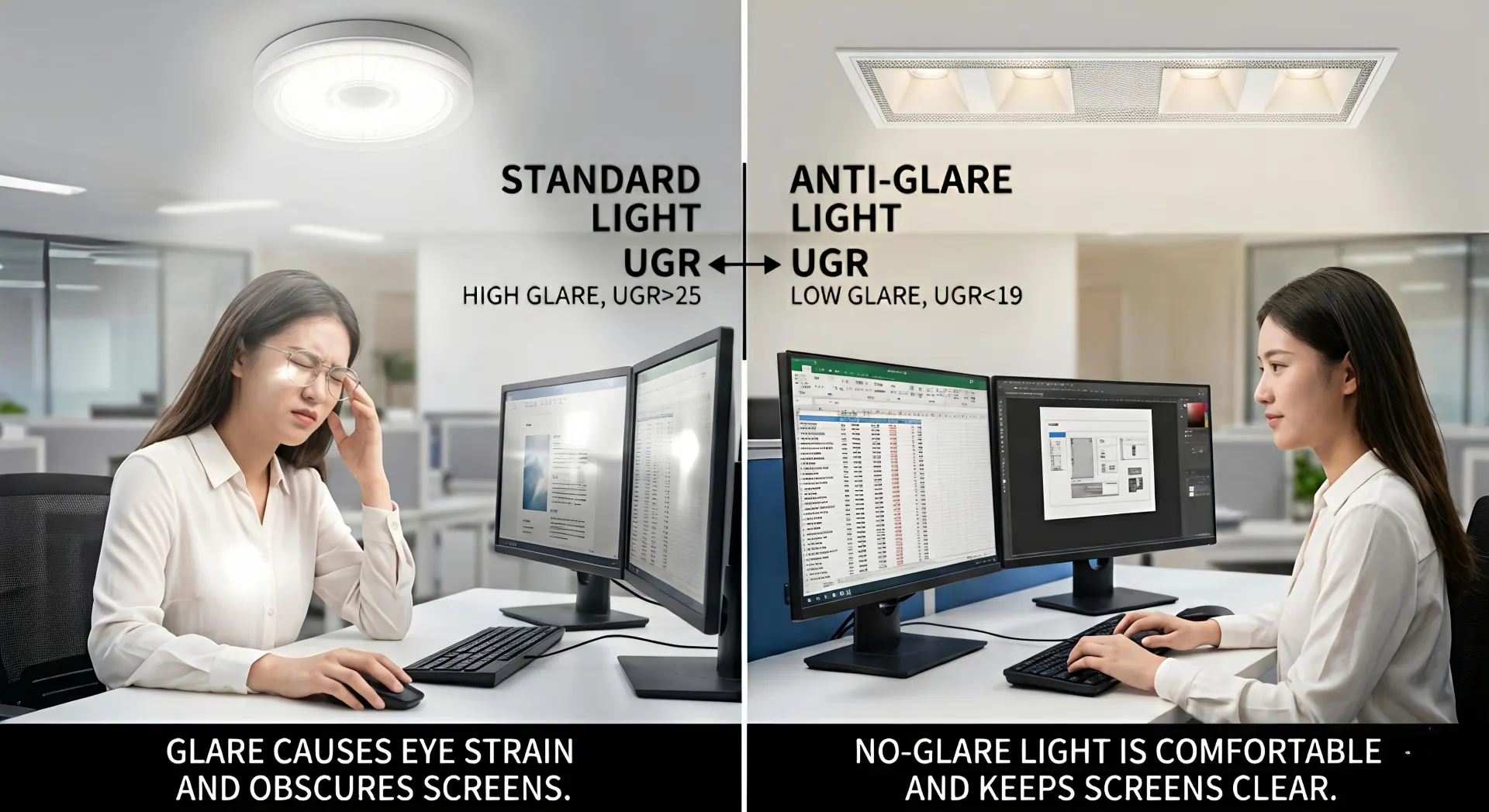
- low glare design (UGR≤19 / UGR≤13 options)
- intelligent control (DALI-2 DT8 compatible)
Designed for Real CS Performance
Our systems are engineered to support optimized Circadian Stimulus (CS value) in real office environments—ensuring both visual comfort and biological effectiveness.
Smart Control Capabilities
- scheduled CS adjustment
- occupancy sensors
- app and system integration
- scene-based lighting modes
Real Applications of Human Centric Lighting for Offices
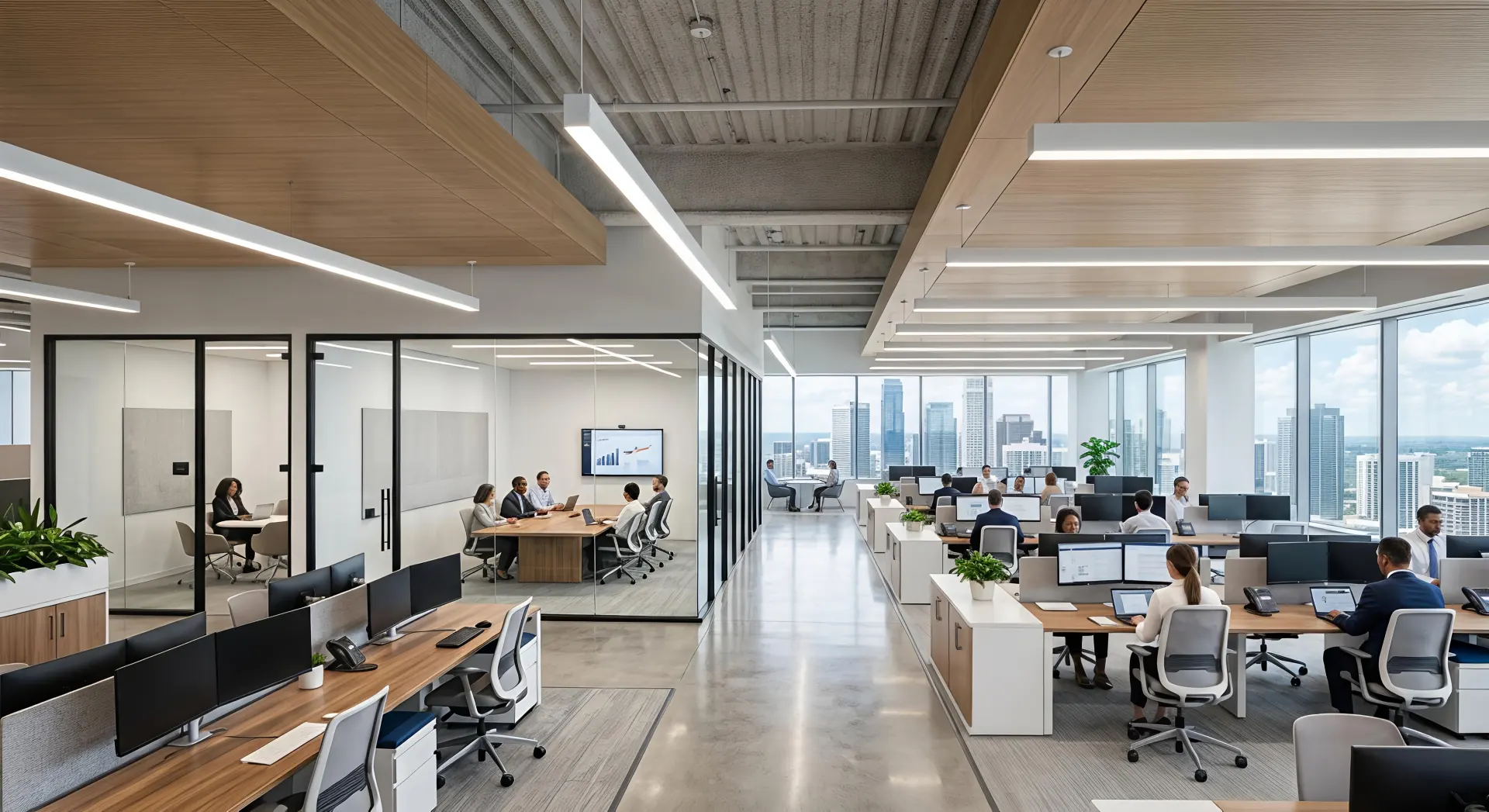
Our solutions have been successfully applied in:
- corporate headquarters
- co-working spaces
- creative studios
Clients have reported:
- reduced fatigue complaints
- improved employee satisfaction
- increased workplace efficiency
Design Tips for Choosing Office Lighting with CS Value
When selecting lighting for your project, consider:
- CS adjustable range (0.1–0.4 recommended)
- certified products (WELL, LRC)
- proper fixture selection by space type
- low glare and flicker-free performance
Conclusion: The Future of Human Centric Lighting for Offices
In today’s workplace, lighting is no longer just about energy consumption—it is an investment in human performance.
Human Centric Lighting for Offices, powered by CS value, represents a shift toward healthier and more productive environments.
By selecting the right lighting solutions, businesses can:
- enhance employee well-being
- improve productivity
- create future-ready office spaces

