



Intelligent Lighting for Retail Display: Transforming Product Presentation in Modern Stores
By Powerstar
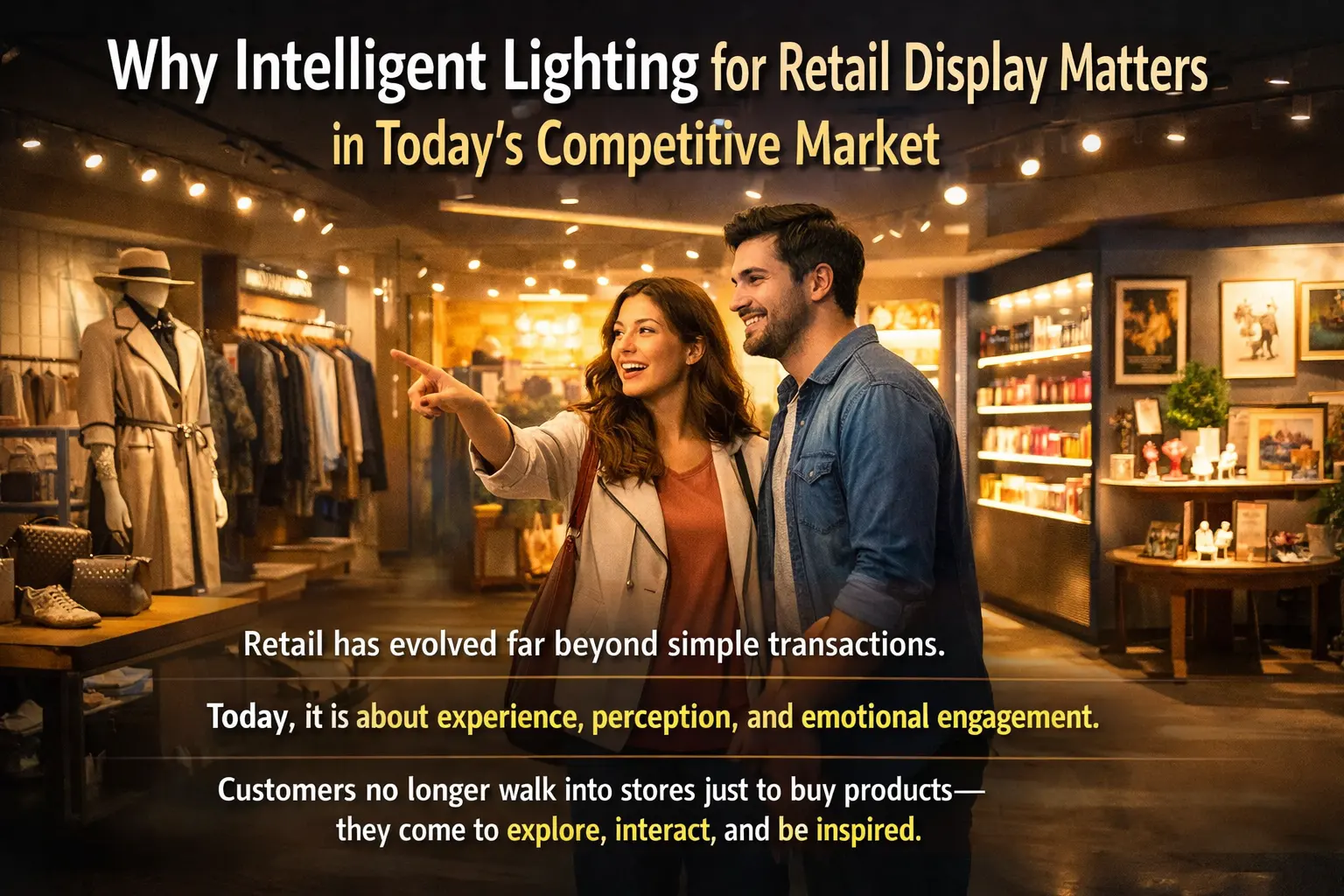
Why Intelligent Lighting for Retail Display Matters in Today’s Competitive Market
Retail has evolved far beyond simple transactions. Today, it is about experience, perception, and emotional engagement. Customers no longer walk into stores just to buy products—they come to explore, interact, and be inspired. In this environment, intelligent lighting for retail display plays a crucial role. It directly influences how products are seen, how spaces are perceived, and ultimately how customers behave.
Poor lighting can make high-quality products appear dull, distort colors, and reduce visual appeal. On the other hand, well-designed intelligent lighting systems enhance product visibility, create atmosphere, and guide customer attention throughout the store.
Retailers who understand this shift are increasingly investing in smarter, more adaptable lighting solutions that go beyond basic illumination.
Common Retail Challenges: Poor Product Visibility and Flat Lighting Environments
Many retail spaces still rely on outdated lighting systems that fail to meet modern demands. These systems often create environments that are visually uninteresting and commercially ineffective.
Lack of Visual Focus
Uniform lighting spreads brightness evenly across the entire space. While this ensures visibility, it eliminates contrast. Without contrast, products do not stand out, and customers are less likely to notice key items.
Inconsistent Color Rendering
Low-quality lighting can distort product colors. This is especially problematic in fashion, cosmetics, and food retail, where accurate color perception is essential for customer trust and purchasing decisions.
Rigid Lighting Layouts
Traditional lighting fixtures are often fixed in place. When store layouts change—as they frequently do—lighting fails to adapt, leaving some areas over-lit and others under-lit.
Missed Merchandising Opportunities
Without targeted lighting, retailers lose the ability to highlight promotions, new arrivals, or high-margin products. This limits the effectiveness of visual merchandising strategies.
These challenges demonstrate why traditional lighting is no longer sufficient in modern retail environments.
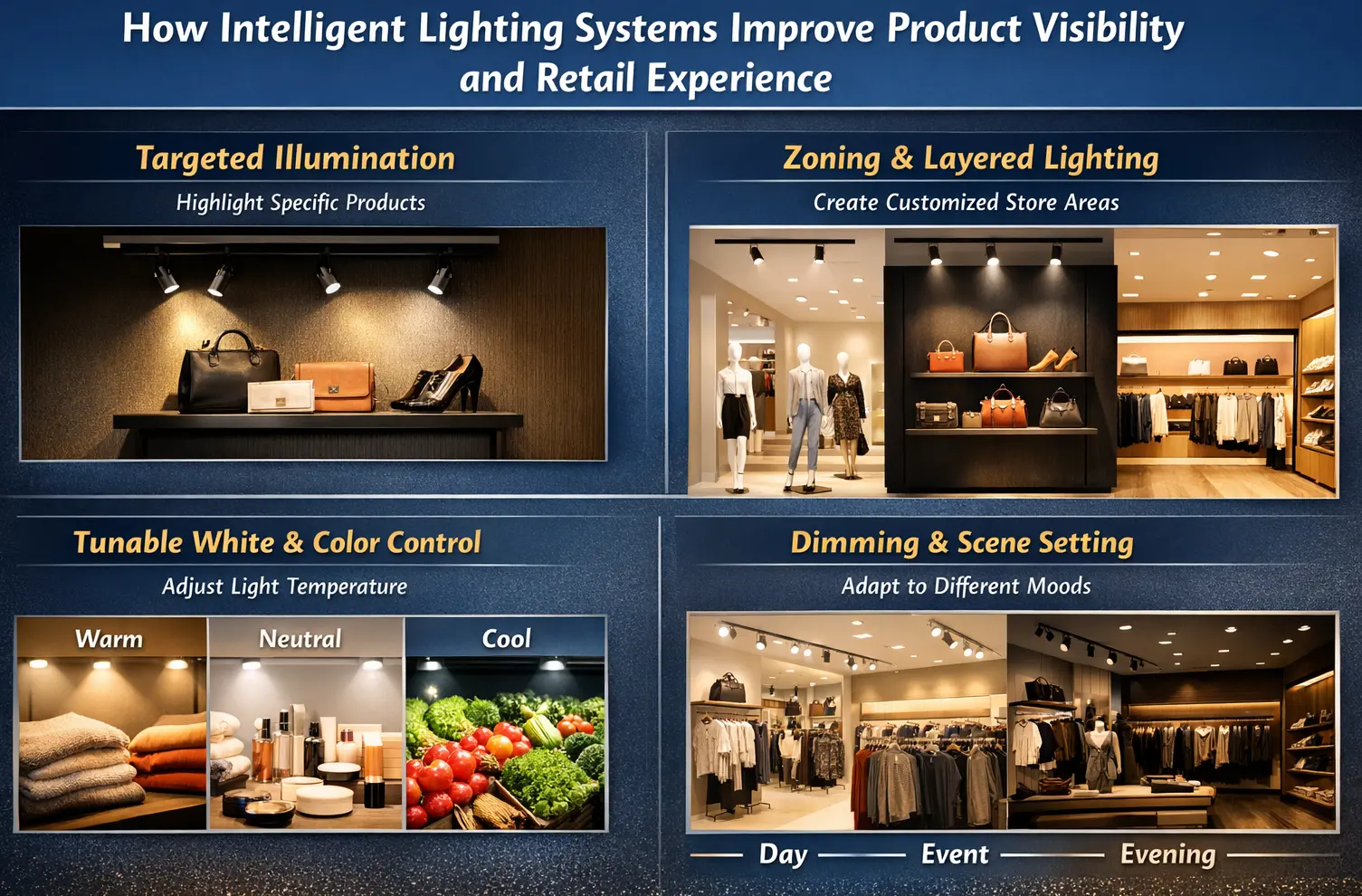
How Intelligent Lighting Systems Improve Product Visibility and Retail Experience
Intelligent lighting introduces flexibility, control, and precision into retail environments. It transforms lighting from a static utility into a dynamic tool for enhancing product presentation.
Targeted Illumination for Product Highlighting
Intelligent lighting systems allow retailers to direct light exactly where it is needed. Adjustable fixtures, such as track lighting, can be aimed at specific products or displays.
This creates contrast between highlighted items and surrounding areas, naturally drawing customer attention.
Zoning and Layered Lighting Design
With intelligent lighting, stores can be divided into zones—each with its own lighting settings.
For example:
- Entrance areas can be brighter to attract attention
- Feature displays can use accent lighting
- Shelving areas can have balanced, comfortable illumination
Layered lighting improves spatial clarity and helps customers navigate the store more easily.
Tunable White and Color Temperature Control
Different products look better under different color temperatures.
- Warm light enhances textiles and creates a welcoming atmosphere
- Neutral light provides balanced visibility
- Cooler light emphasizes freshness in food displays
Intelligent systems allow retailers to adjust color temperature dynamically, ensuring optimal presentation for every product category.
Dimming and Scene Setting
Lighting needs change throughout the day. Intelligent lighting systems support dimming and scene control, enabling retailers to create different lighting environments for:
- Daytime shopping
- Evening ambiance
- Promotional events
- Seasonal campaigns
This flexibility enhances both functionality and customer experience.
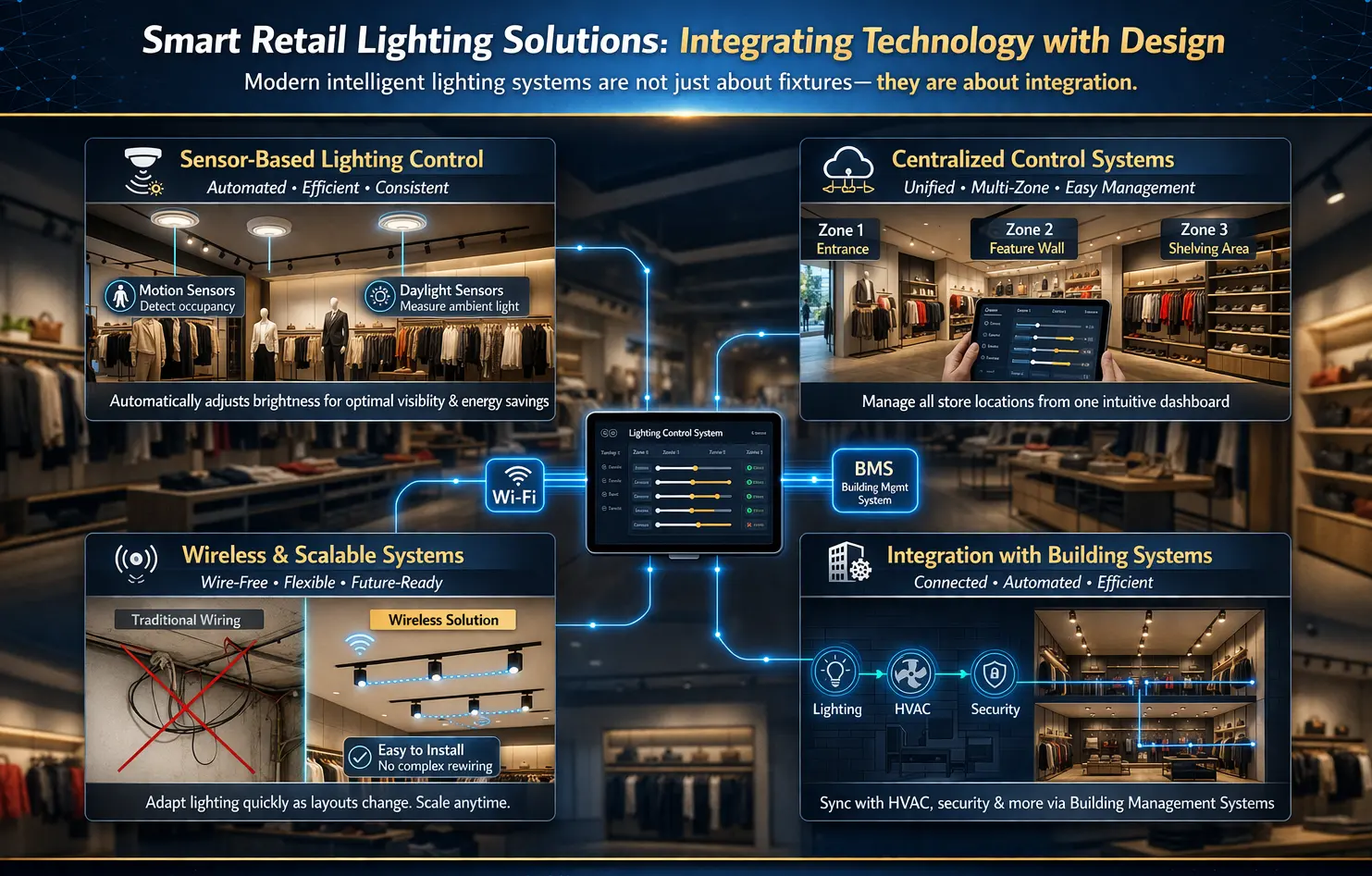
Smart Retail Lighting Solutions: Integrating Technology with Design
Modern intelligent lighting systems are not just about fixtures—they are about integration.
Sensor-Based Lighting Control
Motion sensors and daylight sensors can automatically adjust lighting levels based on occupancy and natural light availability. This improves energy efficiency while maintaining consistent illumination.
Centralized Control Systems
Retailers can manage lighting across multiple zones or even multiple stores from a single interface. This ensures consistency in brand presentation and simplifies operations.
Wireless and Scalable Systems
Wireless lighting solutions reduce installation complexity and make it easier to expand or modify systems as store layouts evolve.
Integration with Building Systems
Intelligent lighting can be integrated with building management systems (BMS), allowing coordinated control of lighting, HVAC, and other systems.
This level of integration supports smarter, more efficient retail environments.
Applications of Intelligent Lighting in Retail Spaces and Display Zones
The versatility of intelligent lighting makes it suitable for a wide range of retail applications.
Fashion Retail and Apparel Stores
In clothing stores, lighting must accurately represent fabric colors and textures. Intelligent lighting enhances visual clarity while creating an inviting atmosphere that encourages browsing.
Sneaker and Lifestyle Stores
These stores often rely on strong visual storytelling. Intelligent lighting can highlight limited-edition products, create dramatic contrasts, and support frequent layout changes.
Supermarkets and Food Retail
Lighting affects how fresh food appears. Intelligent systems can adjust color temperature and brightness to enhance the look of produce, meat, and baked goods.
Electronics and Showrooms
Products in these environments benefit from directional lighting that emphasizes design, materials, and functionality.
Window Displays and Feature Areas
First impressions are critical. Intelligent lighting helps create eye-catching window displays that draw customers into the store.
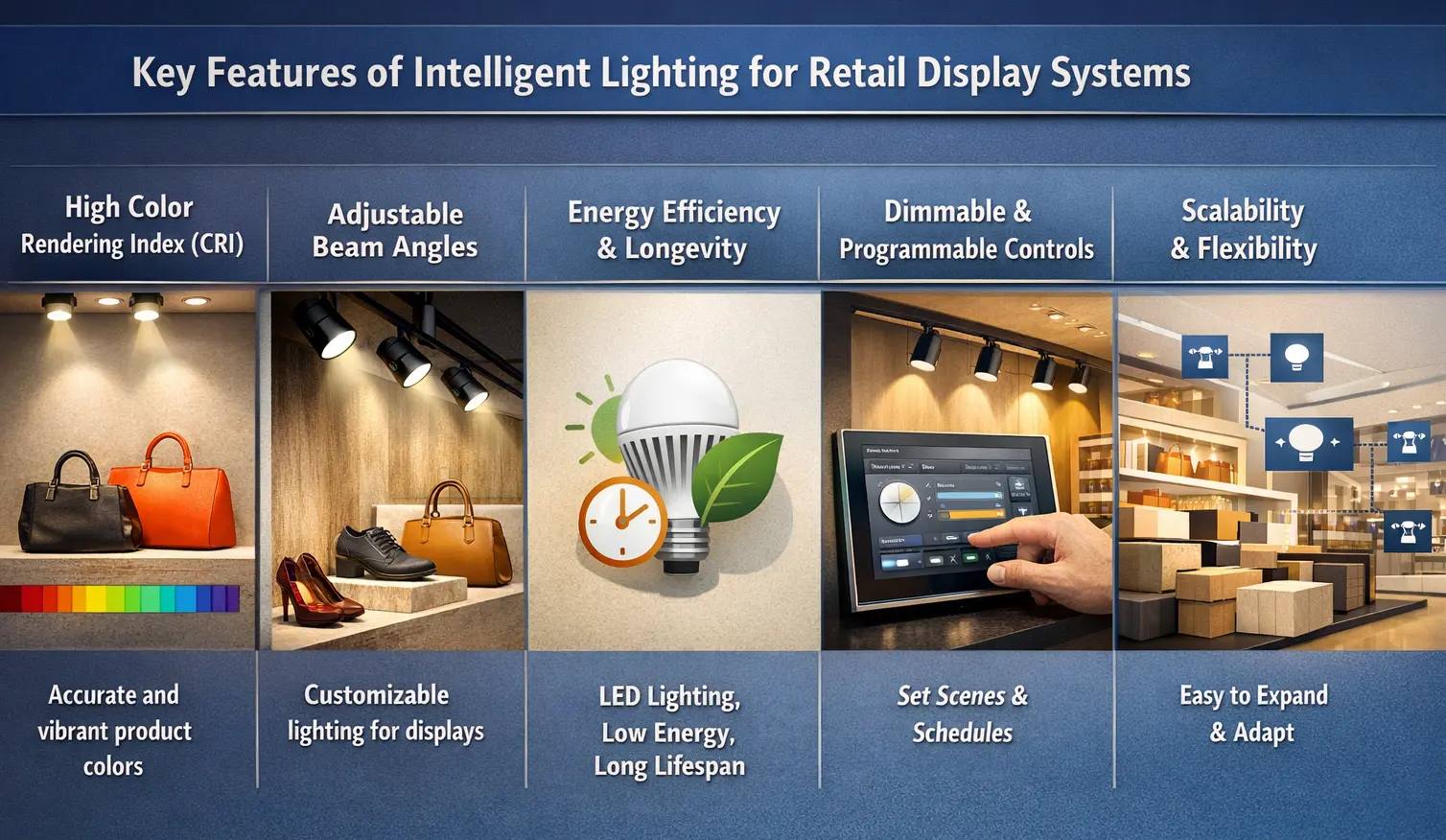
Key Features of Intelligent Lighting for Retail Display Systems
When selecting an intelligent lighting solution, retailers should consider several important features.
High Color Rendering Index (CRI)
High CRI lighting ensures that product colors appear accurate and vibrant, improving customer confidence and satisfaction.
Adjustable Beam Angles
Flexible beam angles allow retailers to tailor lighting to different product types and display configurations.
Energy Efficiency and Longevity
LED-based intelligent lighting systems consume less energy and have longer lifespans, reducing operational costs.
Dimmable and Programmable Controls
Programmable lighting enables retailers to create customized scenes and schedules, improving both efficiency and user experience.
Scalability and Flexibility
A good system should be easy to expand or modify as business needs change.
Business Benefits: From Enhanced Visibility to Increased Sales
The impact of intelligent lighting extends beyond aesthetics—it directly influences business performance.
Improved Product Visibility
Better lighting ensures that products are clearly visible, making it easier for customers to evaluate and choose items.
Increased Customer Engagement
Well-lit environments are more inviting and encourage customers to spend more time in the store.
Stronger Brand Perception
Lighting contributes to the overall identity of a retail space. Intelligent lighting helps create a consistent and professional brand image.
Higher Conversion Rates
When products look more appealing, customers are more likely to make purchases.
Reduced Energy Costs
Smart controls and efficient LED technology help lower energy consumption and operational expenses.
The Future of Retail Lighting: Intelligent, Adaptive, and Experience-Driven
Retail is becoming increasingly experience-driven, and lighting is at the center of this transformation.
Intelligent lighting for retail display is not just a trend—it is a fundamental shift in how retail environments are designed and operated.
As technology continues to evolve, we can expect even more advanced features, such as:
- AI-driven lighting adjustments based on customer behavior
- Integration with digital displays and interactive systems
- Real-time data analysis for optimizing store performance
Retailers who adopt intelligent lighting today are better positioned to meet future demands and stay competitive in a rapidly changing market.
Conclusion: Why Intelligent Lighting for Retail Display Is a Strategic Investment
Lighting is no longer just about visibility—it is about influence.
Intelligent lighting for retail display empowers retailers to create environments that are visually engaging, operationally efficient, and commercially effective.
By improving product visibility, enhancing customer experience, and supporting flexible store design, intelligent lighting becomes a powerful tool for driving retail success.
For businesses looking to elevate their retail spaces and maximize performance, investing in intelligent lighting is not just a design decision—it is a strategic move toward long-term growth.

