



Track Lighting for Retail Display: The Key to Flexible, High-Impact Store Lighting
By Powerstar
Why Retail Lighting by Track Light Matters More Than Ever
With track lighting for retail display, retailers can achieve precise lighting control, highlight key products, and adapt quickly to changing store layouts. In today’s competitive retail environment, lighting is no longer just a functional requirement. It is a strategic tool that directly influences how customers perceive products, navigate spaces, and make purchasing decisions.
Modern retail spaces are highly visual. Customers are drawn to environments that feel dynamic, well-organized, and visually engaging. However, many stores still rely on outdated lighting systems that provide flat, uniform illumination. While this may ensure basic visibility, it often fails to highlight products effectively or create a compelling shopping experience.
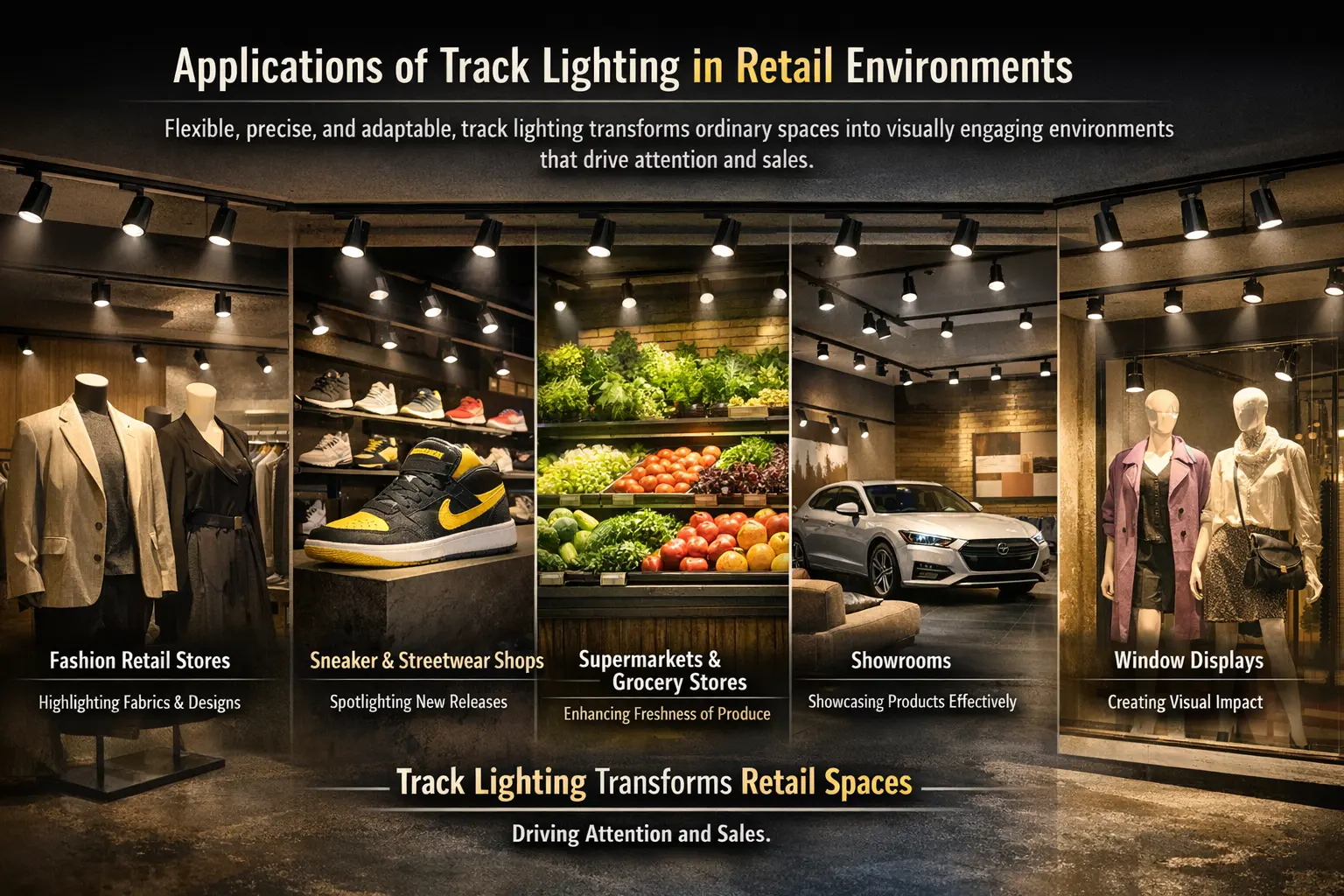
This is where track lighting for retail display becomes essential. By offering flexibility, precision, and adaptability, track lighting helps retailers transform ordinary spaces into visually engaging environments that drive attention and sales.
What Is Track Lighting for Retail Display?
Track lighting is a system where multiple light fixtures are mounted on a continuous track, allowing them to be easily repositioned, adjusted, and directed.
Unlike fixed lighting systems, track lighting provides a dynamic solution for retail environments where layouts, displays, and product focus frequently change.
Key characteristics include:
- Adjustable light heads for precise targeting
- Flexible positioning along the track
- Compatibility with different beam angles and wattages
- Scalable layouts for various store sizes
This flexibility makes track lighting one of the most practical and effective lighting solutions for retail display applications.
The Problem with Traditional Retail Lighting
Before understanding the benefits of track lighting, it is important to recognize the limitations of traditional lighting systems.
Lack of Focus
Standard ceiling lights distribute illumination evenly across the space. While this provides general visibility, it does not create focal points. As a result, products can appear flat and unremarkable.
Limited Flexibility
Fixed lighting layouts cannot adapt to changing store designs. Retailers often update displays, introduce new collections, or rearrange product zones, but traditional lighting remains static.
Poor Visual Hierarchy
Without layered lighting, customers do not know where to look. Everything appears equally lit, reducing the impact of key products or promotional areas.
Inefficient Energy Use
Older lighting systems may consume more energy while delivering less effective illumination, especially when used to compensate for poor lighting design.
These challenges highlight the need for a more adaptable and performance-driven lighting solution.
How Track Lighting Improves Retail Display
Track lighting addresses these challenges by introducing flexibility, control, and visual precision into retail environments.
Targeted Product Highlighting
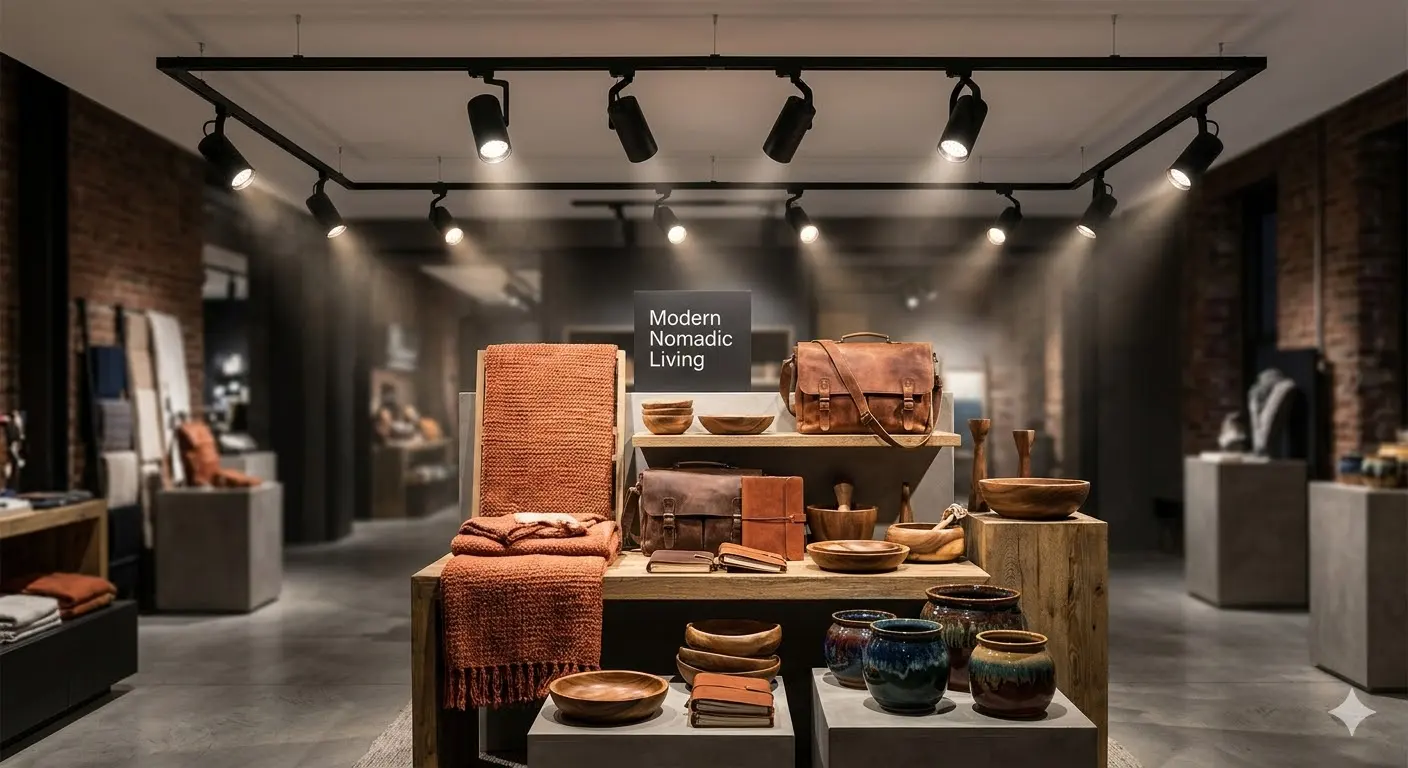
Track lighting allows retailers to direct light exactly where it is needed. Adjustable fixtures can focus on specific products, creating contrast between highlighted items and the surrounding space.
This makes products stand out, attracting customer attention and increasing engagement.
Flexible Layout Adaptation
Retail spaces are constantly evolving. Seasonal promotions, new arrivals, and store redesigns require lighting systems that can adapt quickly.
With track lighting, fixtures can be repositioned along the track without major electrical work. This reduces downtime and allows for continuous visual updates.
Layered Lighting Design
Effective retail lighting is built on layers:
- Ambient lighting for general visibility
- Accent lighting for product highlighting
- Task lighting for functional areas
Track lighting plays a critical role in accent lighting, helping create depth and visual hierarchy within the store.
Improved Beam Control
Different products require different lighting approaches. Track lighting systems support a variety of beam angles, allowing retailers to choose between narrow spotlights and wider flood beams.
For example:
- Narrow beams for featured products
- Medium beams for shelving displays
- Wide beams for general accent areas
This level of control ensures that lighting matches the specific needs of each display.
Enhanced Visual Merchandising
Lighting is a key element of visual merchandising. It shapes how products are perceived and how customers interact with displays.
Track lighting enhances merchandising by:
- Emphasizing textures and materials
- Enhancing color accuracy
- Creating dramatic contrasts
- Supporting storytelling through light
When used effectively, it turns product displays into visual experiences.
Applications of Track Lighting in Retail Environments
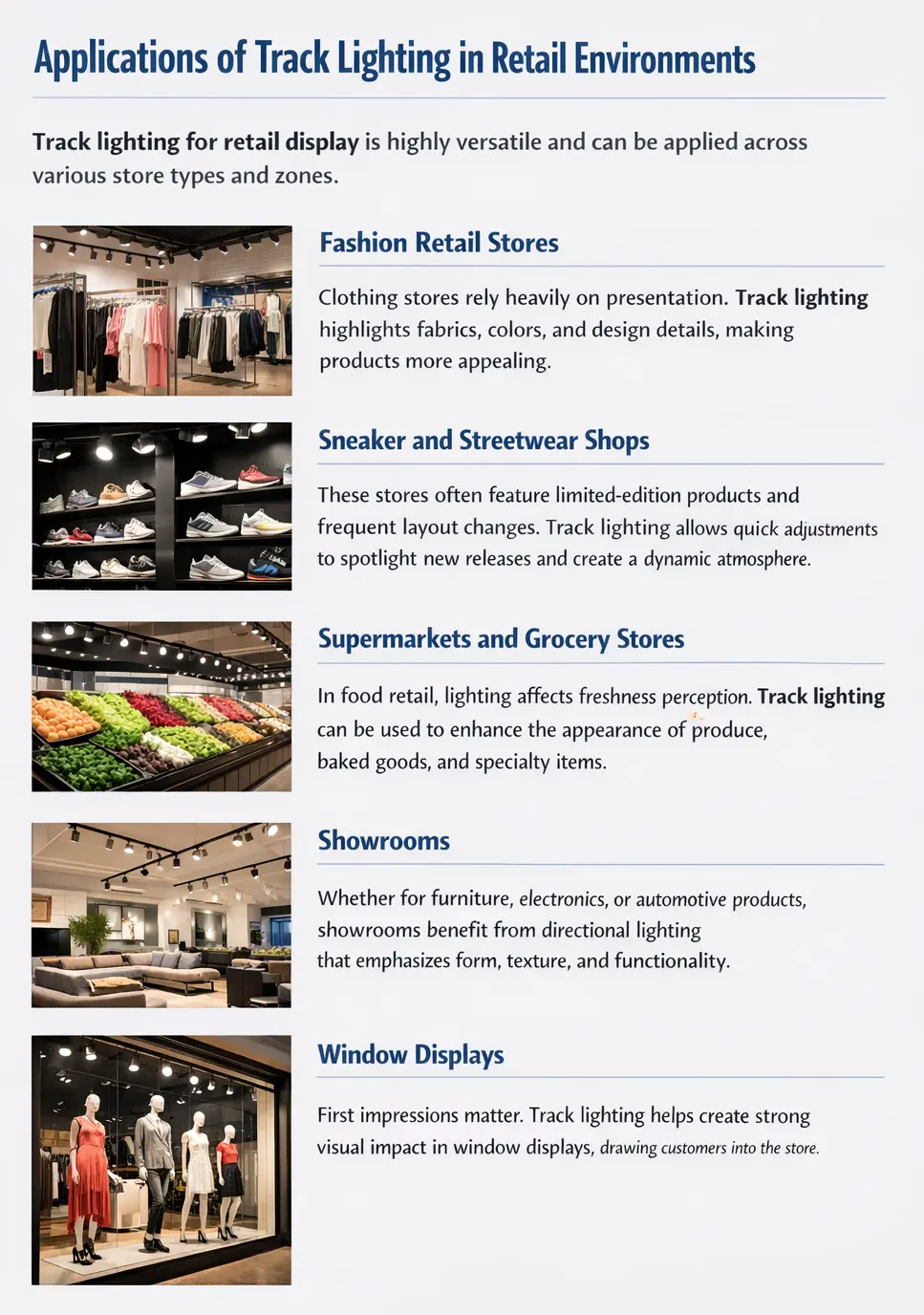
Track lighting for retail display is highly versatile and can be applied across various store types and zones.
Fashion Retail Stores
Clothing stores rely heavily on presentation. Track lighting highlights fabrics, colors, and design details, making products more appealing.
Sneaker and Streetwear Shops
These stores often feature limited-edition products and frequent layout changes. Track lighting allows quick adjustments to spotlight new releases and create a dynamic atmosphere.
Supermarkets and Grocery Stores
In food retail, lighting affects freshness perception. Track lighting can be used to enhance the appearance of produce, baked goods, and specialty items.
Showrooms
Whether for furniture, electronics, or automotive products, showrooms benefit from directional lighting that emphasizes form, texture, and functionality.
Window Displays
First impressions matter. Track lighting helps create strong visual impact in window displays, drawing customers into the store.
Key Features to Look for in Track Lighting Systems
Choosing the right track lighting system is essential for achieving optimal results.
High CRI (Color Rendering Index)
A high CRI ensures that product colors appear accurate and vibrant. This is especially important for fashion and food retail.
Adjustable Beam Angles
Flexibility in beam angle allows for better control over light distribution and product emphasis.
Dimmable Functionality
Dimming enables retailers to adjust brightness levels based on time of day, store ambiance, or specific events.
Energy Efficiency
Modern LED track lighting offers high lumen output with lower energy consumption, reducing operational costs.
Compatibility with Smart Controls
Advanced systems can integrate with smart lighting controls, allowing for zoning, scheduling, and scene setting.
The Role of Smart Track Lighting in Modern Retail
As retail environments become more experience-driven, smart lighting is becoming increasingly important.
Smart track lighting combines the flexibility of track systems with intelligent control features, enabling:
- Automated lighting schedules
- Scene-based lighting adjustments
- Remote control and monitoring
- Integration with other building systems
This allows retailers to create adaptive lighting environments that respond to both operational needs and customer behavior.
Business Impact: From Visibility to Sales
The ultimate goal of retail lighting is not just visibility, but performance.
Track lighting contributes to business success by:
- Increasing product visibility
- Enhancing perceived product value
- Guiding customer attention
- Improving overall store atmosphere
Better lighting leads to better perception, and better perception leads to higher conversion rates.
In a competitive retail landscape, these advantages can make a significant difference.
Conclusion: A Smarter Approach to Retail Display Lighting
Retail spaces are no longer static. They evolve constantly to meet changing consumer expectations and merchandising strategies.
Track lighting for retail display provides the flexibility, precision, and performance required to support this evolution. It allows retailers to highlight products effectively, adapt to new layouts, and create engaging shopping environments.
More importantly, it transforms lighting from a basic necessity into a powerful tool for visual communication and commercial success.
For retailers looking to improve product visibility, enhance store design, and increase sales, track lighting is not just an option—it is a strategic investment.

