
LED Track Light Energy Consumption: How Much Electricity Can You Really Save?
By Vincent
Introduction: Don’t Underestimate the LED Track Light Energy Consumption
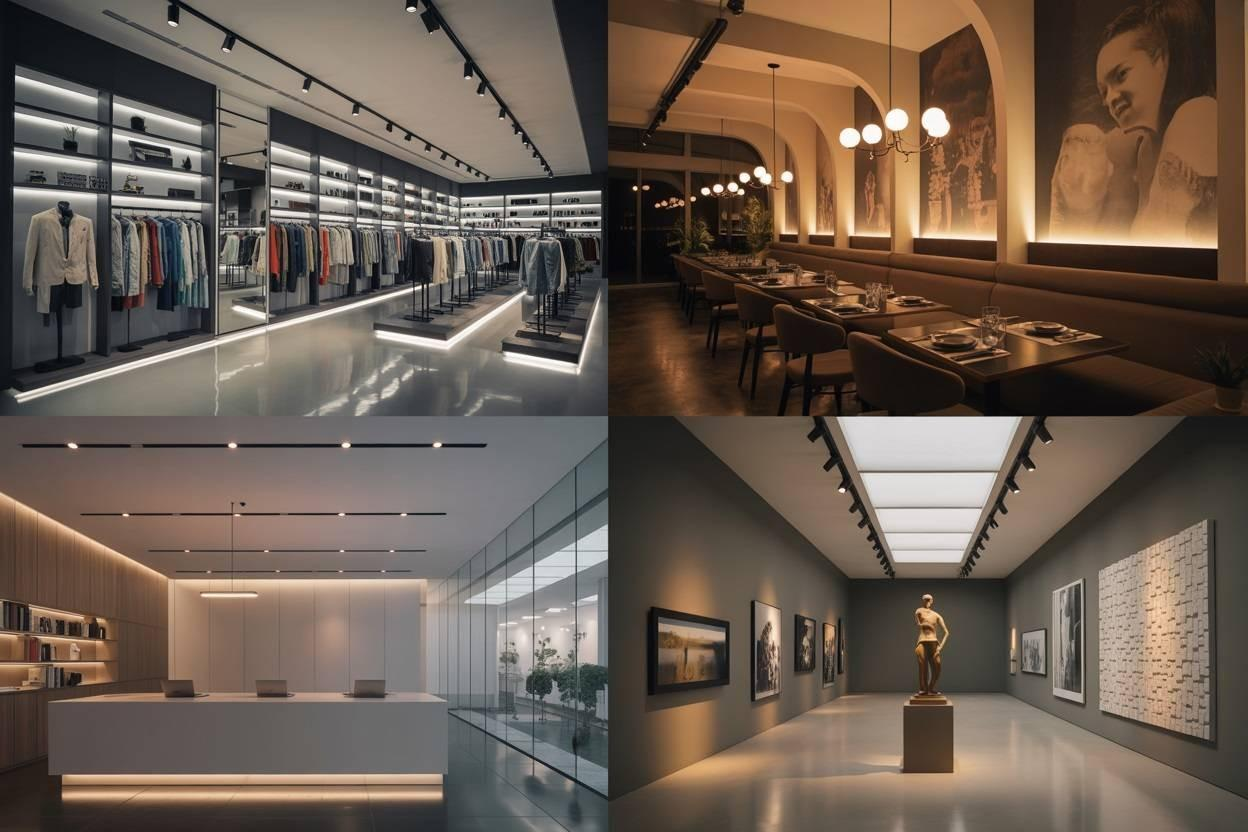
LED track lights are everywhere — shopping malls, supermarkets, hotels and retail stores. They don’t just light up the space. They also highlight product details, set the mood, and make shopping look better for customers.
But have you ever done the math? If a retail shop has 100 track lights running 12 hours a day, how much electricity does it use in a whole year?
One single 30W LED track light doesn’t seem to use much power. But add more fixtures and longer daily runtime, and lighting quickly becomes a big ongoing cost for businesses.
So what actually decides how much power LED track lights burn? How can you cut electricity bills without dimming the light or losing lighting quality?
It’s not just about picking lower-wattage lights. The real key is luminous efficacy.
1. Do Lower-Wattage LED Track Lights Always Consume Less Energy?
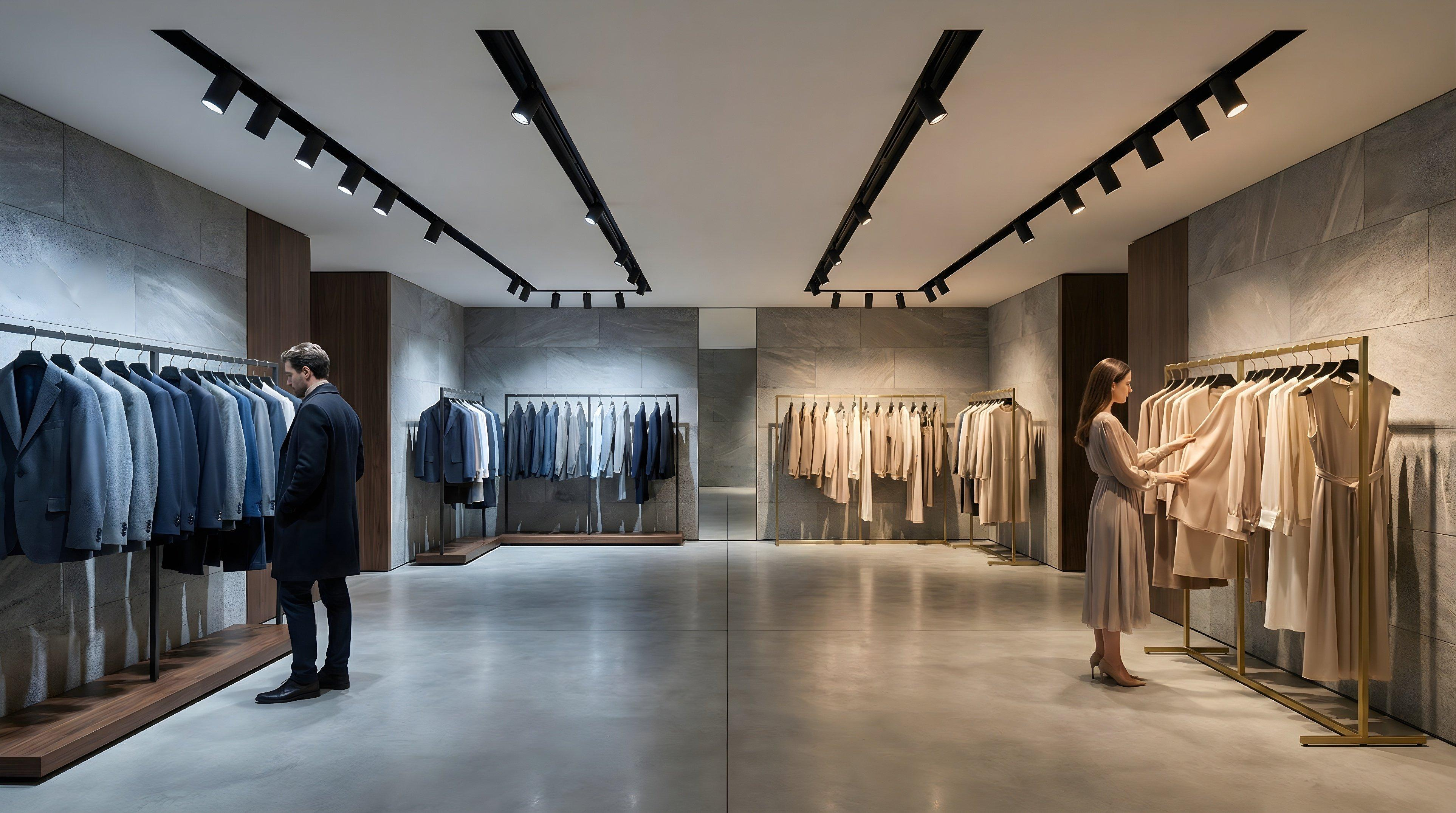
LED track lights are available in different wattages, such as 10W, 20W, 30W, 40W, and 50W.
Wattage (W) tells you how much electrical power a fixture uses. Generally, a higher-wattage light consumes more electricity over the same operating period.
For example, here’s how much electricity different LED track lights consume:
| LED Track Light Wattage | 1 Hour | 8 Hours | 12 Hours |
|---|---|---|---|
| 20W | 0.02 kWh | 0.16 kWh | 0.24 kWh |
| 30W | 0.03 kWh | 0.24 kWh | 0.36 kWh |
| 40W | 0.04 kWh | 0.32 kWh | 0.48 kWh |
| 50W | 0.05 kWh | 0.40 kWh | 0.60 kWh |
If a store installs 100 pieces of 30W track lights and runs them for 12 hours a day, the total daily energy consumption is 36 kWh.
However, there’s one important thing to remember: lower wattage doesn’t always mean better lighting efficiency.
For example, a 20W track light may produce only 2,000 lumens, while a 30W fixture may deliver 5,100 lumens. Although the second fixture uses more power, it also produces much more light.
That’s why you shouldn’t look at wattage alone when choosing LED track lights. Luminous efficacy (lm/W) matters just as much.
2. What Factors Affect LED Track Light Energy Consumption?
LED Track Light Energy Consumption isn’t only about how many watts each light draws. There are quite a few other factors at play.
2.1 Wattage and Luminous Efficacy
Wattage shows how much electricity a light uses. Luminous efficacy tells you how much light you get out of each watt. The higher the lm/W rating, the more light the fixture puts out using the same power. Put simply: better luminous efficacy means you hit your target brightness without using as much electricity.
2.2 Daily Operating Hours
A retail shop running lights for 12 hours a day will obviously use more power than a showroom only open 6 hours. The longer your lights stay on, the more energy efficiency matters.
2.3 Number of Fixtures Installed
For a tiny store, the power difference between a handful of lights might not feel like much. Now picture a big supermarket, mall or retail chain with hundreds, even thousands of lights. Small savings on each fixture add up to huge savings over time.
2.4 Lighting Design and Smart Controls
Good lighting design can also help reduce unnecessary energy consumption.
Choosing the right beam angle, fixture spacing, and installation position helps direct light where it’s actually needed.
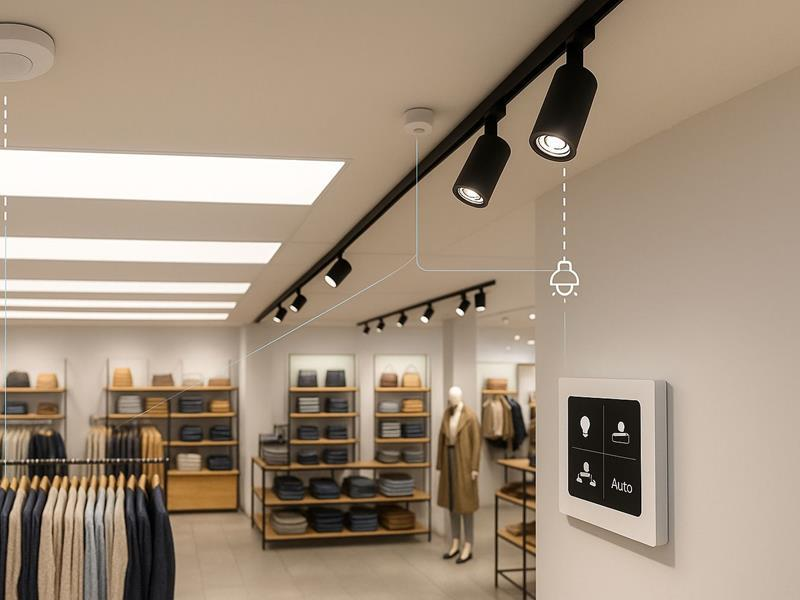
Smart control systems such as DALI and Casambi offer another way to improve energy management. They allow users to adjust lighting levels according to operating hours, space requirements, and different lighting scenes.
3. How to Calculate LED Track Light Electricity Consumption and Costs
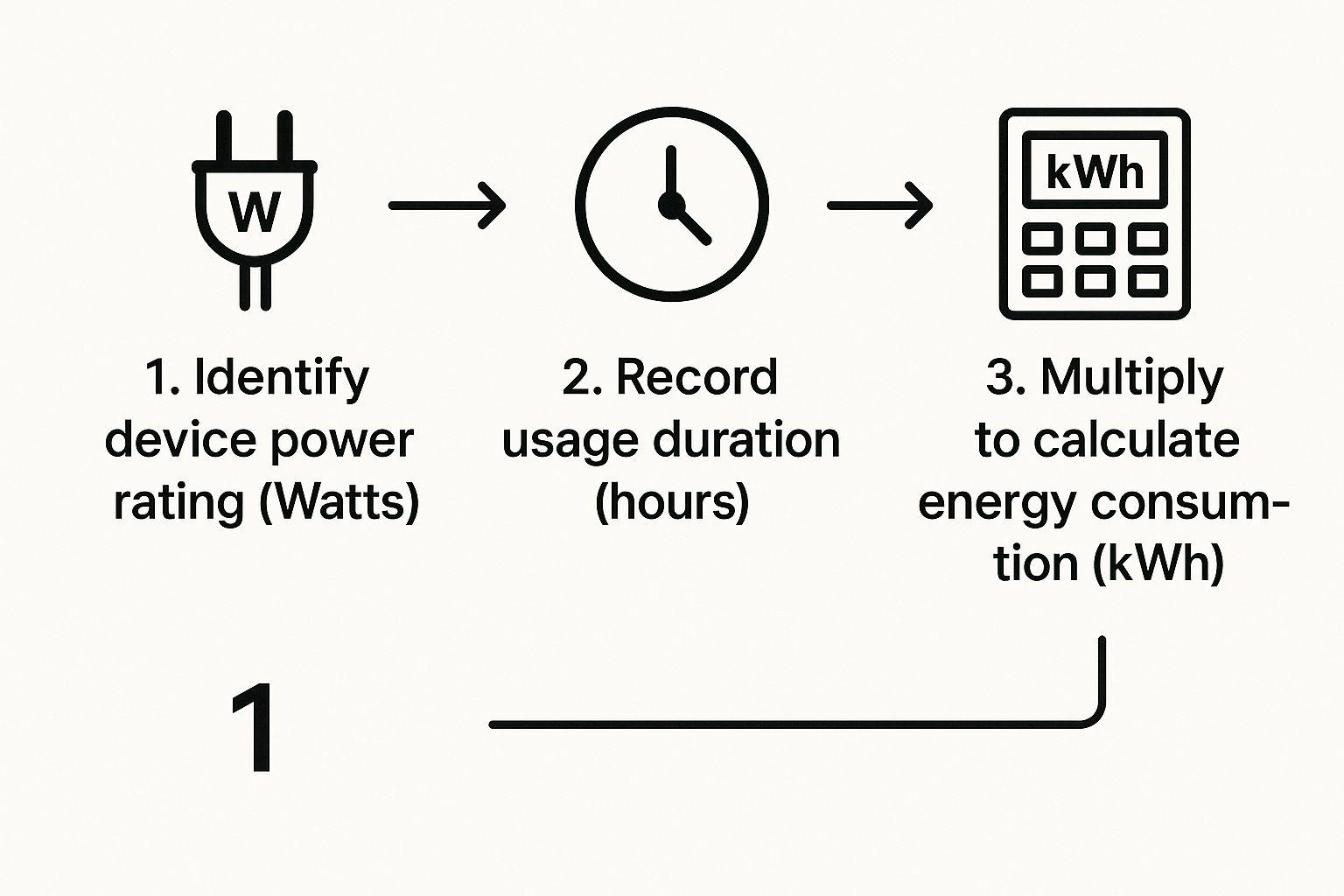
Calculating the energy consumption of LED track lights is quite simple. You only need three basic figures: wattage, operating hours, and the number of fixtures.
Energy consumption formula:
Energy (kWh) = Wattage (W) × Operating Hours × Number of Fixtures ÷ 1,000
Electricity cost formula:
Electricity Cost = Energy Consumption (kWh) × Electricity Rate
Let’s take a retail store as an example.
Imagine it has 100 pieces of 30W LED track lights, operating 12 hours a day. The local electricity rate is $0.30 per kWh.
| Calculation | Result |
|---|---|
| Number of fixtures | 100 |
| Wattage per fixture | 30W |
| Daily operating hours | 12 hours |
| Daily energy consumption | 36 kWh |
| Annual energy consumption | 13,140 kWh |
| Annual electricity cost | $3,942 |
That means the store spends approximately $3,942 per year on electricity for these 100 track lights alone.
For retail chains and large commercial spaces with multiple locations, lighting costs are definitely worth paying attention to.
4. 30W vs. 51W: How Much Can High-Efficiency LED Track Lightss Save?
So, what difference can high luminous efficacy actually make?
Let’s compare two LED track lights with approximately the same luminous output of 5,100 lumens.
Conventional LED Track Light
- Power: 51W
- Luminous efficacy: 100 lm/W
- Light output: 5,100 lumens
High-Efficiency LED Track Light
- Power: 30W
- Luminous efficacy: 170 lm/W
- Light output: 5,100 lumens
As you can see, both fixtures deliver approximately the same luminous flux, but their power consumption is quite different.
Here’s what the comparison tells us:
- The conventional fixture requires 51W to produce around 5,100 lumens.
- The 170lm/W fixture needs only 30W to deliver the same theoretical light output.
- That’s 21W less power per fixture.
- Power consumption is reduced by approximately 41.2%.
In other words, you don’t necessarily need to sacrifice brightness to save electricity. By choosing a more efficient fixture, you can achieve a similar light output while using less power.
Of course, the same lumen output doesn’t automatically mean identical lighting performance. Beam angle, light distribution, mounting height, and target illuminance all affect the final result. A proper lighting design is still important.
5. How Much Can 100 LED Track Lights Save in One Year?
Saving 21W per fixture every hour may not sound like much at first. But let’s look at what happens when we apply this difference to a commercial lighting scenario.
Assume the following conditions:
- Number of fixtures: 100
- Conventional fixture: 51W
- High-efficiency fixture: 30W
- Operating hours: 12 hours per day
- Operating days: 365 days per year
- Electricity rate: $0.30/kWh
Here’s the potential saving:
| Energy Savings | Result |
|---|---|
| Daily energy saved | 25.2 kWh |
| Annual energy saved | 9,198 kWh |
| Daily electricity cost saved | $7.56 |
| Annual electricity cost saved | $2,759.40 |
100 Lights. Up to $2,759.40 in Potential Annual Electricity Savings.
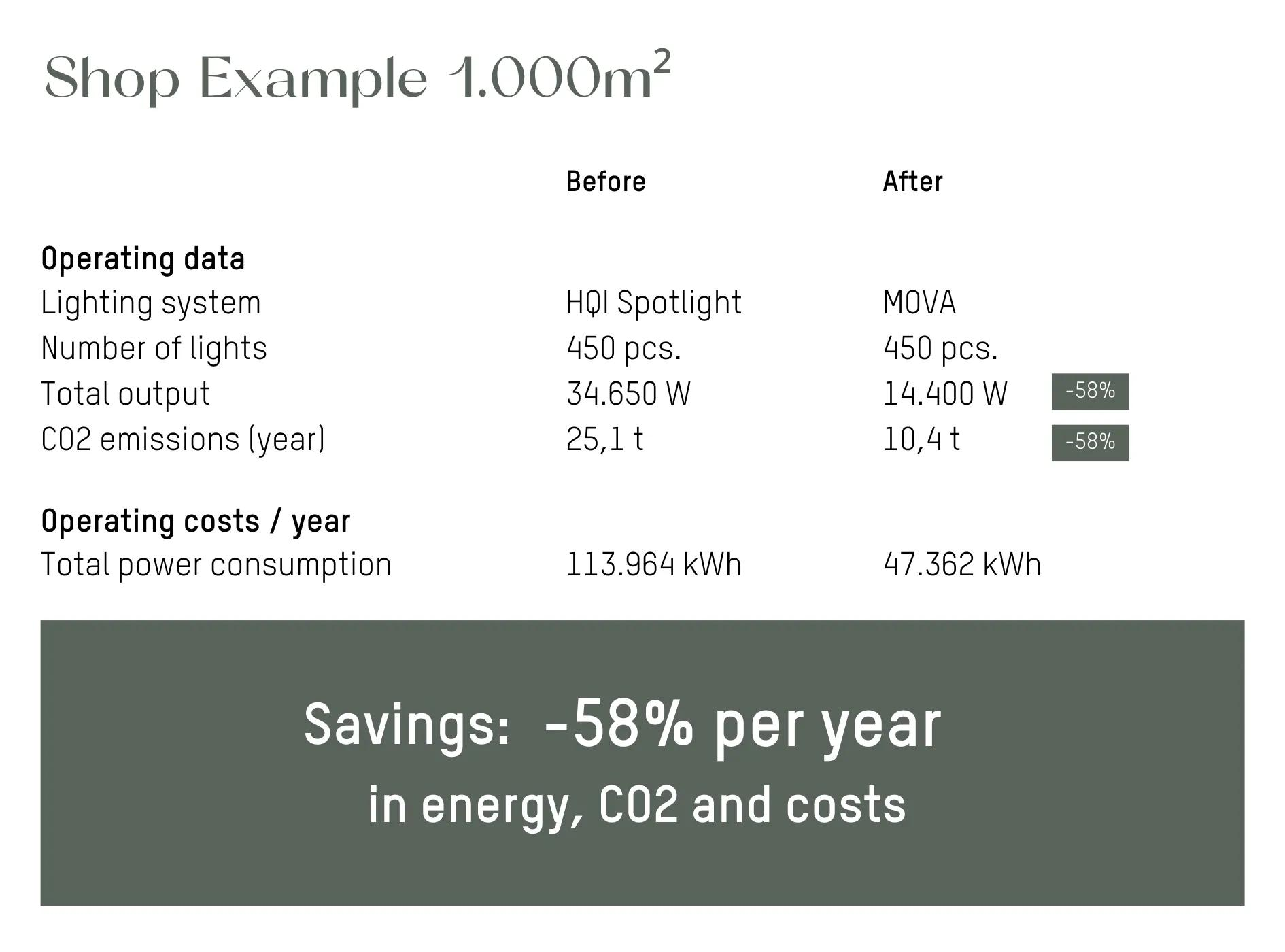
For large retail stores, supermarkets, hotels, and shopping malls, the savings can become even more significant when hundreds or thousands of fixtures are installed.
That’s why it’s worth looking beyond the initial purchase price. The electricity costs over the entire operating period should also be part of your purchasing decision.
Note: These figures are theoretical estimates based on rated fixture wattage. Actual savings may vary depending on operating hours, electricity rates, dimming strategies, lighting design, and project conditions.
6. How to Choose an Energy-Efficient LED Track Light
When choosing LED track lights for commercial projects, don’t focus on just one specification. It’s important to consider lighting quality, product performance, and the actual needs of the space.
| Key Factors | What to Look For | Why It Matters |
|---|---|---|
| Luminous Efficacy | Higher lm/W | Achieve the required light output with less power |
| Color Rendering (CRI) | CRI 90 or higher | Present product colors more naturally and accurately |
| Glare Control | Suitable reflector and optical design | Improve visual comfort for customers and staff |
| CCT & Beam Angle | Options to suit different applications | Create the right atmosphere and lighting effect |
| Smart Controls | DALI, Casambi, 0-10V | Adjust lighting according to operating needs and improve energy management |
Choosing an energy-efficient LED track light isn’t just about finding the highest lm/W value. You also need to consider lighting quality, visual comfort, control flexibility, and the actual requirements of your project.
7. Gope Series-I93H: A 170lm/W LED Track Light for Energy-Efficient Commercial Lighting
If you’re looking for an LED track light that combines high brightness, low energy consumption, and reliable commercial lighting performance, the Gope Series-I93H from Powerstar is worth considering.
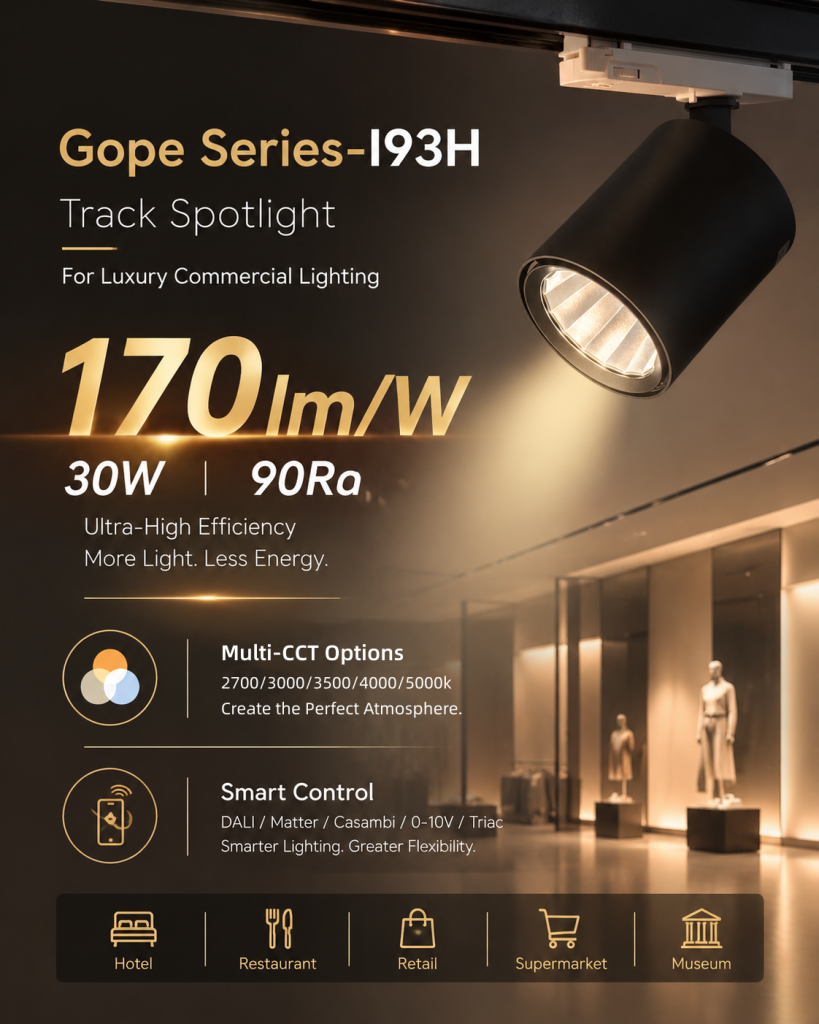
Its key advantages are designed around the needs of modern commercial spaces:
- 170lm/W High Luminous Efficacy: Delivers more light with less electrical power, helping reduce energy consumption in commercial projects.
- 30W Power, Around 5,100 Lumens: Provides high light output for a variety of commercial applications.
- CRI 90: Helps bring out natural and accurate product colors.
- Multiple Fixed CCT Options: Choose the appropriate color temperature for different project requirements. Each fixture operates at its selected fixed CCT.
- Flexible Smart Control: Compatible with DALI, Matter, Casambi, 0-10V, and TRIAC control options.
Whether it’s a hotel, restaurant, retail store, supermarket, or museum, the Gope Series-I93H offers a lighting solution that balances lighting performance and energy efficiency.
For projects requiring a large number of track lights, improving the luminous efficacy of each fixture is more than just a product upgrade. It’s also a practical way to help reduce long-term operating costs.
8. FAQ
1. Do track lights use a lot of electricity?
Not necessarily. It depends on the wattage and efficiency of the fixture. Modern LED track lights typically consume less electricity than traditional halogen track lights. For example, a 30W high-efficiency LED track light can deliver around 5,100 lumens while using significantly less power than a conventional 51W spotlight with comparable light output.
2. Do LED spotlights use a lot of electricity?
No. LED spotlights are generally energy-efficient and use less electricity than traditional halogen spotlights. Their actual energy consumption depends on wattage and operating hours. Choosing a high-efficiency LED spotlight, such as a 170lm/W model, can help deliver the required brightness with lower power consumption.
3. How many watts is a track light?
LED track lights commonly come in different wattages, such as 10W, 15W, 20W, 30W, and 40W. The right wattage depends on the ceiling height, beam angle, lighting requirements, and application. A 30W LED track light with 170lm/W efficiency, for example, can produce approximately 5,100 lumens.
4. How much does a 20 watt track light cost to run?
The running cost depends on how long the light stays on and your local electricity rate. For example, a 20W track light running for 12 hours consumes 0.24 kWh. At an electricity rate of $0.30 per kWh, it costs approximately $0.072 per day, or $2.16 per month (based on 30 days).
5. How much electricity do LED lights consume?
LED electricity consumption depends mainly on wattage and operating time. A 30W LED light uses 0.03 kWh per hour, while a 50W LED light uses 0.05 kWh per hour. However, wattage alone does not determine brightness. Luminous efficacy, measured in lumens per watt (lm/W), shows how efficiently a light converts electricity into visible light.
6. How much electricity does an LED light use in 24 hours?
A 30W LED light running continuously for 24 hours consumes 0.72 kWh of electricity. The calculation is simple: 30W × 24 hours ÷ 1,000 = 0.72 kWh. In commercial spaces, actual daily consumption depends on operating schedules and lighting control settings.
7. How much energy is saved with LED lights?
Energy savings depend on the efficiency of the LED fixture compared with the light it replaces. For example, replacing a 51W spotlight with a 30W LED track light that provides the same 5,100 lumens reduces fixture power consumption by approximately 41.2%. Across 100 lights operating 12 hours daily, this could save around 9,198 kWh annually.
8. Why are LED lights cheaper to run?
LED lights are cheaper to run because they convert electricity into light more efficiently than many traditional lighting technologies. High-efficiency models produce more lumens for every watt consumed, reducing the electricity needed to achieve a required light output. This can lead to lower energy bills, especially in commercial spaces with long operating hours.
9. Do LED lights run up your power bill?
LED lights do add to your electricity bill, but they generally consume less power than traditional lighting for comparable light output. The total cost depends on the fixture wattage, number of lights, daily operating hours, and electricity rate. Using high-efficiency LED track lights can help control lighting-related energy expenses.
10. How much does it cost to run an LED light for 24 hours?
The cost depends on the light’s wattage and your electricity rate. For example, a 30W LED light running for 24 hours consumes 0.72 kWh. At $0.30 per kWh, the running cost is approximately $0.216 per day. You can calculate your own cost by multiplying wattage by operating hours, then dividing by 1,000 and multiplying by your electricity rate.
Closing: True energy-saving lighting is not just about cutting watts
At first glance, power use of LED track lights seems all about wattage. But for commercial spaces, it ties closely to long-term running costs, lighting quality and energy management.
When shopping for track lights, don’t only ask “how many watts is it?” Also check how much light it delivers from each watt of power.
Better luminous efficacy means you can meet your lighting requirements with less electricity. That’s exactly the value of our 170 lm/W high-efficiency LED track lights.
If you’re looking for energy-saving lighting solutions for retail stores, hotels or large commercial projects, reach out to Powerstar. Ask about our Gope Series-I93H high-efficacy track lights and custom commercial lighting solutions for your project.